Your RV Was Damaged. Now Make Sure the Shop Can Actually Handle It.
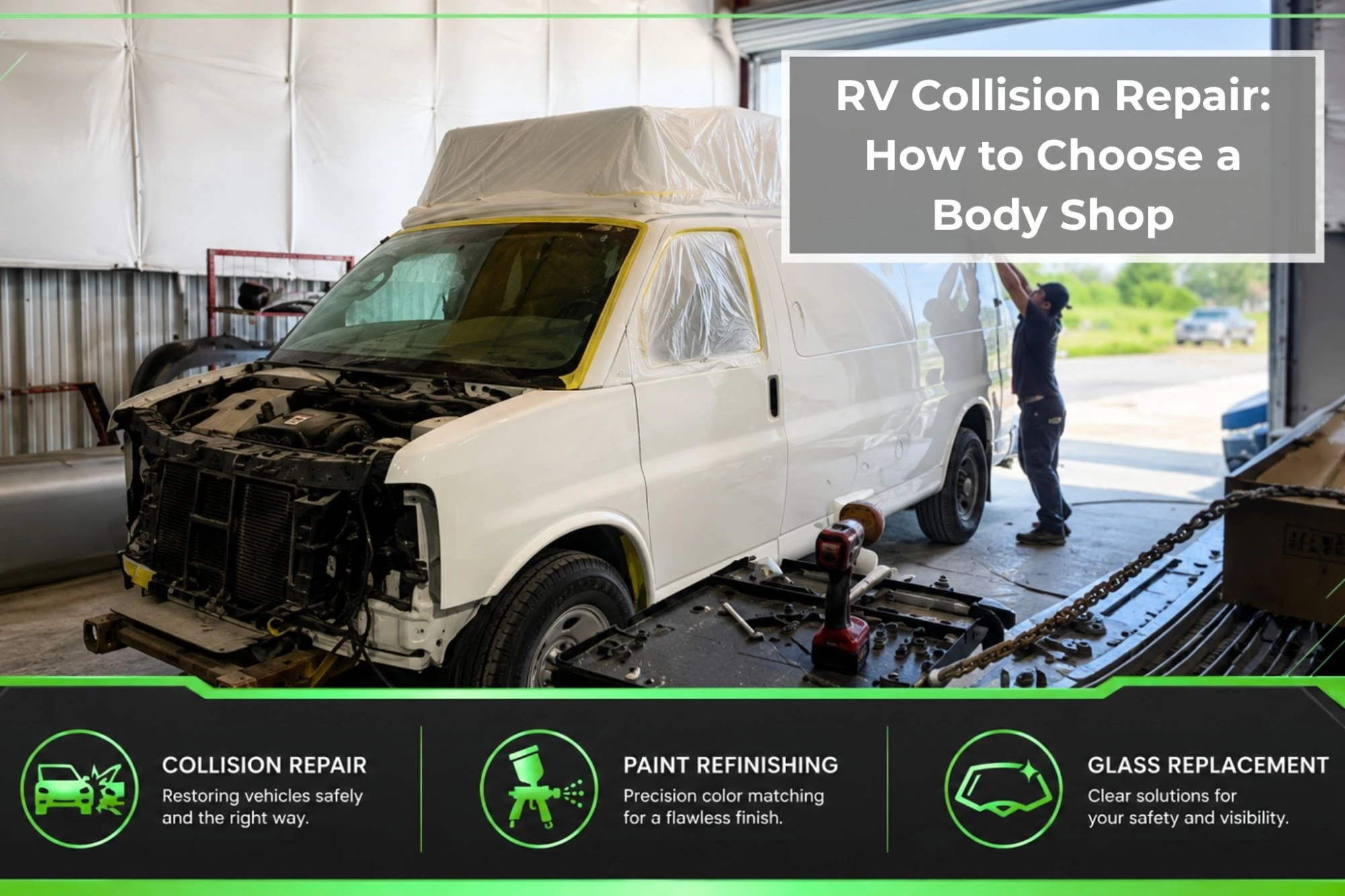
A body shop that repairs passenger cars every day is not automatically the right shop for a damaged motorhome or travel trailer. RV collision repair can involve long exterior panels, oversized vehicle access, paint and graphics extending across large surfaces, harder-to-source parts, and construction that varies substantially from one manufacturer and model to another.
That means choosing a shop should start with more than asking, “Do you repair RVs?” Lankford Paint & Body in Prairieville currently accepts motorhomes, travel trailers, campers, and trailer-related collision damage and specifically lists space for larger vehicles, panel repair, large-body refinishing, and color and decal matching among its services.
The better question is whether the shop can inspect your particular RV, explain the damage clearly, document the repair, manage the physical size of the vehicle, and develop a realistic plan before you authorize the work.
1. Start With the Shop’s Actual RV Experience
An RV is not simply a larger passenger vehicle.
Motorhomes, campers, fifth wheels, and travel trailers can have very different exterior assemblies and components. Even two RVs of similar size may not use the same materials or construction methods.
Manufacturer resources demonstrate why model-specific information matters. Winnebago’s manuals and diagrams include model-specific parts information, operator manuals, sealant information, and paint-code resources. Forest River maintains an extensive library of RV component manuals, including documentation for multiple fiberglass products and exterior systems. Jayco likewise organizes owner manuals by model year and RV type.
That is why you should avoid a shop that gives a blanket answer about how every fiberglass, aluminum, composite, roof, slide-out, or structural component will be repaired before identifying the actual RV.
Ask instead:
- Have you worked on motorhomes or travel trailers before?
- Can you inspect the specific damaged area on my RV?
- Will you research manufacturer information when construction details affect the repair?
- What parts of the repair are handled at your facility?
- How will you communicate if additional damage is discovered?
2. Make Sure the Facility Can Physically Handle the RV
Facility access matters more in RV body repair than many owners realize.
A shop must be able to safely accommodate the vehicle’s overall length, width, and height while providing enough working space around the damaged area. Large exterior panels and long paint transitions also require room that a passenger-car-focused workspace may not provide.
Lankford’s current RV and camper repair services state that the shop works on motorhomes, travel trailers, and campers and has space for the larger panels and surfaces involved.
When comparing shops, ask practical questions before arranging transportation:
- Can the facility accept an RV of this size?
- Is there adequate clearance to maneuver it into the repair area?
- Can the damaged side remain accessible during repair?
- Where will the RV be stored while parts or insurance decisions are pending?
- Is collection or return available if transportation is difficult?
These questions can prevent a situation where an RV arrives only for the shop to discover that the vehicle or repair area does not fit the facility.
3. Ask How the Damage Will Be Documented
Good motorhome collision repair starts with understanding what was actually damaged.
Photos can help begin the conversation, especially when the RV is stored elsewhere, but photographs do not always reveal what is happening beneath a damaged exterior panel.
Before the estimate is finalized, the shop may need information such as:
- Year, make, and model
- VIN
- RV type and overall dimensions
- Location of the impact
- Wide photographs of the affected side
- Close photographs of cracks, dents, scrapes, or punctures
- Previous repairs in the same area
- Damaged paint, stripes, decals, trim, or openings
This is especially important when visible damage might extend beyond the exterior surface.
Lankford’s existing guide to RV fiberglass and exterior damage explains why a surface crack can sometimes involve the material or assembly beneath it and why a final repair decision should be based on the RV’s actual construction.
4. Ask How Insurance Estimates and Supplements Are Handled
If insurance is involved, choosing an RV collision repair shop also means choosing who will document the repair needs and communicate changes.
The first insurance estimate may not contain everything eventually required. Additional damage can become visible during closer inspection, parts information can change, or the repair plan can become more specific once the shop researches the vehicle.
That can lead to a supplemental estimate.
A supplement is not automatically evidence that the original estimate was poorly written. It is a documented update when new information changes the repair scope.
Lankford’s guide to the collision repair supplement process explains how an initial estimate can progress through further inspection, additional findings, documentation, insurer review, and an updated repair plan.
Lankford’s current service information also states that customers file their own insurance claims while the shop handles estimates, supplements, and adjuster communication during the repair process.
If your RV has collision or exterior body damage, Lankford Paint & Body can inspect the vehicle, document what it finds, and explain the proposed repair before work begins. Starting with a proper assessment gives you something more useful than choosing a shop based only on the lowest initial number.
5. Look Closely at Paint and Decal Matching
Paint can be one of the most visible challenges in RV paint and body repair.
A passenger vehicle often has smaller panels and more natural breaks between refinished areas. A motorhome or travel trailer may have a long uninterrupted side, multiple colors, stripes, or graphics extending across several sections.
That makes the questions more specific:
- How will the existing color be identified?
- Does the manufacturer provide paint-code information?
- Has age or weather exposure changed the appearance of the existing finish?
- How will the repair transition into the surrounding surface?
- Are damaged decals or graphics still available?
- If not, what matching options can realistically be considered?
For example, Winnebago publishes model-year-specific paint code manuals, illustrating how paint information can vary across RV models and years.
A shop should not promise a flawless match before seeing the vehicle. The existing finish, repair location, original paint information, weathering, graphic availability, and size of the refinished area can all influence the plan.
6. Ask About Parts Before Expecting a Completion Date
Parts availability can have a major effect on travel trailer body repair or motorhome work.
Depending on the damage, the repair may involve model-specific exterior parts, trim, lights, moldings, graphics, doors, or other components. Availability can depend on the RV’s manufacturer, model year, age, and current supplier support.
That is one reason a reliable shop should give you a realistic schedule rather than an automatic promise.
Lankford’s current website states that repair timing depends on the damage and parts availability and that customers are updated if the expected schedule changes.
When comparing shops, ask:
- Have the required parts been identified?
- Are any parts still being researched?
- Does insurance authorization affect ordering?
- Could additional damage change the parts list?
- How will I be updated if a part becomes unavailable or delayed?
A precise promise made before those questions are answered may not be meaningful.
7. Think About Transportation and Storage Logistics
Getting an RV to and from a body shop can be a project by itself.
A damaged motorhome may be stored at a campground, tow yard, storage facility, residence, or another repair location. A travel trailer may require an appropriate tow vehicle before it can be moved.
Before selecting a shop, confirm:
- How the RV will get there
- Whether it can currently be transported safely
- Where it will be stored during the repair
- Whether transportation must be coordinated
- How pickup or return will be handled
Lankford currently states that collection and return can be arranged in some RV situations, including when an owner is away. That should still be confirmed for the specific vehicle and circumstances before relying on it.
An RV Repair Decision
Consider a travel-trailer owner near Prairieville whose trailer clips a fixed object while being maneuvered.
The visible damage includes a scraped rear corner, damage along a side panel, and a graphic running through the affected area.
One shop looks only at photographs and provides a quick cosmetic estimate. Another first confirms the trailer dimensions, asks for the VIN and model, considers whether anything beneath the visible panel could be involved, researches available exterior components, and discusses how the long paint and graphic transition would be handled.
The second estimate may take more work to prepare, but the owner receives a clearer picture of the actual camper body repair decision.
That is the type of information you want before authorizing the repair.
Questions to Ask an RV Body Shop Before You Choose
Use this checklist when comparing repair facilities:
- Do you regularly accept motorhomes, campers, or travel trailers?
- Can your facility accommodate the size of my RV?
- What information do you need before preparing an estimate?
- How will you determine whether damage extends beyond the visible exterior?
- Will vehicle-specific manufacturer information be reviewed where relevant?
- How will paint, stripes, and decals be matched?
- How are parts availability and delays communicated?
- How do you handle insurance estimates and supplements?
- Where will the RV be stored during the repair?
- How will transportation, pickup, or return be coordinated?
- What factors could change the initial repair schedule?
- Who will update me if the repair plan changes?
The goal is not to find a shop that promises the quickest answer. It is to find one that can explain what your particular RV actually needs.
Choose an RV Repair Shop Based on the Repair, Not Just the Estimate
Good RV collision repair begins with the right questions. The shop should be able to accommodate the vehicle, understand the damage, research the specific RV when necessary, document the repair, communicate with the insurer when applicable, manage large-surface refinishing, and explain how parts and logistics affect timing.
Lankford Paint & Body currently provides RV body repair for motorhomes, travel trailers, and campers, including collision and panel damage and large-body color and decal matching. The shop serves Prairieville and surrounding Ascension Parish and Baton Rouge-area communities.
Lankford Paint & Body
38173 Post Office Rd
Prairieville, LA 70769
Call (225) 241-8904 to discuss your RV, motorhome, travel trailer, or camper damage and arrange a free estimate. You can also send the vehicle information, VIN, description of what happened, and optional photos through the free estimate form.
FAQs
What should I look for in an RV collision repair shop?
Look for a shop that can physically accommodate the RV, has experience with motorhomes or trailers, documents the damage carefully, handles large-body paint work, researches vehicle-specific information when necessary, and provides realistic communication about parts and timing.
How is RV body repair different from repairing a car?
The key difference is that RV size, exterior construction, panel length, graphics, parts, and manufacturer-specific components can vary widely. The repair should therefore be based on the particular make, model, year, and damaged area rather than a universal RV repair method.
Can a body shop match RV paint and decals after a collision?
Often there are repair options, but the process depends on the existing finish, available paint information, age and weather exposure, size of the affected area, and whether matching graphics or decals are available. A shop should inspect the RV before promising a particular result.
Can photos provide a final RV collision repair estimate?
Photos can help a shop understand the visible damage and begin the estimating process, but they may not reveal everything beneath the exterior surface. A physical inspection or closer evaluation may be needed before establishing the complete repair plan.