Why Collision Repair Time Is Hard to Predict
After an accident, one of the first practical questions is: how long does collision repair take? There is no reliable one-size-fits-all answer. A repair involving one exterior panel may move relatively quickly, while concealed damage, ordered parts, structural work, insurer review, or specialty procedures can extend the schedule. Lankford Paint & Body states that repair timing depends on the damage and parts availability, that customers receive a realistic timeline, and that the shop calls if something changes.
For Prairieville-area drivers, it is more useful to view a collision repair timeline as a series of milestones rather than a fixed number of days. Estimating, repair planning, disassembly, parts, body work, refinishing, reassembly, and final checks all have to come together before the vehicle is ready for delivery.
A Realistic Collision Repair Timeline
1. Estimate, Repair Planning, and Authorization
The process starts with an inspection and written estimate based on the damage that can reasonably be identified at that stage. I-CAR’s collision repair process overview explains that the damage report helps identify needed parts, verify the extent of damage, and develop the repair plan.
When insurance is involved, the repair facility may also need to communicate with the carrier or adjuster. Lankford’s current collision repair services state that the shop works with major carriers and handles the estimate and supplement process directly.
2. Disassembly Can Reveal Hidden Damage
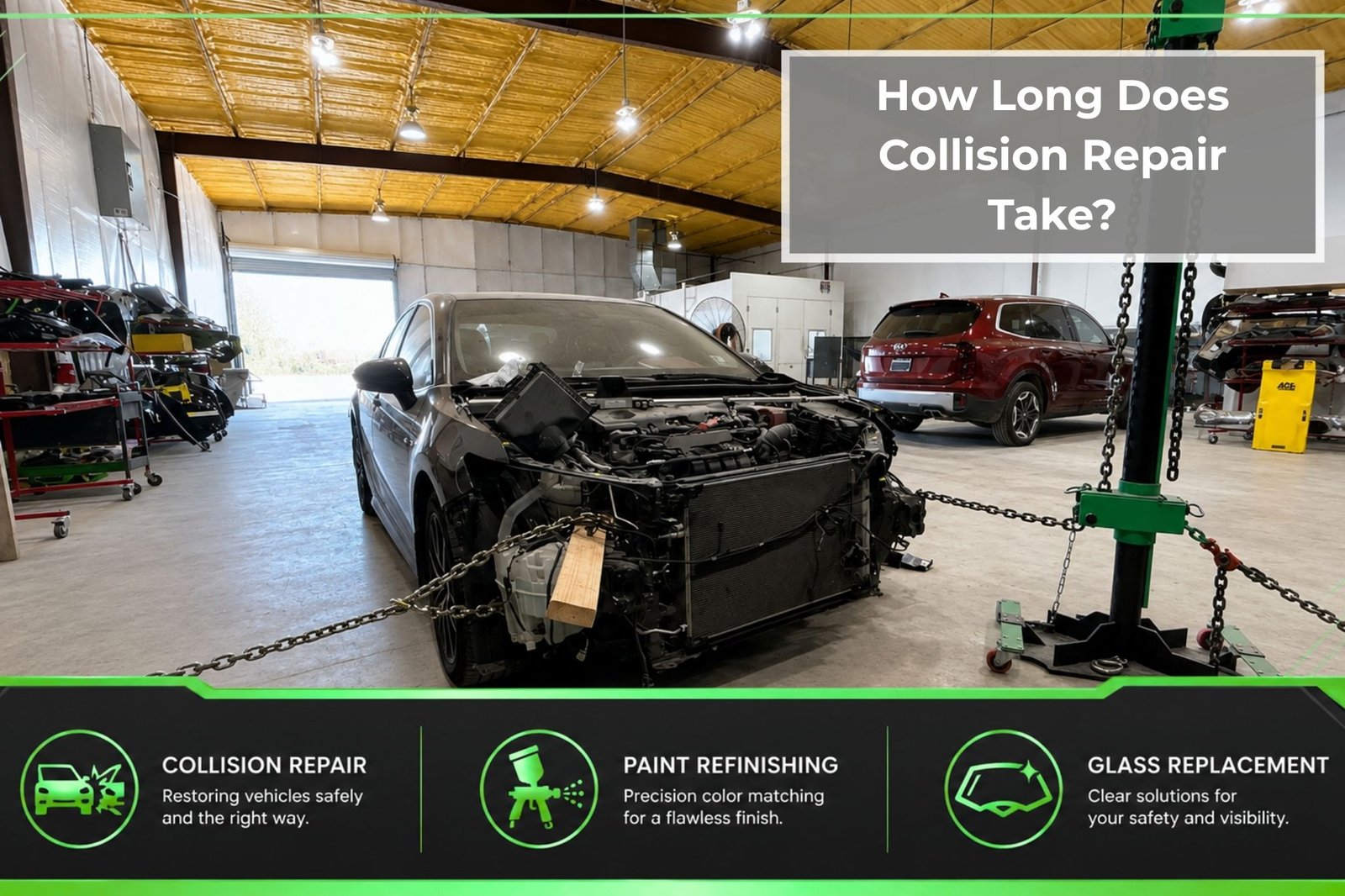
Visible damage does not always show the complete repair scope. Removing a bumper cover, trim, sheet metal, or nearby components can expose damage that was not visible during the initial inspection. I-CAR notes that partial teardown may be necessary during damage analysis and that supplements created after work begins can affect timing when additional parts or authorization are needed.
A supplement is an updated estimate documenting additional repair needs discovered after the original estimate. It should not automatically be interpreted as evidence that the first estimate was incorrect. Collision damage can simply be concealed behind exterior components.
If you have visible collision damage but are unsure what may be happening behind the damaged panels, Lankford Paint & Body can inspect the vehicle, explain the initial repair needs, and provide a written estimate before repairs begin. The current website states that estimates are free.
3. Parts Availability Can Control the Schedule
Parts are a major variable in auto body repair time. Availability can differ by vehicle make, model, year, repair location, and the component required. Part decisions can also depend on the complete repair plan, manufacturer procedures, insurer involvement, customer authorization, and availability.
A parts delay in collision repair can hold up body work, reassembly, or final testing. This is one reason a car repair estimate timeline may change even though the visible damage has not. Lankford specifically lists parts availability as one of the factors affecting the expected completion timeline.
4. Body and Structural Work Depends on the Actual Damage
Not every accident involves structural damage. Some repairs involve cosmetic or bolt-on components, while others may require structural measurement, frame-related repair, or sectioning. The proper repair depends on the specific vehicle, damage location, construction materials, and applicable manufacturer procedures.
Lankford lists structural, frame, and sectioning work among its collision-repair capabilities, but those procedures are used when the actual damage requires them rather than being assumed for every collision.
5. Refinishing Has Its Own Timing Requirements
Automotive refinishing involves more than applying color. Preparation, paint matching, basecoat and clearcoat application, blending when necessary, and the required drying or curing stages all affect workflow. 3M’s collision repair refinishing guidance emphasizes the preparation and finishing stages, while I-CAR’s refinishing guidance notes that paint manufacturers specify product-specific drying and baking requirements in their technical data.
Lankford’s current service information states that its refinishing process uses factory paint-code information and blending into adjacent panels where needed. That means the paint portion of a repair may involve more than the visibly damaged panel.
6. Reassembly, Alignment, Calibration, and Final Checks
Once body and paint work are complete, removed components must be reinstalled and the repaired areas checked. I-CAR’s collision-repair process includes reassembly and pre-delivery quality control as distinct stages before the vehicle is returned to the customer.
Some modern vehicles may also require scanning, aiming, or calibration after particular repairs. The I-CAR OEM Calibration Requirements Search shows that these requirements vary by make, model, year, system, and repair procedure. They should therefore be verified against current OEM information rather than assumed for every vehicle.
Lankford does not state that calibration is performed in-house. Its website does state that outside services it coordinates, including alignment, are arranged and managed as part of the repair process.
Why Similar-Looking Accidents Can Have Different Timelines
Consider a hypothetical example. Two Prairieville drivers are rear-ended, and both vehicles appear to have bumper damage.
On the first vehicle, disassembly might confirm that the damage is limited to exterior components. On the second, removing those components might reveal additional damage, a part that must be ordered, a closure-alignment issue, or another component requiring inspection. The second repair might also require a supplement and further insurer review.
From the parking lot, the vehicles can look similar. Once the complete repair plans are established, their collision repair timelines can be very different. That is why photographs and an exterior inspection may help begin an estimate but cannot always establish the final repair scope.
What Can Change the Collision Repair Timeline?
Common variables include:
- Hidden damage discovered during disassembly
- Parts availability or backorders
- Insurer or adjuster response to supplemental damage
- Additional structural or body work
- Paint preparation, blending, drying, or curing requirements
- Vehicle-specific alignment, calibration, or specialty work
- Additional findings during final quality checks
These factors explain why how long is a car in the body shop is usually better answered after the repair plan becomes more complete, rather than from the exterior appearance alone.
If an insurance company has recommended a particular repair facility and you are still deciding where to take the vehicle, Lankford’s guide to choosing your own body shop in Louisiana explains how shop selection, written estimates, parts, and supplements fit into the process.
Questions to Ask About Your Repair Schedule
Instead of focusing only on a projected delivery date, ask what milestone your vehicle has reached:
- Has disassembly been completed?
- Have the required parts been identified and ordered?
- Have the parts arrived and been verified?
- Was additional damage discovered?
- Is a supplement waiting for review?
- Is body work, refinishing, reassembly, alignment, or specialty work next?
- What could reasonably change the current estimate?
- How will I be notified if the schedule changes?
Those questions make it easier to distinguish active repair work from waiting time and understand what is currently controlling the auto body repair time.
How Long Does Collision Repair Take at Lankford Paint & Body?
When customers ask how long does collision repair take, Lankford’s current website says the answer depends on damage and parts availability. The shop provides a realistic timeline when the estimate is written and calls the customer if something changes. It also states that it manages estimates, supplements, adjuster communication, and rental setup during insurance-related collision repairs.
That approach matters because an initial completion estimate can change as the repair plan becomes more complete. Hidden damage, parts availability, insurer review, refinishing requirements, or vehicle-specific procedures can all affect what happens next.
Get a Clear Collision Repair Timeline Before Work Begins
If your vehicle has collision damage in Prairieville or the surrounding Ascension Parish area, start with a proper inspection and written estimate. Lankford Paint & Body currently offers free estimates, and its website states that no appointment is required for an estimate during normal business hours. You can also submit your vehicle and damage information through the free estimate and contact page.
Lankford Paint & Body
38173 Post Office Rd
Prairieville, LA 70769
Call (225) 241-8904 to discuss the collision damage or request a free estimate.
FAQs
How long does collision repair take after an accident?
There is no universal repair time. Damage severity, hidden damage, parts availability, insurer review, refinishing, reassembly, and required specialty procedures can all affect the schedule. Lankford provides a timeline based on the actual repair and updates customers when circumstances change.
Can hidden damage increase collision repair time?
Yes. Removing damaged exterior components can reveal additional repair needs that were not visible during the initial estimate. Additional parts or a supplemental estimate may then be required.
What is a collision repair supplement?
A supplement documents additional repair needs discovered after the initial estimate, often after disassembly provides a clearer view of the damage. It may require additional parts and insurer review when insurance is involved.
How long is a car in the body shop after insurance approval?
Insurance approval is only one part of the schedule. Parts, disassembly findings, body and structural work, refinishing, reassembly, alignment or calibration requirements, and final quality checks may still affect the completion date.