The Storm Passed. Now You Are Finding Dents Everywhere.
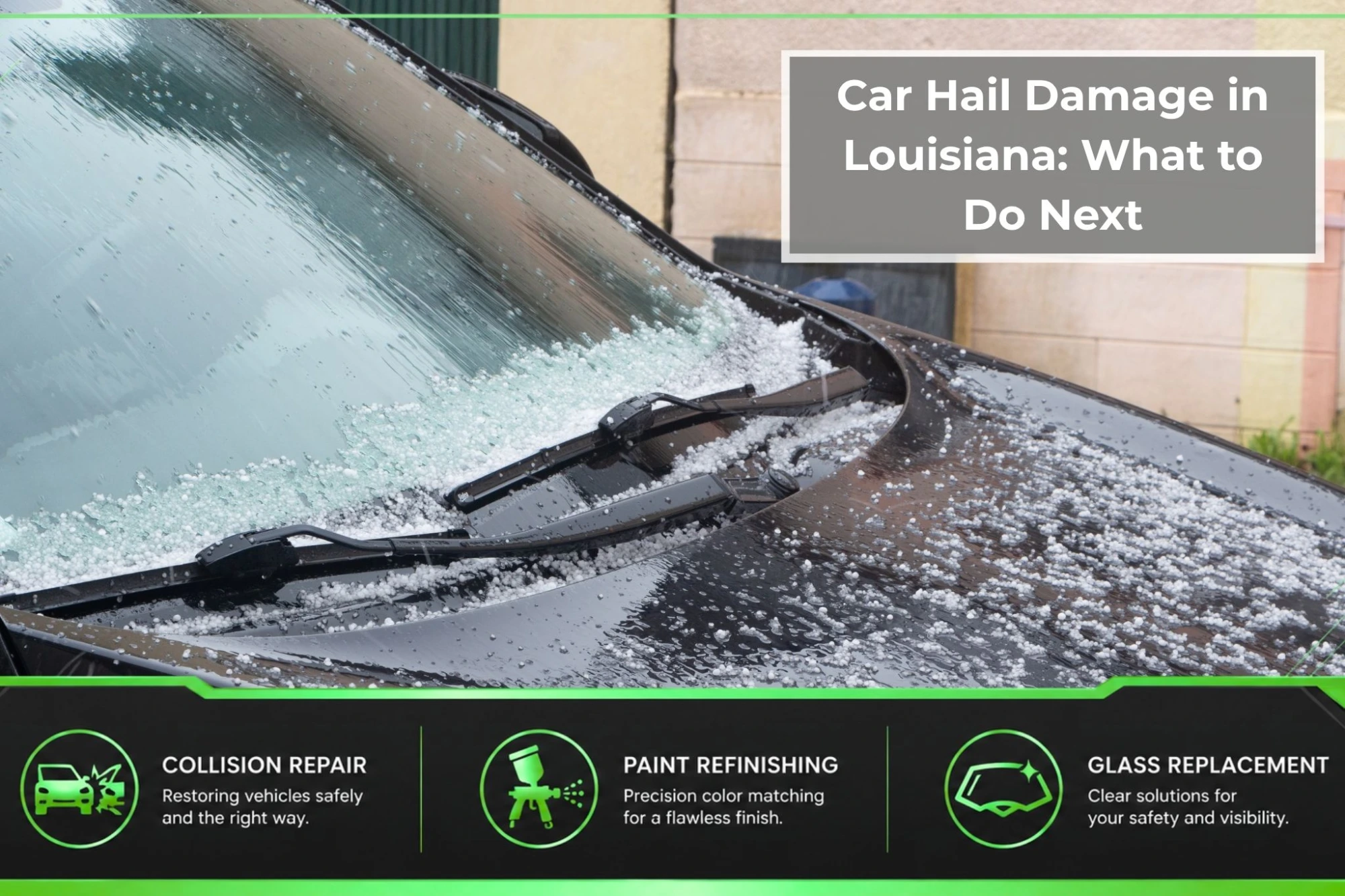
You walk outside after a Louisiana storm and notice one dent on the hood. Then another catches the light. A closer look reveals marks across the roof, trunk, or doors, and possibly damaged glass. Car hail damage in Louisiana can be easy to underestimate because dozens of shallow dents may not be obvious until the vehicle is viewed from different angles under suitable lighting.
The best first move is not to decide immediately whether every dent needs paintless repair, conventional body work, or an insurance claim. Document what you can see, check the vehicle for damage that could affect safe operation, review your policy, and have the full vehicle inspected. Lankford Paint & Body provides dent, hail, storm, paint, glass, and related body repair from its Prairieville shop, including paintless dent repair where the panel allows.
Step 1: Check for More Than Just Dents
Hail often draws attention to the hood and roof first, but those may not be the only affected areas.
After conditions are safe, walk around the entire vehicle and look at:
- Hood, roof, trunk lid, and quarter panels
- Doors and fenders
- Windshield, back glass, and door glass
- Paint around deeper impacts
- Trim and exterior components
- Areas where a dent sits near a panel edge or body line
Use natural daylight when possible and view the panels from several angles. Directional lighting can reveal shallow dents that are difficult to see straight on. I-CAR training on hail-damage analysis notes that lighting is an important part of evaluating dents for paintless dent repair. Review I-CAR’s hail-damage training material.
If glass is shattered, visibility is obstructed, a body component is loose, or the vehicle otherwise does not appear safe to operate, do not assume it is roadworthy based only on the hail dents. Have it professionally assessed.
Step 2: Photograph the Vehicle Before Repair
Before repair work begins, create a basic record of the damage.
Take:
- Wide photographs of each affected side
- Closer photos of obvious dents
- Photos of cracked or broken glass
- Images of damaged paint or trim
- A few photos showing the vehicle as a whole
Do not worry if every shallow dent is difficult to capture on a phone. Photographs are useful documentation, but a detailed in-person inspection can reveal damage that photographs miss.
The Louisiana Department of Insurance recommends photographing storm damage before cleanup or repairs when filing an insurance claim. Its recent severe-weather guidance also advises policyholders to contact their insurer and have policy information available when making a claim. See Louisiana Department of Insurance storm guidance.
Step 3: Review Your Auto Insurance Policy
A common question after a storm is whether insurance covers hail damage repair in Louisiana.
Louisiana only requires liability insurance. Coverage for damage to your own vehicle generally requires additional coverage. The Louisiana Department of Insurance explains that comprehensive coverage addresses many non-collision losses, and its consumer guidance specifically identifies hail damage as a type of loss associated with comprehensive coverage.
You can review the Louisiana Department of Insurance auto insurance resources for general information.
If you are considering a hail damage insurance claim in Louisiana, check:
- Whether comprehensive coverage is listed on the vehicle
- Your comprehensive deductible
- Any claim instructions in the policy
- Whether the insurer wants photographs or an inspection
- How the insurer wants the initial estimate handled
Coverage ultimately depends on your individual policy, deductible, and claim circumstances. A body shop cannot guarantee that an insurer will pay a particular repair.
Step 4: Have Every Affected Panel Properly Assessed
Hail damage is unusual because one storm can produce many small impacts across several panels.
An estimate should therefore look beyond the most noticeable dent. A technician may need to evaluate dent depth, paint condition, panel location, accessibility, body lines, previous repairs, and whether the metal has been stretched.
This distinction is important because car hail dent repair is not one single procedure.
Some panels may qualify for paintless dent repair. Others may need conventional body work and refinishing. Glass or trim damage may require separate repair operations.
If you want a detailed explanation of those repair choices, Lankford’s guide to paintless dent repair vs. traditional dent repair explains how paint condition, dent depth, location, access, and panel construction affect the decision.
If your vehicle was caught in a hailstorm, Lankford Paint & Body can inspect the affected panels and explain which areas may qualify for paintless repair and which may require conventional body and paint work. Review the shop’s dent and storm damage services before deciding on a repair method based only on photographs.
When Is PDR for Hail Damage Appropriate?
PDR for hail damage can be an effective option when the individual dent and panel are suitable for the technique.
In general, favorable conditions may include:
- The exterior paint remains intact
- The metal has not been excessively stretched
- The dent can be accessed appropriately
- The damage is located where controlled metal reshaping is possible
- Vehicle-specific repair information does not prohibit the procedure
But PDR is not automatically appropriate for every hail dent.
I-CAR’s hail-damage guidance notes that damage near panel edges, cracked finishes, access restrictions, and other conditions can make PDR impractical or require refinishing. It also explains that a vehicle can require a combination of PDR and conventional repair across different areas. Read I-CAR’s analysis of hail and PDR repairability.
That is why a roof covered with shallow dents may receive a different repair recommendation from a hood with deeper dents and chipped paint.
When Conventional Body Repair May Be Needed
A hail impact can do more than gently move sheet metal.
Traditional body repair and refinishing may be more appropriate when there is:
- Cracked or chipped paint
- A deeper or sharper dent
- Stretched metal
- Difficult panel access
- Damage at an edge or complex body line
- Previous body work that changes the repair decision
- Damage that cannot be corrected appropriately with PDR
Where paint has been damaged, reshaping the metal alone does not restore the finish.
Lankford Paint & Body’s paint refinishing services include individual panel refinishing, factory paint-code matching, and blending where needed. For more detail on why refinishing involves more than simply looking up a paint code, see the guide to automotive paint color matching.
Do Not Overlook Broken or Damaged Glass
Large hail can also damage automotive glass.
Lankford’s current service information lists windshield, back-glass, and door-glass replacement, including storm and debris damage.
A small body dent and a damaged windshield should not be treated as the same repair problem. If glass is cracked, shattered, loose, or interfering with visibility, have it evaluated rather than assuming the vehicle is safe to continue driving.
A Prairieville Hail-Damage Scenario
Consider a Prairieville driver whose vehicle sits outside during a strong hailstorm.
The next morning, the hood has numerous shallow dents with apparently intact paint. The roof also has several dents, but one is deeper near a body line. A closer inspection finds a chip in the paint on another panel and damage to the windshield.
The repair plan may not be identical for every area.
The shallow hood dents might be candidates for PDR after the panel is inspected. The deeper roof dent may require a different repair method depending on its condition and accessibility. The chipped area may need conventional body work and refinishing, while the damaged glass requires separate evaluation.
If the owner has comprehensive coverage and chooses to make a claim, the insurer then reviews the loss subject to the policy and deductible.
This is whystorm damage auto body repair should begin with a full assessment rather than assuming every visible mark needs the same procedure.
A Simple Louisiana Post-Hail Checklist
For car hail damage in Louisiana, a practical sequence is:
- Wait until conditions are safe.
- Check the vehicle for broken glass, loose components, and other obvious damage.
- Photograph the vehicle before repair.
- Look over every exterior panel, not only the hood.
- Review your comprehensive coverage and deductible.
- Contact your insurer if you decide to make a claim.
- Have the vehicle inspected under suitable lighting.
- Ask which dents qualify for PDR and which require conventional repair.
- Ask whether damaged paint or glass changes the repair plan.
- Get a written estimate before authorizing the work.
The goal is not to choose PDR or traditional repair before inspection. It is to determine what each damaged area actually requires.
Get Your Hail Damage Properly Evaluated
After a Louisiana hailstorm, the dents you notice first may not represent the complete repair. Car hail damage in Louisiana can involve multiple panels, different dent depths, damaged paint, broken glass, and more than one repair method.
Lankford Paint & Body provides hail and storm dent repair, paintless dent repair where appropriate, conventional body repair, paint refinishing, and automotive glass replacement for Prairieville and surrounding communities. The current website lists free estimates and states that customers can bring a vehicle by during business hours without an appointment.
Lankford Paint & Body
38173 Post Office Rd
Prairieville, LA 70769
Call (225) 241-8904 to discuss your hail damage or arrange a free estimate. You can also submit vehicle information, a description of the damage, and optional photos through the free estimate form.
FAQs
Does comprehensive insurance cover hail damage in Louisiana?
Hail damage is generally associated with comprehensive auto coverage rather than Louisiana’s required liability coverage. Whether a specific loss is covered depends on the policy, deductible, and claim circumstances. The Louisiana Department of Insurance recommends reviewing your coverage and contacting your insurer with policy-specific questions.
Can all hail dents be repaired with PDR?
No. PDR for hail damage depends on factors such as paint condition, dent depth, location, access, metal condition, previous repairs, and vehicle-specific requirements. Some vehicles may need a combination of paintless and conventional repair.
Should I photograph hail damage before taking my car to a body shop?
Yes, especially if you may make an insurance claim. Photograph the vehicle and obvious damage before repair. A professional inspection is still important because shallow dents can be difficult to document accurately with ordinary phone photos.
Can Lankford Paint & Body repair hail damage and broken glass?
The current Lankford services page lists hail and storm dent repair, paintless repair where appropriate, conventional body and paint work, and windshield, back-glass, and door-glass replacement.