Your Vehicle Goes Into the Shop. What Actually Happens Next?
Dropping off a damaged vehicle is easy to see. What happens after it disappears through the shop doors is the part most customers never get to watch.
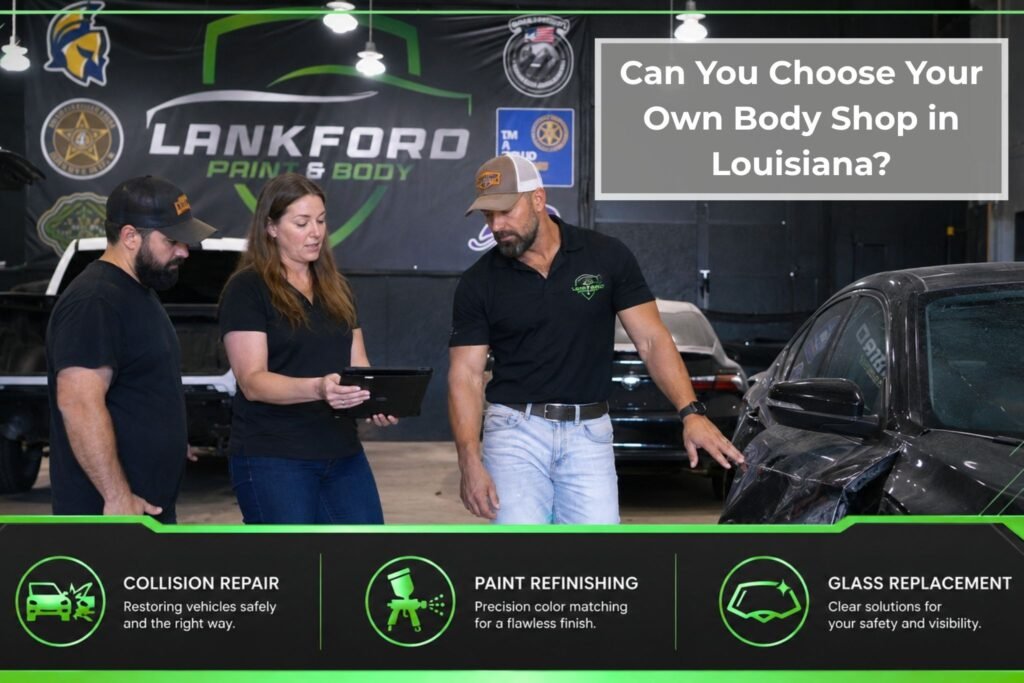
The video accompanying this article gives a real look inside that environment. It moves from customer-facing communication to Lankford Paint & Body’s Prairieville facility, hands-on refinishing work, and the office side of the operation. Those different scenes matter because the collision repair process is not one technician performing one repair. It is a sequence of inspection, planning, communication, body work, paint work, parts coordination, documentation, and final review.
Lankford Paint & Body is currently an owner-operated Prairieville collision and paint shop serving customers across Ascension Parish and the Baton Rouge area. Its live website lists collision repair, paint refinishing, dent work, frame and structural repair, glass replacement, RV/camper repair, and commercial/fleet body work.
Here is what customers should understand about what happens behind the scenes.
1. The Collision Repair Process Starts With Communication
Before tools come out, the shop needs to understand what happened.
That usually starts with information such as:
- Vehicle year, make, and model
- VIN
- Location and type of visible damage
- How the accident happened
- Insurance information when applicable
- Photos that may help document the initial condition
- Any changes in steering, doors, glass, lights, or other affected areas
The goal is not to diagnose the entire repair from a conversation or photograph. Photos can help establish visible damage, but some collision damage may remain concealed behind bumpers, trim, panels, or other components.
Lankford’s current free estimate process allows customers to provide vehicle information, a VIN, a description of what happened, and optional damage photos. The site currently lists estimates as free and says no appointment is required during normal business hours.
2. A Written Estimate Is a Starting Point, Not Guesswork
Once the vehicle is inspected, the shop can begin documenting what the repair appears to require.
The Louisiana Department of Insurance recommends asking for a written repair estimate that identifies the work, parts, and labor involved. Its consumer guide also advises drivers to understand how the shop will handle situations where the repair cost changes from the original estimate. See the Louisiana Department of Insurance guide to auto insurance after an accident.
That is important because the initial estimate reflects what can reasonably be identified at that point.
Once damaged components are removed, the repair team may discover additional damage that changes:
- Parts requirements
- Labor operations
- Structural repair needs
- Paint and refinishing work
- Glass work
- Vehicle-specific procedures
- Insurance documentation
If additional damage is identified, Lankford’s guide to the collision repair supplement process explains why an updated estimate may be needed.
3. Repair Planning Happens Before Good Body Work
One of the most important parts of a professional auto body repair process happens before the visible repair begins.
Repair planning means understanding not just which component looks damaged, but what the manufacturer requires for that particular vehicle and repair area.
I-CAR’s repair-planning guidance explains that technicians may need to research body repair manuals, construction materials, welding requirements, corrosion protection, diagnostic procedures, calibrations, and other vehicle-specific information when developing a complete repair plan.
That is why two vehicles with similar-looking damage may not require identical repairs.
Vehicle make, model, year, material, equipment, and damage location can all affect the appropriate procedure.
The goal should be to understand the repair before performing it, rather than assuming the same technique applies to every vehicle.
4. The Facility and Equipment Matter Too
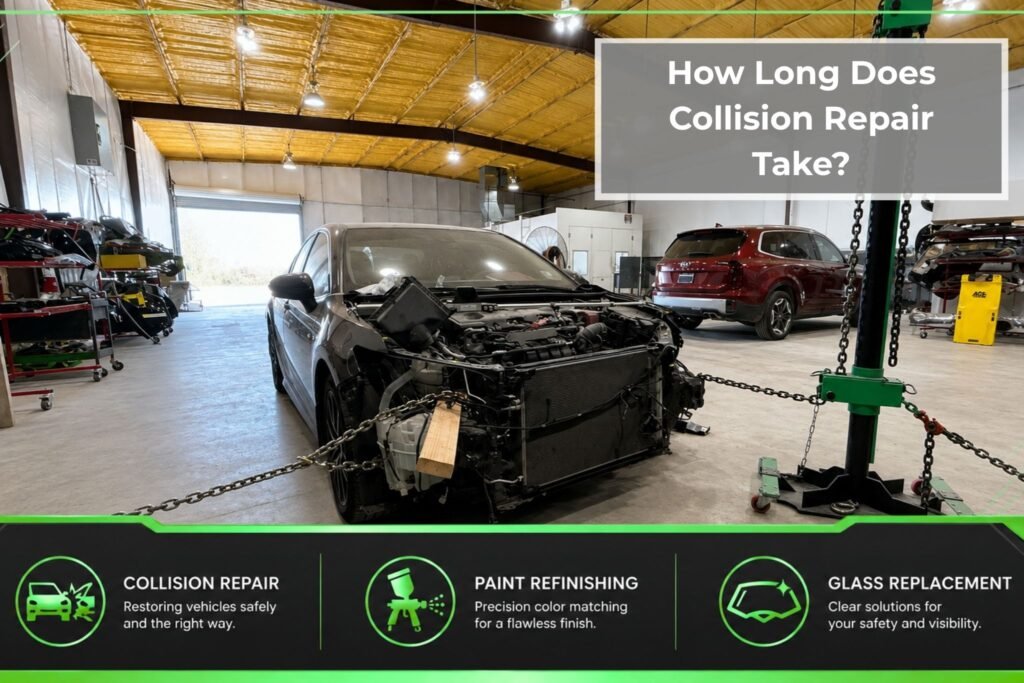
The aerial portions of the video help show something customers do not always think about when selecting a repair facility: the physical shop itself.
Collision work requires appropriate space and equipment for the types of vehicles and repairs being accepted.
I-CAR published an updated Automotive Collision Repair Facility and Equipment Best Practice in July 2026. It establishes a baseline for facility, equipment, and operational considerations while emphasizing that manufacturer-specific repair procedures still take precedence.
That does not mean a customer needs to understand every piece of equipment in the building.
Instead, ask practical questions:
- Does the shop routinely handle this type of repair?
- Can it accommodate the vehicle?
- How does the shop research vehicle-specific procedures?
- Which work is completed there?
- How are outside specialty services handled when required?
- Who is responsible for keeping the customer updated?
Lankford’s current service list provides a useful overview of the repairs the Prairieville facility presently accepts.
5. Body Repair Comes Before Making the Paint Look Right
Collision repair should not begin with making the damaged area shiny again.
The underlying body repair needs to be established first.
Depending on the actual accident, that could involve anything from relatively localized panel damage to structural work. Not every collision involves frame damage, and the words “frame damage” should not be applied automatically to every dent or bent panel.
When structural damage is suspected, the repair decision should be based on the actual vehicle and appropriate procedures.
For customers wondering whether their collision may involve more than cosmetic damage, Lankford’s article on signs of possible frame or structural damage explains warning signs such as changed panel gaps, closure problems, steering changes, or unusual vehicle tracking.
If a vehicle has significant damage, wheel or tire contact, broken glass affecting visibility, loose body components, fluid leakage, deployed airbags, or steering changes, have it professionally evaluated rather than assuming it is safe to continue driving.
6. Refinishing Is Its Own Skilled Part of the Repair
One of the clearest hands-on scenes in the video shows refinishing work taking place inside the shop.
Paint is not simply the final decorative step.
Before automotive paint can be applied, the repaired surface needs proper preparation. The refinisher then has to work with the vehicle’s existing finish, factory color information, possible color variants, metallic or pearl characteristics, and the relationship between the repaired panel and surrounding panels.
Lankford’s current website states that its paint refinishing services include full repaints, panel work, factory paint-code matching, and blending into adjacent panels where needed.
For a closer explanation, the existing guide to automotive paint color matching covers why a factory paint code is an important starting point but not the entire matching process.
If your vehicle has collision damage and you are unsure whether the repair involves body work, refinishing, structural work, or more than one area, Lankford Paint & Body can inspect the actual vehicle and explain the proposed repair before work begins.
7. The Office Side of Collision Repair Matters
The office scene in the video represents another part of the process that customers may rarely see.
A modern collision repair can involve communication among:
- The vehicle owner
- Repair technicians
- Estimators
- Parts suppliers
- Insurance adjusters
- Rental providers
- Towing providers
- Outside specialists when a particular procedure requires them
That administrative work can affect how smoothly the repair moves forward.
For an insurance repair, the shop may need to document additional damage, submit supplemental information, answer adjuster questions, confirm parts, obtain authorization, and keep the customer updated.
Lankford’s website currently states that the shop helps customers with the claim process and handles estimates, supplements, and adjuster communication after the customer files the claim.
That communication does not replace the customer’s insurer or provide legal advice. It helps connect the repair documentation with the claim process.
8. Parts and Additional Damage Can Change the Schedule
Customers understandably want to know when their vehicle will be finished.
But a responsible collision repair process does not start by promising the same completion time for every car.
Timing can depend on:
- Amount and location of damage
- Hidden damage discovered later
- Parts availability
- Insurance review
- Structural work
- Refinishing
- Glass replacement
- Vehicle-specific repair procedures
- Additional specialty work when required
That is why Lankford’s separate guide to how long collision repair takes treats the timeline as a series of repair stages rather than a guaranteed number of days.
A useful question for customers is not only, “When will it be done?”
Also ask, “What stage is the vehicle in now, and what is controlling the schedule?”
9. Quality Control Happens Before the Keys Come Back
The final step should not simply be deciding that the paint is dry.
The repaired areas need to be reviewed before delivery.
I-CAR’s collision repair training identifies pre-delivery quality control as a distinct stage of the repair process, including checks of panel fit, finish, closures, and the completed repair area. I-CAR’s collision repair process overview discusses this final inspection before customer delivery.
The specific checks vary according to the vehicle and work performed, but the principle is straightforward: the completed repair should be inspected before the customer receives the vehicle.
What the Video Shows About a Real Body Shop
The video does not focus on one dramatic before-and-after repair.
Instead, it shows the pieces that make the operation work:
People communicating.
A physical repair facility.
Hands-on refinishing work.
Office coordination.
A local shop behind the finished vehicle.
That makes it useful for explaining something customers rarely see.
A repair is not just the final painted panel.
It is the work, research, documentation, coordination, and communication required to move from accident damage to a completed repair.
That is the part of the collision repair process worth understanding before choosing a shop.
Start With a Clear Repair Plan in Prairieville
If your vehicle has been damaged, start by finding out what it actually needs rather than choosing a repair based only on appearance or the first number on an estimate.
Lankford Paint & Body is an owner-operated collision and paint shop serving Prairieville, Ascension Parish, and surrounding Baton Rouge-area communities. Current services include collision repair, paint refinishing, dent work, structural repair, glass replacement, RV/camper work, and commercial/fleet body repair.
Lankford Paint & Body
38173 Post Office Rd
Prairieville, LA 70769
Call (225) 241-8904 to discuss the damage or arrange a free estimate, or submit your vehicle information and optional damage photos through the free estimate form.
FAQs
What happens first when I bring my vehicle to a body shop?
The process generally begins with inspecting and documenting the visible damage, gathering vehicle information, and preparing an initial repair estimate. Additional damage can sometimes become apparent later during disassembly.
Can a body shop tell everything that is damaged from photos?
Not always. Photos are useful for documenting visible damage and beginning an estimate, but they may not show damage behind bumpers, panels, trim, or other components.
Why can a collision repair estimate change?
An estimate can change when hidden damage is discovered, parts requirements become clearer, vehicle-specific procedures are researched, or additional labor and repair operations are identified.
How long does the collision repair process take?
There is no universal timeline. Damage severity, parts availability, additional damage, insurer review, refinishing, and vehicle-specific procedures can all affect the schedule. Lankford provides a separate guide explaining the factors that influence collision repair time