The Broken Glass May Be the Most Obvious Damage, Not the Only Damage
The shattered side window is easy to see. What the collision did to the surrounding door may be less obvious.
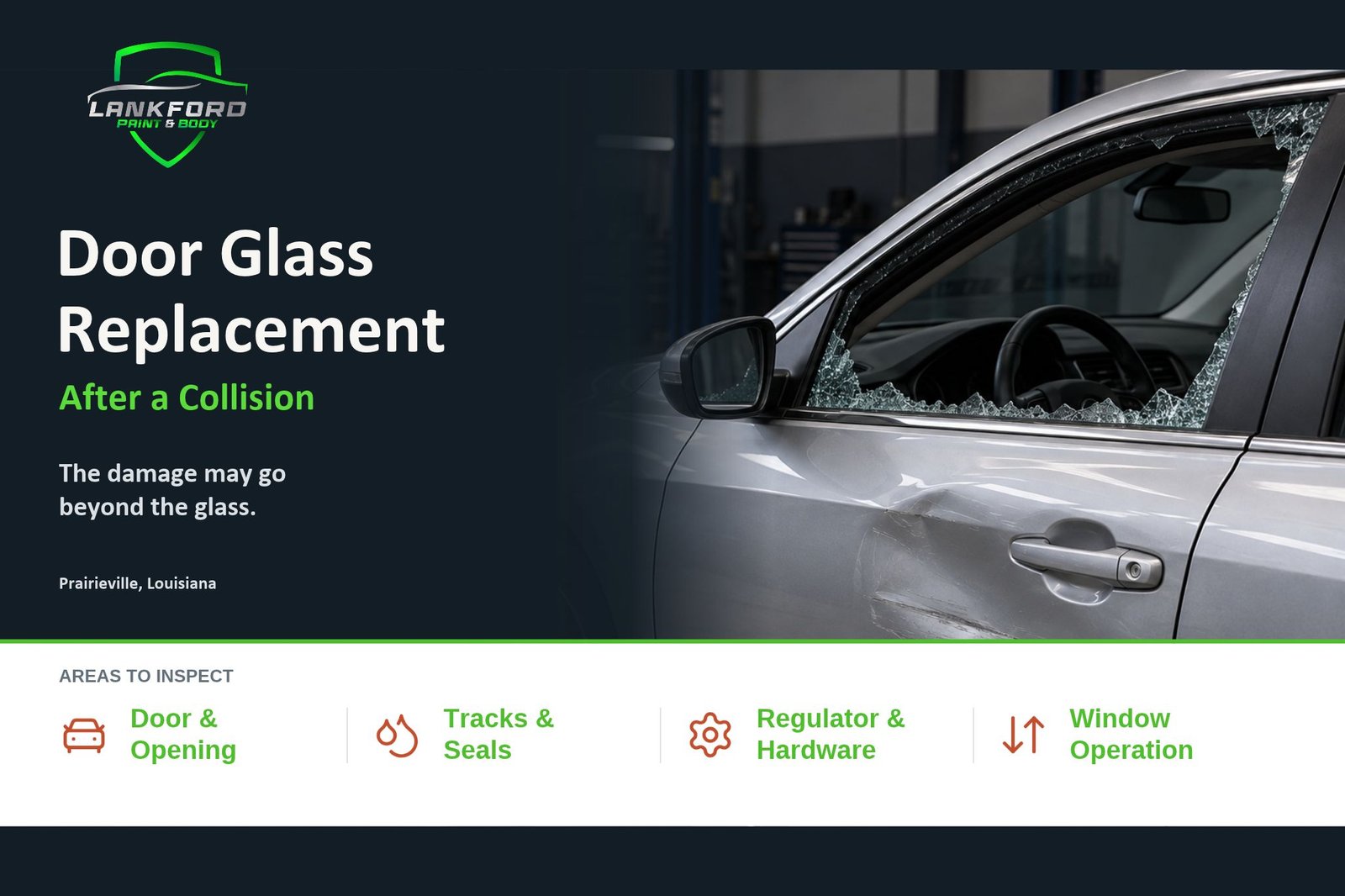
After an impact, door glass replacement after collision damage should not automatically be treated as a simple glass-only repair. The window opening, door shell, tracks, weather sealing, regulator, mounting hardware, trim, and surrounding body damage may also need inspection before installing the new glass.
For drivers around Prairieville and Ascension Parish, Lankford Paint & Body handles collision repair and in-house glass replacement, including door glass. The important question is not only, “What glass fits?” It is also, “Did the collision change anything the new glass depends on to fit, move, seal, or operate correctly?”
What Should You Check After a Broken Car Window Accident?
If a side impact, flying debris, or collision breaks the window, an inspection may need to look beyond the shattered glass itself.
Areas that may matter include:
- The window opening
- Door shell and outer panel
- Glass run channels
- Weatherstripping and seals
- Interior and exterior trim
- Window regulator
- Mounting points and hardware
- Window motor and switches where applicable
- Door alignment
- Nearby collision damage
A broken car window after an accident does not automatically mean all of these components are damaged. It means the repair should confirm their condition instead of assuming the glass is the only part affected.
For additional information about how collision-related glass should be evaluated as part of the surrounding repair, see Lankford’s guide to windshield replacement after a collision.
Why the Door Shell and Window Opening Matter
Door glass depends on the opening around it being in the correct condition.
If the impact pushed, twisted, creased, or distorted the door, installing new glass without first addressing the body damage may not solve the entire problem.
The technician may need to evaluate whether:
- The opening has changed shape
- The glass can travel normally through the door
- The weather seals still contact the glass correctly
- Trim fits as intended
- The door closes and latches normally
- Damage extends into nearby panels or attachment areas
This does not mean every broken side window indicates structural damage. A collision can break glass without significantly changing the door shell, while another impact can affect both.
That distinction is why photos alone may not determine the complete repair.
Run Channels and Weather Sealing Affect More Than Appearance
The door glass normally travels through guides and run channels that help control its movement.
If those channels are bent, displaced, torn, or damaged during the collision, replacing only the glass may leave additional issues to correct.
Weather sealing also matters. Damaged seals can affect how the window sits in the opening and how the door protects the interior from rain, wind, and outside debris.
A proper side window glass replacement should therefore account for the condition of the parts that guide and seal the glass, not just the replacement pane itself.
Vehicle designs vary, so there is no single inspection or installation procedure that applies to every make and model. Shops should refer to current vehicle-specific repair information through resources such as I-CAR Repairability Technical Support and current OEM procedures.
The Window Regulator May Need Inspection
The regulator is the mechanism inside the door that raises and lowers the window.
Depending on the vehicle, it may use cables, tracks, guides, clips, brackets, or other components to support and move the glass.
A collision that breaks the window can also affect those parts, particularly when the impact occurs directly in the door.
Possible concerns include:
- Bent or displaced tracks
- Broken retainers
- Damaged mounting points
- Regulator movement that is no longer smooth
- Damage to the motor or related electrical components
- Glass fragments inside the door
I-CAR’s power window motor technical information also illustrates why modern power window systems can vary between vehicles.
The repair should be based on the actual system installed in the vehicle rather than a universal glass-replacement procedure.
Have the Entire Door Evaluated Before Replacing the Glass
If your door glass broke during a collision, Lankford Paint & Body can inspect the glass damage together with the door and surrounding body area.
Bring the vehicle, photos from the accident, and any insurance estimate you already have. That gives the shop more information to determine whether the repair is limited to the glass or whether other door components should be included in the estimate.
Some Vehicles May Require Window Initialization
Modern power windows can include features such as one-touch operation, automatic closing, pinch protection, or stored glass positions.
On some vehicles, removing the door glass, disconnecting electrical components, servicing the regulator, or interrupting power can require an initialization or relearn procedure afterward.
That does not mean every vehicle requires the same reset.
The requirement can depend on:
- Year
- Make
- Model
- Window system
- Components removed or replaced
- Manufacturer service procedures
Manufacturers publish vehicle-specific repair information, and resources such as OEM1Stop can help direct repair professionals toward current OEM procedures.
The correct approach is to check the information for the specific vehicle rather than assume every car window replacement after accident damage requires the same electronic procedure.
Broken Glass Also Creates Immediate Safety and Security Concerns
Shattered door glass can leave sharp fragments in the seat, carpet, door cavity, weather seals, and surrounding trim.
Avoid reaching into the door or handling exposed shards unnecessarily.
Professional evaluation becomes especially important when:
- Loose glass interferes with visibility
- The door no longer closes or latches normally
- Exterior or interior trim is loose
- Significant body deformation is present
- The damaged opening cannot be secured from weather or unauthorized access
- Other collision damage makes the vehicle difficult to control
Do not assume a vehicle is safe for normal driving simply because the damage appears limited to the window.
If visibility, door security, vehicle control, or another safety-related condition is affected, have the vehicle professionally evaluated before continuing normal use. General vehicle-safety resources are also available through NHTSA.
Why Photos May Not Show the Complete Collision Door Glass Damage
Photos are useful for showing that the glass broke and documenting visible exterior damage.
They may not clearly show:
- Bent internal window guides
- Damaged regulator hardware
- Glass inside the door
- Distorted mounting points
- Seal damage
- Subtle door-shell distortion
- Problems with window movement
- Damage hidden behind interior trim
That is why collision door glass damage may require an in-person inspection before the final repair scope is clear.
This is similar to the broader collision estimating process. Lankford’s guide to how long a collision repair estimate takes explains why an initial inspection documents what can reasonably be confirmed at that stage while additional damage can sometimes become apparent later.
A Prairieville Collision Example
Consider a Prairieville driver whose vehicle is struck in the driver’s door at relatively low speed.
The window shatters, the exterior door skin dents, and the glass falls into the door cavity.
At first, it might seem like the repair only needs new glass and bodywork for the visible dent.
During inspection, however, the shop would also need to determine whether the glass channel, regulator, seals, mounting areas, and door opening were affected.
If those components remain in proper condition, the repair could be different from a collision in which the window mechanism or door opening was distorted.
The example does not assume hidden damage exists. It shows why door glass replacement after collision damage should be evaluated as part of the complete door repair.
What to Bring for a Door Glass and Collision Estimate
Before requesting an estimate, gather:
- Vehicle year, make, and model
- VIN
- Photos taken after the collision
- Insurance estimate if one has already been written
- Claim number if applicable
- A description of how the impact occurred
- Notes about whether the window operated after the collision
- Information about problems closing or latching the door
Lankford’s estimate and contact form also allows customers to provide vehicle details, VIN, a damage description, and optional photos.
Get the Glass and Door Damage Evaluated Together
If your side window shattered during an accident, start with an inspection of the entire affected door rather than assuming the repair ends with the new piece of glass.
Lankford Paint & Body provides collision repair and glass replacement in Prairieville, including door glass replacement performed as part of collision repair. Current shop information lists free estimates with no appointment required during regular business hours.
Lankford Paint & Body
38173 Post Office Rd
Prairieville, LA 70769
Call (225) 241-8904 or submit the vehicle and damage information through the estimate form. Bring any accident photos and insurance documentation you already have so the glass, door, window system, and surrounding collision damage can be evaluated together.
FAQs
Does broken door glass after a collision always mean the door is damaged?
No. The glass can break without major damage to the door shell. However, the window opening, regulator, guides, seals, trim, and surrounding collision damage should be checked before assuming the repair is limited to glass replacement.
Can the window regulator be damaged in the same accident?
Yes, depending on where and how the impact occurred. The regulator, guides, retainers, mounting points, or other components inside the door may need inspection if the glass broke during a collision.
Does a replacement side window always need initialization?
No. Some vehicles may require an initialization or relearn procedure after certain window-system repairs, while others may not. The correct procedure should be verified using current information for the specific year, make, and model.
Can photos determine everything needed for door glass replacement?
Photos can document visible damage, but they may not reveal the condition of internal channels, regulator components, mounting hardware, seals, or the door opening. An in-person inspection may be needed before the complete repair plan is known.