That Damaged Side-by-Side Panel May Have More Than One Repair Option
A scraped or cracked exterior panel on a side-by-side does not automatically mean the machine needs a completely new body. It also does not mean every damaged panel can simply be sanded and painted.
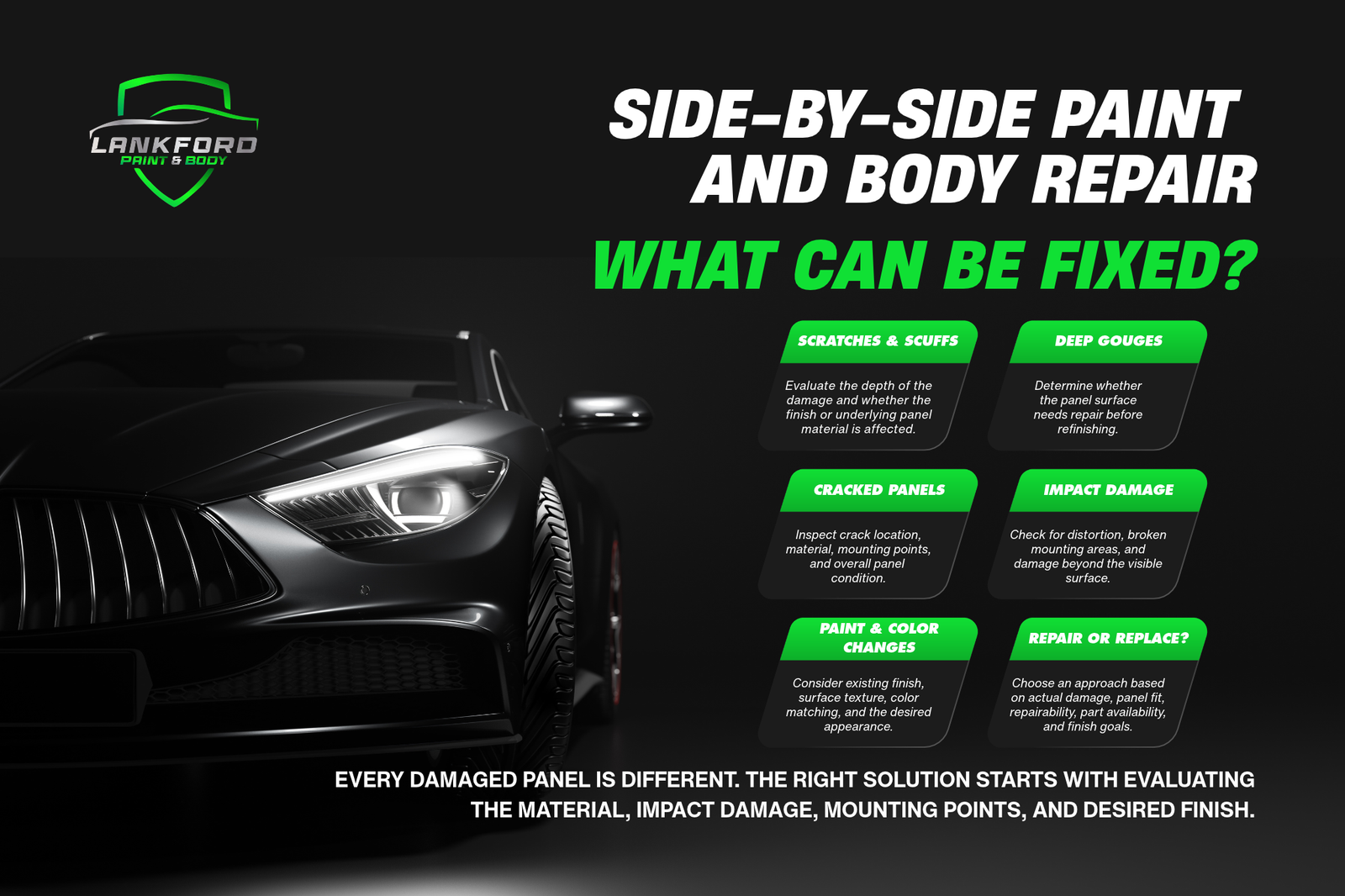
The right side-by-side body repair depends on the actual panel material, how the impact affected it, whether mounting areas are damaged, the condition of the existing finish, previous repairs, and the appearance the owner wants when the work is complete.
For owners around Prairieville and Ascension Parish, Lankford Paint & Body currently handles powersports and side-by-side paint and body work, including panel and body damage and full color changes. The goal is to evaluate the actual machine before deciding whether a panel should be repaired, refinished, replaced, or incorporated into a larger cosmetic change.
What Side-by-Side Body Damage Can Be Evaluated for Repair?
Side-by-side exterior damage can take several forms.
A body and refinishing shop may evaluate:
-
Scratches and scuffs
-
Gouged exterior surfaces
-
Cracked or damaged panels
-
Collision or impact damage
-
Damaged mounting areas
-
Paint damage
-
Previous body repairs
-
Multiple damaged exterior panels
-
Complete color-change requests
That does not mean every example is repairable.
The first step is determining what the damaged component is made from and how it is attached to the machine.
Some side-by-sides use removable polymer or plastic exterior panels. Other components, panels, and accessories can use different materials and mounting methods. Even within one manufacturer’s lineup, construction can vary by model and model year.
Polaris, for example, publishes model-specific RZR owner resources and manuals and maintains a separate catalog of RZR body panels. That is a useful reminder that panel identification and fitment should be based on the exact machine, not a generic assumption about all UTVs.
Panel Material Can Change the Repair Decision
Material is one of the most important factors in UTV body panel repair.
A light scratch on one type of plastic may call for a completely different process than a torn mounting tab, deep gouge, cracked panel, or damaged component made from another material.
Repairability can depend on:
-
Plastic or composite type
-
Thickness
-
Flexibility
-
Crack location
-
Heat sensitivity
-
Surface texture
-
Mounting points
-
Previous repair material
-
Whether the surface will be painted afterward
Professional collision-repair suppliers such as 3M publish separate procedures for plastic and flexible component repairs because material type and the specific damage matter. Their plastic repair guidance also emphasizes evaluating the individual application and relevant part or manufacturer information rather than assuming one procedure fits every plastic component.
For side-by-side work, that same principle matters. Identify the panel before choosing a repair approach.
When Replacement May Make More Sense Than Panel Repair
Repair isn’t automatically the best choice just because the damaged part still exists.
Replacement may be worth considering when the panel has:
-
Extensive cracking
-
Missing material
-
Severely damaged mounting areas
-
Multiple previous repairs
-
Distortion that prevents proper fit
-
Damage in an area where an appropriate repair cannot be supported
-
A replacement panel that better meets the owner’s finish goals
Part availability can also influence the decision.
A replacement body panel may be available directly for a particular machine, while another model, trim, or older side-by-side may have fewer practical options.
That is another reason to have the exact year, manufacturer, model, and VIN or machine identification available when asking for an estimate.
Scratches and Impact Damage Are Not Always Just Paint Problems
A scratch may look like a refinishing problem until the panel is inspected more closely.
The impact may have:
-
Removed only the upper finish
-
Cut into the underlying surface
-
Gouged the panel material
-
Distorted the panel
-
Broken a mounting point
-
Affected an adjacent component
If the panel itself is damaged, paint cannot correct the shape or structural condition underneath it.
This is similar to automotive body repair, where surface appearance and underlying panel condition are evaluated separately.
If you want a deeper explanation of how refinishing decisions change when damage extends below the surface, Lankford’s paint color matching guide explains why the existing finish and repair area should be evaluated before the final paint plan is chosen.
What Affects a Side-by-Side Paint Job?
A side-by-side paint job can mean very different things depending on the owner’s goal.
One person may want a repaired panel matched back into the existing appearance. Another may want several damaged panels refinished together. A third may want a complete UTV color change.
Those are different projects.
The refinishing plan may consider:
-
Current panel condition
-
Existing color
-
Surface texture
-
Previous paint
-
Repair materials underneath
-
Number of panels being refinished
-
Desired finish
-
Color complexity
-
Whether neighboring panels need to visually coordinate
-
Whether the owner wants restoration or customization
Color matching is also more involved than simply choosing a color from a code. I-CAR’s color matching guidance explains that existing finish condition, weathering, previous repairs, application variables, and color characteristics can affect refinishing decisions.
That is why a shop should see the machine before promising an exact match or final appearance.
Have the Damage Evaluated Before Ordering Panels or Choosing Paint
If your side-by-side has impact damage, deep scratches, cracked panels, or several exterior areas that need attention, Lankford Paint & Body can evaluate the body and finish before you commit to a repair or replacement approach.
Bring the machine information, photos, and any replacement-panel information you have. If your goal is a color change rather than restoring the original appearance, explain that at the beginning so the estimate reflects the project you actually want.
A Side-by-Side Repair Example
Consider a side-by-side that brushes against a tree during off-road use.
The visible damage includes a long scrape on one side panel, a deeper gouge near the rear edge, and a cracked mounting area.
At first glance, the owner may think the entire job is simply UTV paint repair.
During inspection, however, each part of the damage may need a different decision.
The light scrape may primarily involve the finish. The deeper gouge may require panel repair before refinishing. The cracked mounting area may affect whether the panel can still be repaired appropriately or whether replacement should be considered.
If the owner was already considering changing the machine’s color, that goal could also change the overall paint plan.
This example does not mean every cracked panel needs replacement or every scratched panel should be painted. It shows why the complete panel and the owner’s desired result should be considered together.
What Photos Cannot Confirm About Side-by-Side Collision Damage?
Photos are useful when starting an estimate.
They can show:
-
General damage location
-
Scratches
-
Cracks
-
Missing pieces
-
Existing color
-
Number of affected panels
But photographs may not clearly show:
-
Exact panel material
-
Damage behind the panel
-
Broken mounting tabs
-
Distortion
-
Previous repairs
-
Surface contamination
-
How securely the panel still fits
-
The condition of adjacent mounting points
That is why side-by-side collision repair should not be diagnosed entirely from a few close-up photographs.
The machine may need inspection before the full repair scope is clear.
Keep Mechanical and Body Repairs Separate
Don’t confuse side-by-side body and paint work with general powersports mechanical repair.
This article is specifically about exterior:
-
Panels
-
Body damage
-
Scratches
-
Paint
-
Refinishing
-
Cosmetic collision damage
-
Color changes
It does not assume Lankford performs engine, drivetrain, suspension, roll-cage, electrical, or general powersports mechanical repair.
If an impact may have affected one of those systems, the appropriate mechanical or manufacturer-specific evaluation should be addressed separately.
What to Bring for a Side-by-Side Body Repair Estimate
Before requesting an estimate, gather:
-
Manufacturer
-
Model
-
Model year
-
VIN or identification information
-
Photos of the complete machine
-
Close photos of damaged panels
-
Description of how the damage happened
-
Information about previous body or paint work
-
Your desired final appearance
-
Replacement-panel information, if you already found a part
Lankford’s contact and estimate form allows customers to provide vehicle information, describe the damage, and upload photos.
If you are deciding between localized refinishing and a larger cosmetic project, Lankford’s guide to full repaint vs panel refinishing also explains why the condition of the existing finish and the owner’s goal should guide the scope of paint work.
Find Out What Your Side-by-Side Actually Needs
If your side-by-side has damaged panels, scratches, impact damage, or a finish you want changed completely, start with an evaluation of the machine rather than assuming every panel needs replacement or every scratch only needs paint.
Lankford Paint & Body currently offers side-by-side and powersports paint and body work from its Prairieville shop, including panel and body damage and full color changes. Current shop information also lists free estimates.
Lankford Paint & Body
38173 Post Office Rd
Prairieville, LA 70769
Call (225) 241-8904 or use the free estimate form to provide the side-by-side information, photos, damage description, and the finish you want. The next step is determining what the actual panels and damage support before deciding on repair, replacement, refinishing, or a complete color change.
FAQs
Can a cracked side-by-side body panel be repaired?
Possibly. Repairability depends on the panel material, crack location, extent of damage, mounting areas, previous repairs, and manufacturer or part information. Some damaged panels may be better candidates for replacement.
Can Lankford Paint & Body change the color of a side-by-side?
Lankford’s current service information includes full color changes for side-by-sides. The exact refinishing scope should be based on the machine, panel condition, existing finish, and desired result.
Can scratches on a UTV be painted?
Some scratches may be candidates for refinishing, while deeper gouges or panel damage may require body repair first. The affected surface should be evaluated before deciding that paint alone is sufficient.
Do photos provide enough information for a final side-by-side repair estimate?
Photos can help document visible damage, but they may not reveal the exact panel material, mounting damage, distortion, previous repairs, or conditions behind the exterior panels. An in-person inspection may be needed before the complete repair plan is known.