One Damaged Panel Does Not Automatically Mean Repainting the Whole Car
If only one door or fender is damaged, repainting the entire vehicle may be unnecessary. But if the finish is failing across the hood, roof, trunk, and sides, repeatedly refinishing one panel at a time may not solve the bigger problem.
That is the real decision behind full repaint vs panel repair. The right choice depends on where the damage is, what condition the existing finish is in, whether body repair is needed underneath, how the color behaves, whether the vehicle has previous paint work, and what you actually want to accomplish.
For Prairieville-area owners, Lankford Paint & Body currently provides both full repaints and individual panel refinishing, along with collision and body repair when damaged metal or panels need attention before painting begins.
The goal should not be to choose the biggest paint job. It should be to choose the amount of repair and refinishing the actual vehicle needs.
What Is Panel Refinishing?
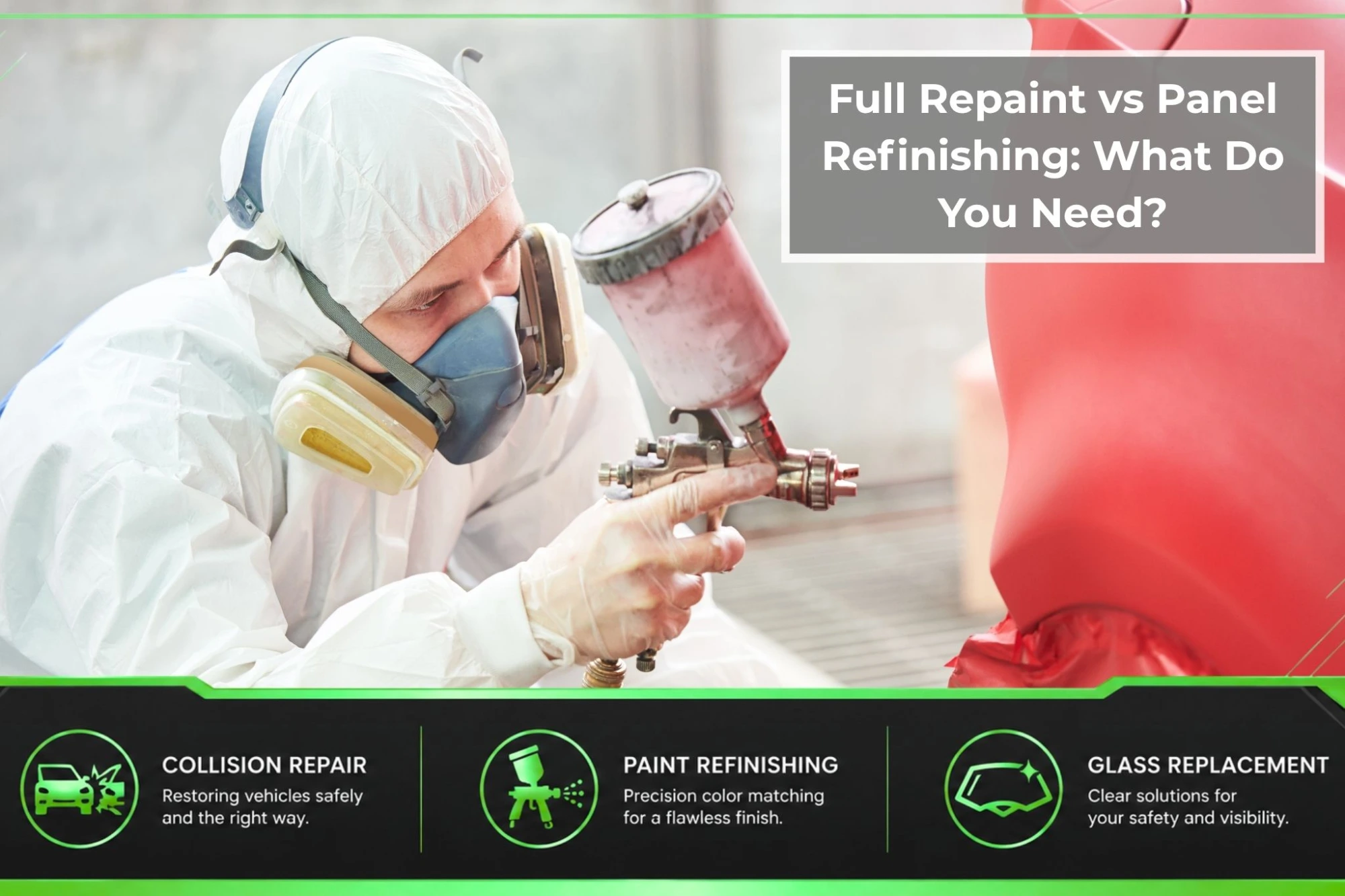
Panel refinishing focuses on one damaged panel or a limited group of panels rather than repainting the complete exterior.
Examples might include:
-
A scratched or collision-damaged door
-
A repaired fender
-
A damaged bumper cover
-
A hood with localized paint damage
-
Several panels affected by one side impact
-
A replacement panel that needs to match the existing vehicle
A single panel repaint does not necessarily mean paint stops abruptly at the edge of that panel. Depending on the color, repair location, and existing finish, the refinisher may need to blend color into an adjacent panel to create an appropriate transition.
I-CAR explains that blending extends basecoat into an area next to the repair so the transition between the refinished area and existing color is less noticeable. It also emphasizes that blending does not replace the need to establish a suitable color first. Review I-CAR’s color matching and blending guidance
For localized collision or body damage, refinishing only the panels involved can often be the more logical repair scope.
When Does a Full Vehicle Repaint Make More Sense?
A full vehicle repaint is a much larger project because the refinishing scope extends across most or all exterior painted surfaces.
It may be worth discussing when:
-
The finish is deteriorating across many panels
-
Clear coat failure is widespread rather than isolated
-
Several previous paint repairs have left inconsistent finishes
-
The customer wants a complete color change
-
Numerous panels already require refinishing for unrelated reasons
-
The vehicle is undergoing a more extensive restoration or appearance project
That does not mean every older or faded vehicle automatically needs a full repaint.
If most of the finish remains serviceable and the problem is concentrated in one area, a smaller repair may still be appropriate. When comparing a full car repaint vs partial repaint, the vehicle’s actual condition matters more than a blanket rule.
Lankford’s current paint refinishing services include both full repaints and panel work, allowing the repair recommendation to be based on the condition and objective rather than treating every paint concern the same way.
Paint Cannot Fix Body Damage Underneath It
Before deciding how much of the vehicle to paint, first determine what is happening below the finish.
A dent, crease, collision-damaged panel, corrosion concern, or previous body repair may require correction before refinishing begins.
Professional refinishing depends heavily on preparation. PPG’s refinishing procedures identify cleaning, body repair, sanding, primer, sealer, color, blending, and clear coat as separate stages of the process. 3M likewise treats panel repair and paint preparation as important operations before the finished coating is applied. PPG automotive refinishing procedures 3M panel repair and paint preparation guidance
This is why choosing between full repaint vs panel repair should begin with the substrate and body condition, not just the color you see from several feet away.
If you are unsure whether your vehicle needs one panel refinished, several panels blended, or a complete repaint, Lankford Paint & Body can inspect the current finish and underlying damage before recommending the scope of work.
Why Factory Paint Codes Are Only the Starting Point
Customers sometimes assume that panel refinishing is difficult because new paint cannot match an older vehicle.
Professional color matching is more nuanced than that.
The factory paint code gives the refinisher an important starting point, but the vehicle in front of the technician may also have:
-
Factory production variations
-
Years of environmental exposure
-
Previous refinishing
-
Different gloss or surface condition
-
Metallic or pearl effects
-
Adjacent panels that have aged differently
PPG’s color-identification process calls for checking the OEM code, reviewing available variants, comparing color near the repair area, and using a spray-out when further verification is needed. See PPG’s color formula identification process
For a deeper explanation, Lankford’s guide to how body shops match automotive paint explains why color variants, lighting, blending, previous repairs, and the existing finish all matter.
Metallic and Pearl Finishes Can Affect the Repair Area
Metallic, pearl, and other effect colors can make the refinishing decision more involved.
The appearance of these finishes may change with:
-
Viewing angle
-
Lighting
-
Application technique
-
Metallic or mica orientation
-
Color variant
-
Number of coating stages
PPG’s blending procedures specifically account for the space needed to transition certain translucent and special-effect colors into surrounding areas. Review PPG’s basecoat blending guidance
That does not mean a metallic or pearl vehicle automatically needs a full repaint.
It means the refinisher needs enough repair and blend area to produce an appropriate transition based on that particular color and vehicle.
Previous Repairs Can Change the Decision
A vehicle with previous body or paint work may require closer evaluation before another refinishing project begins.
For example, one panel may still have factory paint while the neighboring panel was refinished several years earlier. Another vehicle may have several previously repaired panels with different surface conditions.
That can affect the decision in two ways.
First, the technician must determine what finish is currently on the vehicle rather than assuming every panel is still factory-original.
Second, the customer should decide whether the objective is simply to repair new localized damage or to correct broader appearance inconsistencies across the vehicle.
A new collision does not automatically justify repainting unrelated panels, but existing finish condition can influence how a repair is planned.
Full Repaint vs Panel Repair: Consider the Labor Scope Too
The difference between a single panel repaint and a complete refinishing project is not simply the amount of paint used.
A larger repaint can require significantly more:
-
Cleaning and preparation
-
Sanding and surface correction
-
Masking
-
Trim or component removal
-
Panel access
-
Primer or sealer work
-
Basecoat and clear coat application
-
Reassembly
-
Finishing and inspection
The exact scope depends on the vehicle and the desired result.
That is why it is misleading to give one universal price for a full repaint or claim that a partial repair is always inexpensive. Preparation requirements, body condition, vehicle size, paint system, finish complexity, and how much disassembly is required all influence the estimate.
A Prairieville Example
Consider two vehicles in Prairieville.
The first has collision damage to one front door. The rest of the vehicle’s finish is in good condition.
After the body repair is completed, the refinisher evaluates the factory color information and existing finish. The repair plan may call for refinishing the door and blending where appropriate. Repainting the entire vehicle would add a great deal of work without addressing an additional repair need.
The second vehicle has peeling clear coat across the roof, hood, trunk, and several side panels, plus previous paint repairs that no longer look consistent.
In that situation, refinishing one damaged panel may fix that panel while leaving the broader finish problem unchanged. A more extensive repaint may be worth discussing if the owner’s objective is to correct the overall exterior.
Neither vehicle proves that one option is universally better.
The correct full repaint vs panel repair decision comes from the condition of the vehicle and the customer’s goal.
Questions to Ask Before Choosing a Paint Repair
Before authorizing refinishing work, ask:
-
Which panels actually need body repair?
-
Which panels need refinishing?
-
Is the paint problem localized or widespread?
-
Does the vehicle have evidence of previous refinishing?
-
Will neighboring panels need to be blended?
-
Is the finish metallic, pearl, or multi-stage?
-
How will the existing color be evaluated?
-
What preparation is needed before paint begins?
-
Does any trim or hardware need to be removed?
-
Am I correcting collision damage, widespread finish deterioration, or changing the vehicle’s color?
-
What work is included in the written estimate?
These questions help turn a vague request for “a paint job” into a repair plan based on the actual condition of the vehicle.
If the paint work is part of collision damage, Lankford’s guide to how long collision repair takes also explains how body work, refinishing, disassembly, parts, and final checks fit into the broader repair timeline.
Choose the Paint Work Your Vehicle Actually Needs
A full repaint is not automatically better than panel refinishing, and a smaller repair is not automatically the right choice simply because fewer panels are involved.
The appropriate scope depends on the damage, condition of the existing finish, previous repairs, paint characteristics, preparation required, and what you want the finished vehicle to accomplish.
Lankford Paint & Body provides full repaints, individual panel refinishing, color matching, blending, collision repair, and related body work in Prairieville. Current website information also lists free estimates with no appointment required during normal business hours.
Lankford Paint & Body
38173 Post Office Rd
Prairieville, LA 70769
Call (225) 241-8904 to discuss paint or panel damage and request a free estimate, or send your vehicle information and optional damage photos through the free estimate form.
FAQs
Does one damaged panel mean the whole car needs to be repainted?
Usually, no automatic rule requires a complete repaint because one panel is damaged. The shop should evaluate the damaged panel, surrounding finish, color, repair area, and whether blending into adjacent panels is appropriate.
When does a full vehicle repaint make sense?
A full repaint may be worth considering when finish deterioration affects much of the vehicle, multiple previous paint repairs have created widespread inconsistencies, a complete color change is desired, or a larger restoration project justifies refinishing most exterior surfaces.
Can a body shop repaint only one panel and still match the vehicle?
Often, a panel can be refinished as part of a localized repair, but matching depends on the factory color information, existing finish, available color variants, previous repairs, and paint characteristics. Blending adjacent panels may be appropriate in some repairs.
Is a full repaint always better than panel refinishing?
No. The better choice depends on the condition of the vehicle and the customer’s objective. Repainting an entire vehicle to correct one localized repair can create unnecessary work, while repeatedly refinishing individual panels may not make sense when finish failure is widespread.