One Damaged Work Vehicle Can Disrupt an Entire Week
One damaged van can turn tomorrow’s route schedule into today’s operations problem. A collision not only removes a vehicle from service. It can force a business to reshuffle crews, move equipment, delay appointments, or decide which remaining vehicles need to cover the most important work.
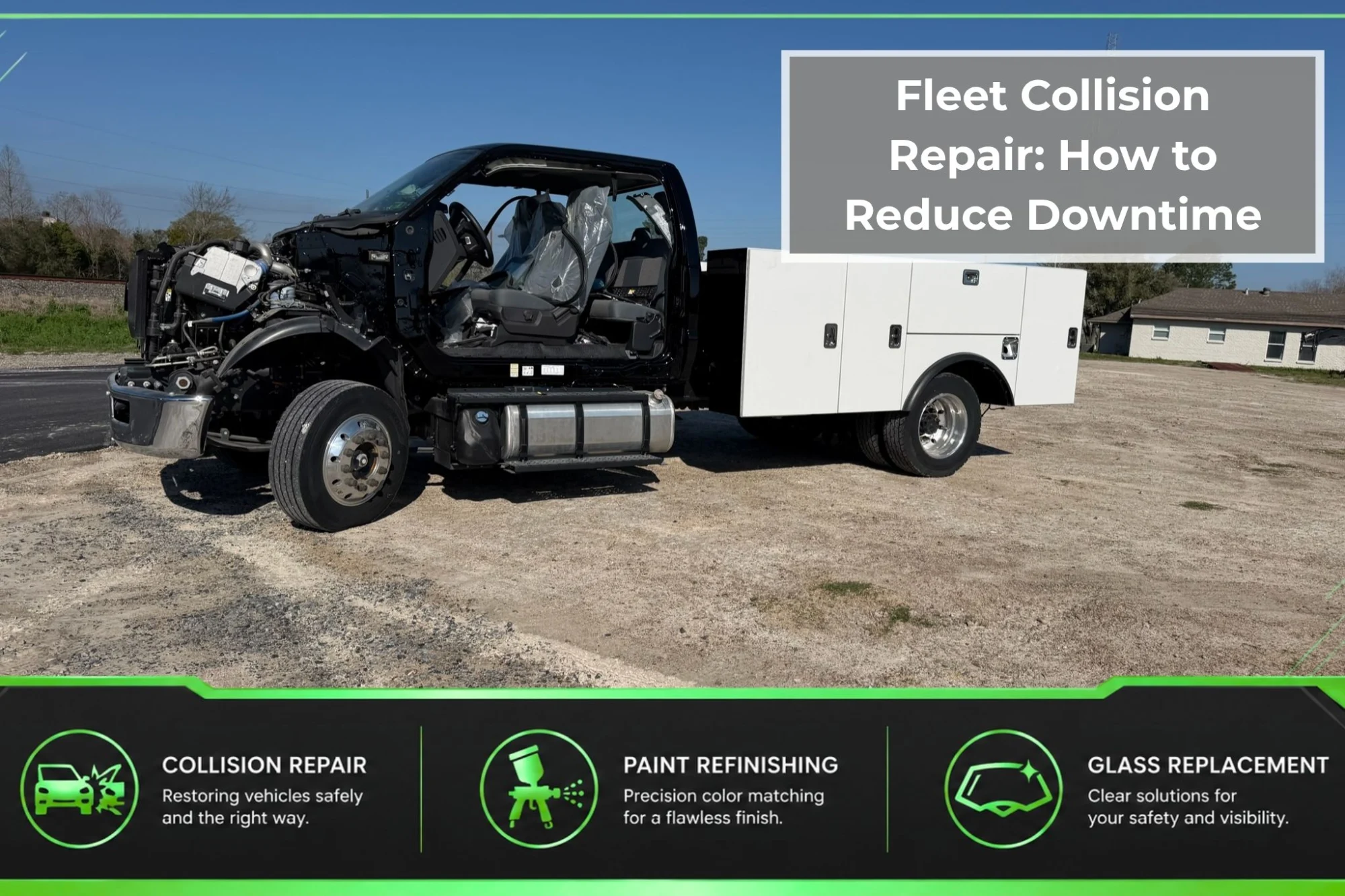
Effective fleet collision repair is therefore about more than getting body damage fixed quickly. It is about understanding the damage early, setting priorities, identifying parts and approvals that could affect the schedule, and keeping the fleet manager informed. Lankford Paint & Body in Prairieville currently accepts work trucks, vans, pickups, and commercial fleet vehicles and states that fleet repairs can be scheduled around the customer’s working week.
There is no responsible way to promise the same turnaround for every damaged fleet vehicle. A better goal is to make downtime more predictable and easier to plan around.
1. Triage the Damage Before You Triage the Schedule
The first decision should not be, “Which vehicle can we get repaired fastest?”
It should be, “What does each vehicle need before we decide when it can return to work?”
Fleet managers can separate damage into broad planning categories:
- Cosmetic damage that does not appear to affect normal operation
- Damage requiring prompt professional assessment
- Vehicles that should not be driven until evaluated
- Damage that may require insurance involvement
- Repairs that can potentially be scheduled around lower-demand periods
Do not determine roadworthiness from appearance alone. Steering changes, wheel or tire contact, broken glass affecting visibility, damaged lights, loose panels, fluid leaks, or significant deformation warrant professional evaluation.
For commercial motor vehicles subject to Federal Motor Carrier Safety Regulations, the FMCSA inspection, repair, and maintenance guidance states that covered motor carriers must systematically inspect, repair, and maintain vehicles under their control and keep applicable parts and accessories in safe operating condition.
2. Give the Body Shop the Right Information Up Front
A fleet body shop can plan more effectively when it does not have to chase basic information after the vehicle arrives.
For each damaged unit, prepare:
- Fleet or unit number
- Year, make, and model
- VIN
- Driver’s description of what happened
- Photos of visible damage
- Insurance or claim information when applicable
- Known operational deadlines
- Primary fleet contact
- Approval contact if different
- Any known previous repairs in the damaged area
Lankford’s free estimate and contact form currently accepts the vehicle, VIN, description of what happened, and optional damage photos. The shop also lists free estimates with no appointment required during normal business hours.
Standardizing this intake information across the fleet can also make recurring damage easier to document and review later.
3. Build the Repair Plan Before Making Promises to Operations
An estimate based only on exterior damage may not reveal the complete repair.
This matters especially when a fleet manager is trying to promise an internal return-to-service date before the repair facility has established what is actually damaged.
I-CAR explains that collision-repair blueprinting is intended to expose loss-related damage and collect the parts, repair information, OEM procedures, and other details needed for a more complete repair plan. I-CAR’s workflow and blueprinting guidance specifically notes that damage discovery during disassembly can improve repair planning.
For a work truck or van, this could mean a damaged bumper cover is only the visible portion of the repair. Once components are removed, additional mounting, structural, body, or related damage may become apparent.
That does not mean every vehicle needs extensive disassembly. It means the timeline should become more reliable as the repair scope becomes better understood.
Lankford’s guide to how long collision repair takes explains how hidden damage, parts availability, insurance review, body work, refinishing, and specialty procedures can affect the schedule.
4. Identify Parts Requirements as Early as the Repair Allows
Parts availability can turn an otherwise straightforward work truck collision repair into a scheduling problem.
Availability depends on factors such as:
- Vehicle make, model, and year
- What was actually damaged
- Repair versus replacement decisions
- Part configuration
- Manufacturer repair requirements
- Supplier availability
- Insurance review where applicable
Early identification helps the fleet manager understand whether the vehicle is actively moving through repairs or waiting on a component.
It also prevents a common planning mistake: scheduling the rest of the fleet around an expected completion date before critical parts have been identified.
If a work truck or commercial van has collision damage, Lankford Paint & Body can inspect the unit, prepare a written estimate, and discuss the expected repair process before your operation commits to a schedule. Its current commercial and fleet body repair services include work trucks, vans, pickups, and commercial accounts.
5. Prioritize Vehicles by Operational Value, Not Arrival Order
When several fleet vehicles need body work, sending all of them to the shop at once can create a second operational problem.
Instead, identify:
- Which vehicles cannot currently be used
- Which vehicles support the most time-sensitive work
- Which damaged vehicles can remain in service pending professional assessment or scheduled cosmetic work
- Which repairs are waiting on insurance decisions
- Which units have confirmed parts availability
- How many vehicles the business can realistically have unavailable at the same time
For example, a business may choose to repair a revenue-producing service van before addressing cosmetic damage on a backup pickup, provided that the pickup has been appropriately assessed and there is no safety-related reason for immediate repair.
The objective is not to postpone necessary repairs. It is to coordinate commercial fleet body repair around how the business actually uses its vehicles.
6. Create One Point of Contact for Repair Decisions
A damaged fleet vehicle can generate communication between the driver, fleet manager, operations team, insurer, estimator, parts department, and repair facility.
That becomes harder when several people are separately requesting updates or approving work.
Designating one fleet contact helps centralize:
- Repair authorization
- Insurance information
- Schedule questions
- Parts decisions
- Estimate approvals
- Status updates
- Return-to-service planning
Lankford’s current site says the shop handles estimates, supplements, and adjuster communication during insurance-related collision work.
When additional damage changes the repair scope, Lankford’s guide to the collision repair supplement process explains why a revised estimate can be necessary after previously concealed damage becomes visible.
The Louisiana Department of Insurance’s accident guide also recommends obtaining a written estimate detailing work, parts, and labor when handling collision repairs.
7. Understand Why Vehicle-Specific Procedures Affect Timing
Fleet standardization does not mean every collision repair is identical.
Even two similar vans can require different procedures based on model year, configuration, damage location, construction, or equipment.
I-CAR’s repair-planning guidance emphasizes researching manufacturer body-repair manuals, service information, construction materials, corrosion protection, diagnostic requirements, and related procedures when building the repair plan.
That matters when trying to reduce fleet repair downtime because skipping required repair research is not an appropriate shortcut.
Good planning should reduce avoidable waiting. It should not reduce the repair itself.
8. Track Recurring Damage Across the Fleet
Repeated body damage can reveal operational patterns worth reviewing.
For example:
- Multiple rear-bumper impacts
- Repeated sliding-door damage
- Scraped van corners
- Tailgate damage
- Similar dents on vehicles serving the same facility
- Repeated damage during loading or parking
Documenting the vehicle, location of damage, circumstances, repair type, and date can help a fleet manager identify whether the same type of incident is occurring repeatedly.
That record also makes future commercial van body repair easier to organize because the fleet already has a consistent intake process.
This does not mean every cosmetic issue must be repaired immediately. It gives the business better information for deciding which repairs need prompt attention and which can be planned with other scheduled body work.
A Prairieville Fleet Example
Consider a Prairieville service company operating eight vans and three pickups.
One van is involved in a collision and cannot be returned to normal service until the damage is assessed. A second van has older cosmetic side-panel damage, and one pickup has minor body damage that has already been professionally evaluated.
Sending all three vehicles in simultaneously could leave the company short on transportation.
Instead, the fleet manager sends the collision-damaged revenue-producing van first, provides the VIN and claim information before intake, and confirms the repair scope and required parts. The cosmetic van is scheduled for a lower-demand period, followed by the pickup.
If hidden damage is discovered on the first van, the body shop documents the additional work and communicates the revised plan before the fleet manager rearranges the remaining schedule.
That is what effective fleet collision repair planning looks like: not a guaranteed turnaround, but better visibility into what is controlling the downtime.
Build a Repeatable Fleet Repair Process
For businesses that operate multiple vehicles, the best way to reduce fleet repair downtime is to remove avoidable uncertainty from the process.
Use a consistent workflow:
Damage reported → professional assessment → vehicle and VIN documented → repair plan established → parts identified → approvals completed → repair scheduled → status communicated → vehicle returned to service
Accurate repair planning cannot eliminate parts delays, hidden damage, insurer review, or vehicle-specific procedures. It can, however, make those variables easier for operations teams to understand and plan around.
Make Fleet Body Repair Easier to Plan Around
A good fleet collision repair process should give the fleet manager a clearer picture of the damage, repair scope, parts status, approvals, and realistic timeline rather than an unsupported promise about how quickly every vehicle will be finished.
Lankford Paint & Body’s commercial and fleet services include work trucks, vans, pickups, and fleet accounts, with scheduling coordinated around customers’ working weeks. The shop is located in Prairieville and serves surrounding Ascension Parish and Baton Rouge-area communities.
Lankford Paint & Body
38173 Post Office Rd
Prairieville, LA 70769
Call (225) 241-8904 to discuss collision or body-repair needs for your fleet, or submit vehicle information through the free estimate form. Current website information lists estimates as free.
FAQs
How can a business reduce downtime during fleet collision repair?
Start with damage triage, provide complete vehicle and VIN information, identify repair and parts requirements early, establish one approval contact, and schedule units according to operational priority. These steps cannot eliminate every delay, but they make downtime easier to plan around.
Should multiple damaged fleet vehicles go to the body shop at the same time?
Not necessarily. The best schedule depends on damage severity, vehicle availability, parts, business workload, and how many units the operation can have out of service at once. A fleet body shop can help determine which vehicles should be assessed or scheduled first.
Can hidden damage change a fleet vehicle’s repair schedule?
Yes. Damage behind bumpers, exterior panels, or other components may not become apparent until closer inspection or disassembly. Additional findings can affect parts requirements, repair operations, insurance supplements, and the projected schedule.
Does Lankford Paint & Body repair work trucks and commercial vans?
Yes. The current Lankford Paint & Body services page lists work trucks, vans, pickups, fleet vehicles, and commercial accounts under its commercial and fleet services.