When Fiberglass Damage Is More Than a Surface Mark
A crack, scrape, puncture, or damaged corner on an RV can look like a straightforward exterior problem. In many cases, RV fiberglass repair is possible, but the right repair depends on what was damaged beneath the visible surface. The exterior material, laminated wall construction, location of the impact, moisture exposure, previous repairs, and condition of the supporting structure can all change the repair plan.
For RV and camper owners around Prairieville and Ascension Parish, Lankford Paint & Body currently works on motorhomes, travel trailers, campers, and trailer-related body damage. The shop’s service information specifically lists collision and panel repair, large-body paint and decal matching, and space to handle larger vehicles.
What Does “Fiberglass” Mean on an RV?
Not every RV exterior is constructed the same way. Depending on the manufacturer and model, the visible exterior may involve fiberglass, gel coat, fiberglass-reinforced material, or a skin bonded as part of a laminated sidewall system.
That distinction matters because repairing a surface crack is different from repairing damage that reaches the substrate or laminated wall beneath it. Manufacturer information should be considered whenever construction details affect the repair. For example, Winnebago’s manuals and diagrams provide vehicle-specific resources that include parts information, sealant callouts, operator manuals, and paint-code information.
The first question should therefore be less about whether fiberglass can be repaired in general and more about what material and structure were actually damaged on this RV.
What Types of RV Fiberglass Damage May Be Repairable?
Professional camper fiberglass repair may be appropriate for several kinds of exterior damage after the complete area has been evaluated.
Examples can include:
- Surface cracks
- Scrapes and gouges
- Punctures
- Impact damage
- Damaged exterior corners
- Localized panel damage
- Areas requiring refinishing after a body repair
Fiberglass repair materials are designed to restore damaged fiberglass surfaces in appropriate applications. For example, 3M’s fiberglass repair material information describes resin systems used with fiberglass cloth or mat for cracks, breaks, and larger damaged areas. The actual material and process used on an RV should still match the construction of that particular vehicle.
A visible crack alone does not tell the shop whether the repair is strictly cosmetic or whether the surrounding wall needs additional attention.
RV Sidewall Damage Repair Can Involve Hidden Problems
RV sidewall damage repair becomes more complicated when an impact affects more than the outer skin.
A professional inspection may need to determine whether there is:
- Separation between wall layers
- Damage around a corner, molding, window, or opening
- A compromised moisture barrier
- Damage to supporting material underneath the skin
- Previous repair material in the same area
- Water intrusion associated with an opening or damaged seam
- Structural damage extending beyond the visible exterior mark
Forest River’s fiberglass sidewall care guidance notes that major sidewall repairs may be handled by an OEM, RV repair facility, or local body shop and emphasizes maintaining a moisture barrier to protect the composite wall system.
That is especially relevant when an owner is concerned about delamination. If the exterior skin has separated from the material underneath, simply making the outside look smooth does not necessarily address the complete problem.
Why Moisture Intrusion Matters
An opening created by collision damage can matter even when the visible area is fairly small.
RV exterior assemblies contain seams, joints, trim, and openings that need to keep water out. Winnebago’s technical guidance on roof-to-sidewall joint sealing shows how manufacturer procedures focus on adhesion and sealing where fiberglass exterior material meets adjacent components.
If an impact occurs near a corner, roofline, window, compartment opening, or other seam, the shop may need to consider whether the repair must restore both the exterior appearance and the protection that joint provides.
This is one reason RV fiberglass repair should begin with damage assessment instead of a cosmetic assumption.
Professional Body Repair vs. a Temporary Cosmetic Patch
A temporary patch and a professional body repair serve different purposes.
A surface patch may cover an opening or temporarily improve appearance, but it does not show whether damage exists behind the exterior skin. If the substrate, laminated wall, attachment points, or surrounding seals have been affected, those issues should be identified before the final exterior finish is restored.
Professional motorhome body repair addresses the entire repair area, not just the visible crack.
The goal may include restoring the damaged exterior material, correcting the panel contour, addressing surrounding damage, properly preparing the surface, and refinishing the repaired area. The exact process depends on the RV’s construction and the extent of the damage, not a one-size-fits-all fiberglass procedure.
If your RV has collision or panel damage and you are unsure how deep it goes, Lankford Paint & Body can evaluate the exterior and explain the proposed repair before work begins. Its current RV and camper repair services include motorhomes, travel trailers, campers, collision damage, panel work, and large-surface refinishing.
An RV Sidewall Repair
Consider a hypothetical travel trailer whose rear corner contacts a fixed object while being maneuvered.
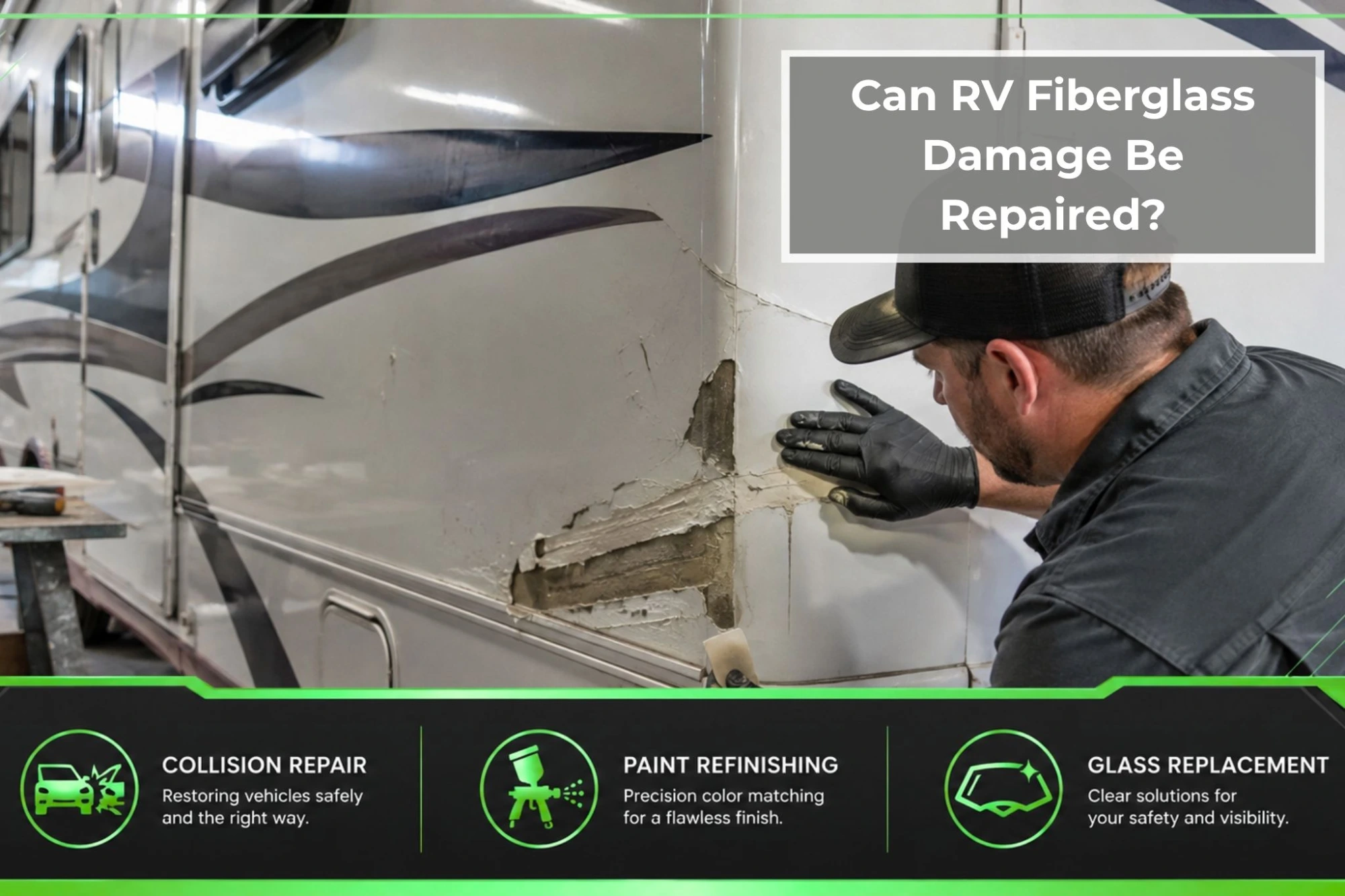
The visible damage includes a cracked exterior surface, a puncture near the corner, and a damaged section of the graphic running across the sidewall.
From photographs, it may appear to be a localized camper fiberglass repair. An in-person assessment, however, could also need to determine whether the corner structure, material beneath the exterior skin, adjoining trim, or moisture barrier was affected.
If the surrounding structure is sound, the repair may focus primarily on the damaged exterior area and refinishing. If hidden damage or separation is present, the repair scope can become more involved.
This is also why photographs can start the estimating conversation but may not establish the final repair plan.
RV Paint and Decal Matching Across Large Surfaces
Finishing an RV repair creates a different visual challenge from refinishing a small passenger-car panel.
Motorhomes and travel trailers can have long uninterrupted sidewalls, multiple colors, stripes, and graphics. A repaired area may need to visually transition into a much larger surface.
Lankford specifically lists RV paint and decal matching among its current RV and camper capabilities.
Age and weather exposure also matter. Forest River’s sidewall guidance notes that gel-coated surfaces can become dull or faded from environmental exposure over time. That means the finish currently on an older RV may not look exactly as it did when new.
For owners who want more detail on why paint codes alone don’t tell the full refinishing story, Lankford’s broader paint and body repair services explain its approach to color matching and refinishing.
What Information Helps With an RV Repair Estimate?
Before contacting a body shop about RV collision repair, gather enough information to help the shop understand what it will be inspecting.
Useful details include:
- Year, make, and model
- RV type, such as motorhome, travel trailer, or camper
- VIN
- Where the damage is located
- What caused the damage
- Wide photos showing the full side or corner
- Close photos of cracks, punctures, or scraped areas
- Whether the panel appears loose, raised, or separated
- Any signs of moisture near the damaged area
- Whether the area was previously repaired or painted
- Whether paint, stripes, or decals are affected
Lankford’s current estimate form asks for the vehicle, VIN, a description of what happened, and optional damage photographs. A physical inspection may still be necessary when photographs cannot show the condition behind the exterior panel.
Repair timing also depends on the actual scope. Hidden findings, required materials, refinishing, and other repair steps can affect the schedule. Lankford’s guide to how collision repair timelines are determined explains why an initial timeline can change as the repair becomes better defined.
Questions to Ask Before Authorizing RV Body Repair
When comparing an RV sidewall damage repair estimate, ask questions that clarify what is actually being repaired:
- Is the damage limited to the exterior surface?
- Does anything suggest damage beneath the fiberglass skin?
- Are any laminated or structural components involved?
- Is there a moisture-intrusion concern?
- What part of the sidewall will need refinishing?
- How will existing paint or graphics be matched?
- Does the RV manufacturer provide relevant repair or material information?
- Could the repair scope change after the damaged area is opened or inspected more closely?
- How will the shop communicate if it discovers additional damage?
The answers should be based on the vehicle and damage, not a universal promise that every fiberglass crack can be handled the same way.
Get Your RV Damage Properly Evaluated
Many exterior cracks, punctures, scrapes, and collision-damaged areas may be candidates for RV fiberglass repair, but repairability depends on the actual construction and what happened beneath the visible surface.
Lankford Paint & Body provides RV and camper body and paint work in Prairieville, including motorhomes, travel trailers, campers, large-panel refinishing, and color and decal matching. The shop’s current website also states that collection and return can be arranged in some situations when the owner is away.
Current shop information lists free estimates with no appointment required during business hours. Vehicle owners can also submit details and photographs through the free estimate form.
Lankford Paint & Body
38173 Post Office Rd
Prairieville, LA 70769
Call (225) 241-8904 to discuss collision, body, fiberglass, paint, or exterior damage on your RV, motorhome, or camper and determine the next appropriate step.
FAQs
Can a cracked fiberglass RV sidewall be repaired?
Many cracks may be repairable, but the shop first needs to determine whether the problem is limited to the exterior surface or extends into the substrate, laminated wall, adjoining seams, or other supporting material. Major repairs should follow the RV manufacturer’s relevant guidance where available.
Can RV delamination be repaired?
The answer depends on what has separated, how large the affected area is, whether moisture is involved, and the construction of the specific RV. Delamination should not automatically be treated as a simple cosmetic fiberglass crack.
Can an RV body shop match the paint and decals after a repair?
Matching is possible in many repairs, but the existing finish, age, weather exposure, size of the repaired area, available graphics, and original design can affect the approach. Lankford’s current services specifically include color and decal matching on large RV bodies.
Can I send photos to get an RV repair estimate?
Photos can help a shop understand the location and visible extent of the damage. Lankford’s estimate form currently accepts up to five optional damage photos along with the vehicle, VIN, and description of what happened. A physical inspection may still be needed before we can determine the full repair scope.