When a Dent Needs More Than a Quick Visual Decision
A dent may look simple from a few feet away, but choosing the correct repair method requires more than judging its size. When comparing paintless dent repair vs traditional repair, the better option depends on the condition of the paint, how deeply the metal has moved, where the dent sits, whether the technician can access the panel, and whether the metal has been stretched or otherwise compromised.
For Prairieville and Ascension Parish drivers, Lankford Paint & Body offers both dent work and conventional body and paint repair. Its current services page specifically says paintless repair is used where the panel allows, and when PDR is not the right call, the shop explains the other repair options instead of treating every dent the same way.
What Is Paintless Dent Repair?
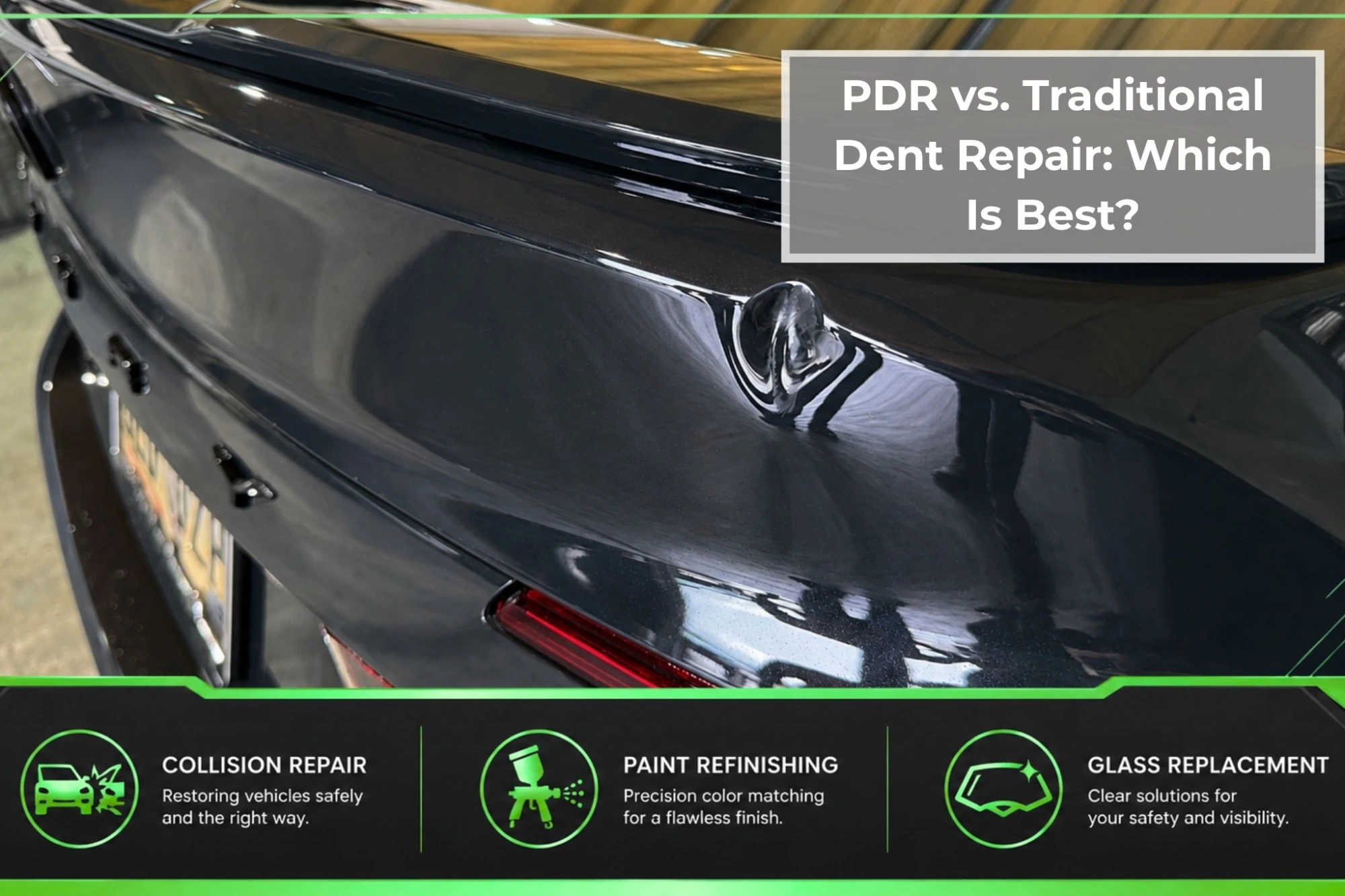
Paintless dent repair, commonly called PDR, reshapes eligible sheet metal without sanding away the exterior finish or refinishing the repaired area. The main benefit of dent repair without paint is that the existing factory finish can remain intact when the paint and panel are suitable for the process.
That does not mean PDR is appropriate for every steel or aluminum panel. Vehicle construction and material matter. An I-CAR summary of Rivian’s PDR position statement, for example, notes that PDR may be used on both steel and aluminum substrates, but each material can have limitations that must be checked against vehicle-specific repair information. Rivian also requires inspection for paint micro-cracking before and after repair. I-CAR’s summary of Rivian’s PDR guidance illustrates why technicians cannot assume the same technique applies to every vehicle.
What Does Traditional Dent Repair Involve?
Traditional dent repair is appropriate when restoring the panel requires more than controlled metal reshaping. Depending on the damage, the repair may involve metalwork, surface preparation, body filler, sanding, primer, refinishing, blending, or panel replacement.
Professional collision-repair systems include separate metal-repair, filler, sanding, primer, paint-application, and finishing processes. 3M’s collision repair resources show how conventional body repair can involve several distinct operations rather than one universal dent-repair procedure.
The important distinction in PDR vs body shop repair is not that one process is always better. It is whether the damage actually qualifies for a paintless method or needs conventional repair to restore the panel correctly.
Paintless Dent Repair vs Traditional Repair: What Determines the Choice?
1. Is the Paint Still Intact?
Paint condition is one of the first considerations. A shallow dent with sound factory paint may be a candidate for PDR. Cracked, chipped, peeling, or otherwise damaged paint can change the recommendation because reshaping the metal alone does not repair the damaged finish.
Even apparently intact paint deserves close inspection. Some damage can create fine cracking that is difficult to see casually. This is one reason an in-person assessment is more useful than assuming a dent qualifies based only on a photograph.
2. How Deep Is the Dent, and Has the Metal Stretched?
Dent diameter alone does not determine repairability. A broad, shallow dent may behave very differently from a smaller but deeper impact.
One useful OEM example comes from Rivian’s material repair guidance, which allows straightening only when the base material has not been overstretched, thinned, or cracked. The exact criteria vary by manufacturer and vehicle, but the broader lesson is important: paintless dent repair limitations are affected by what happened to the metal, not just the size of the visible dent. Rivian’s material repair guide provides an example of those material-specific restrictions.
3. Can PDR Fix Creases?
Customers often ask, can PDR fix creases? Sometimes it may, but a crease is not automatically a PDR repair.
A gentle crease in an accessible area with intact paint may allow controlled metal reshaping. A sharp crease can concentrate deformation, affect a body line, stretch the metal, or damage the finish. Those conditions can make conventional repair more appropriate.
Lankford’s website specifically lists creases among the types of dents it works on while qualifying that paintless repair is used only where the panel allows.
4. Can the Technician Reach the Damaged Area Properly?
Tool access matters. The backside of some exterior panels can be difficult or inappropriate to reach because of reinforcements, factory foam, structural components, or the way the vehicle is assembled.
I-CAR specifically advises technicians not to drill access holes simply to perform PDR, noting that adding holes to structural parts can change their integrity. It also cautions against removing factory foam just to gain PDR access. I-CAR’s PDR access guidance demonstrates why accessibility is a genuine repair limitation rather than an inconvenience to work around.
If you are trying to decide between PDR and conventional dent repair, Lankford Paint & Body can inspect the panel, paint condition, dent location, and surrounding damage before recommending a repair. Its current dent repair services include door dings, creases, hail and storm damage, with paintless repair used where appropriate.
5. Is the Dent on a Body Line or Panel Edge?
Body lines and panel edges can make a dent more complicated because those areas have defined contours and may behave differently when deformed. The location also affects tool access and how much control the technician has while restoring the shape.
A dent on a body line is not automatically impossible to repair with PDR, but location should be evaluated along with depth, paint condition, material, and metal stretch. These are practical paintless dent repair limitations that cannot be reduced to a simple yes-or-no rule.
6. Has the Panel Been Repaired Before?
Previous body filler, refinishing, or metal repair can influence the next repair decision. A panel that has already undergone conventional work may not respond like an untouched factory panel.
This is another reason dent repair without paint should be treated as a repair option rather than a promise. The technician needs to evaluate the current condition of the panel before deciding whether further metal manipulation is appropriate.
Side-by-Side Examples of PDR vs Body Shop Repair
Consider three hypothetical examples.
Parking-lot door ding: A Prairieville driver finds a shallow door dent with intact paint. If the metal has not been overstretched and the repair area can be accessed properly, PDR may preserve the existing finish without requiring refinishing.
Sharp fender crease with damaged paint: If the impact produces a deep crease and cracks the finish, traditional body repair may be the more appropriate route because both the panel shape and paint system need attention. If damage extends beyond a cosmetic dent, the repair plan may need to account for additional components.
Hail damage across several panels: PDR can be one of the hail dent repair options when dents and paint condition allow it, but each panel still needs assessment. A vehicle may have many repairable dents while another panel has deeper deformation, damaged paint, or access restrictions requiring a different approach.
If an impact appears more significant than a cosmetic dent, Lankford’s guide to signs of frame or structural damage after an accident explains why steering changes, closure problems, unusual panel gaps, or other symptoms warrant a broader collision inspection instead of a dent-only assumption.
One Detail Often Overlooked With PDR: Corrosion Protection
Keeping the exterior paint intact does not mean every underlying coating remains untouched.
I-CAR notes that PDR tools can potentially disturb E-coat or wax-based corrosion protection on the backside of a panel. Its guidance recommends restoring corrosion protection because tool contact may affect coatings even when the visible exterior finish does not need refinishing. I-CAR’s corrosion-protection guidance for PDR is an important reminder that a professional repair includes what happens behind the visible surface.
A Simple Decision Guide
When comparing paintless dent repair vs traditional repair, these questions can help frame the conversation with the body shop:
- Is the factory paint still intact?
- Is the metal stretched, cracked, or sharply deformed?
- Can PDR fix creases in this particular location without compromising the panel?
- Is there safe access to the repair area?
- What material is the panel made from?
- Has the panel been repaired or refinished before?
- Does the damage involve only the outer panel, or should surrounding collision damage also be evaluated?
- For storm damage, which hail dent repair options are appropriate panel by panel?
The correct answer may be PDR, conventional dent repair, panel replacement, or a combination of methods across different areas of the same vehicle.
Get the Dent Evaluated Before Choosing the Repair Method
The most useful way to think about paintless dent repair vs traditional repair is not “Which process is better?” but “Which process fits this damage?”
Lankford Paint & Body currently offers dent repair, paintless repair where the panel allows, hail and storm damage repair, paint refinishing, and broader collision repair from its Prairieville shop. The business also states that estimates are free and no appointment is needed for an estimate during normal business hours.
Lankford Paint & Body
38173 Post Office Rd
Prairieville, LA 70769
Call (225) 241-8904 to discuss the dent and determine whether paintless or conventional repair may be appropriate, or submit vehicle and damage details through the free estimate form.
FAQs
Is PDR always better than traditional dent repair?
No. PDR can preserve the existing finish when a dent and panel qualify, but paint damage, stretched metal, access restrictions, panel construction, previous repairs, or more extensive collision damage may make traditional repair more appropriate.
Can PDR fix creases without repainting?
Some creases may qualify for PDR when the paint is intact, the metal has not been excessively stretched, and the area can be accessed correctly. Sharp or complex creases may require conventional body repair.
What are the main paintless dent repair limitations?
Common considerations include paint condition, metal stretch, dent depth, panel material, body lines, edges, access, previous repairs, and vehicle-specific repair requirements. I-CAR also cautions against creating access holes simply to perform PDR.
Is PDR an option for hail damage?
It can be one of several hail dent repair options when the individual dents, paint, panel material, and access allow it. A professional assessment should determine the repair method for each affected panel rather than assuming every hail dent qualifies.