When Collision Damage May Go Deeper Than the Exterior
After an accident, the visible dent, bumper damage, or cracked panel may not tell the whole story. Some of the signs of frame damage after an accident are subtle, including changes in panel alignment, steering feel, tire wear, or the way doors and the trunk close. These symptoms do not automatically prove structural damage, but they are good reasons to have the vehicle evaluated instead of assuming the problem is cosmetic.
For drivers in Prairieville and Ascension Parish, Lankford Paint & Body provides collision repair that includes structural, frame, and sectioning work when the actual damage requires it. The shop’s current service information emphasizes proper repair planning rather than assuming every collision involves frame damage.
What Does “Frame Damage” Mean on a Modern Vehicle?
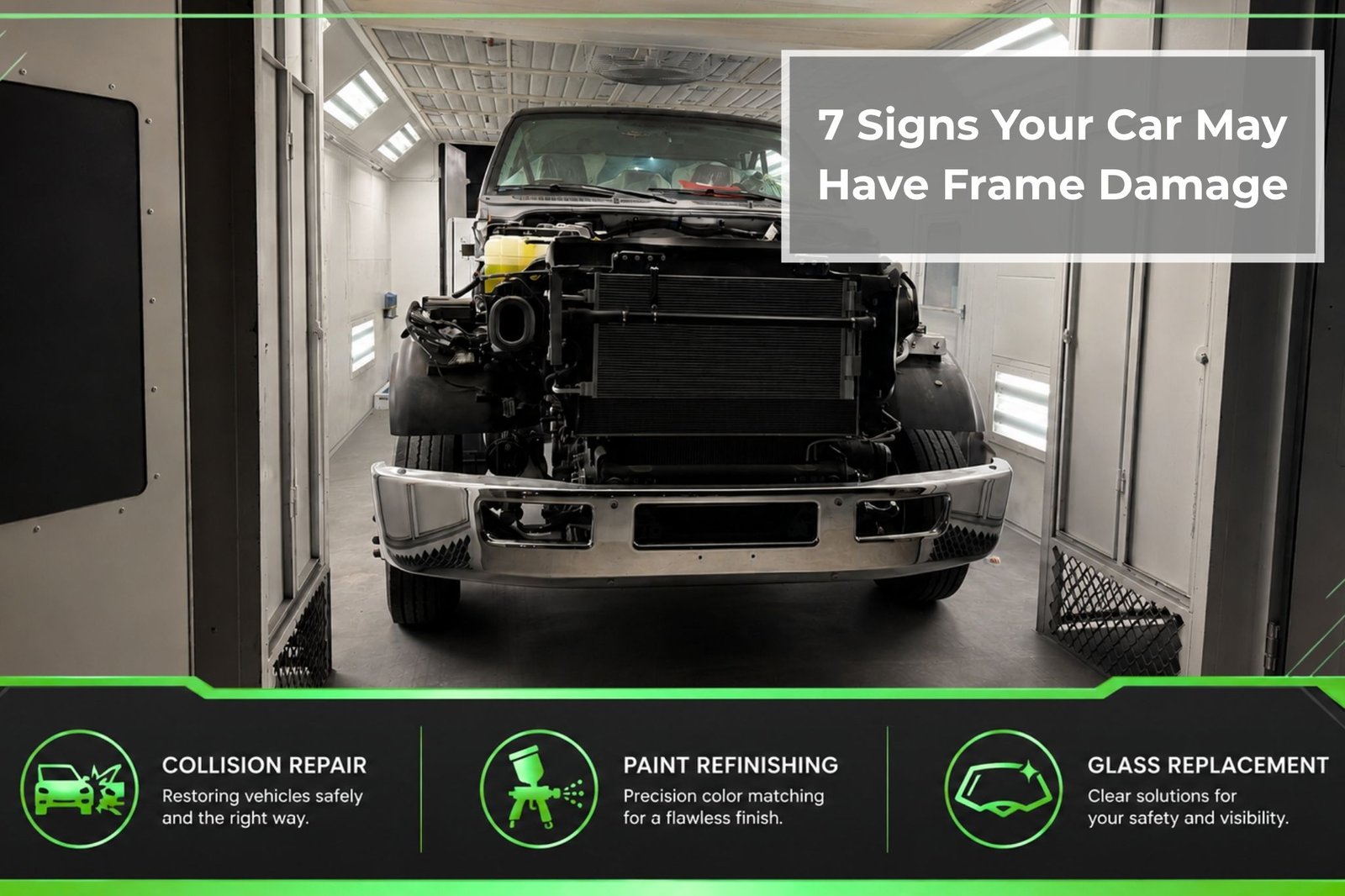
The term frame damage is often used too broadly. Some trucks and SUVs use a separate frame, while many passenger vehicles use unibody construction, where structural rails, pillars, rockers, floor sections, and other components work together as the vehicle’s body structure.
That distinction matters because unibody damage signs cannot always be diagnosed by looking at an exterior panel. Ford’s current structural-repair guidance, for example, identifies structural components as parts that carry vehicle loads or crash energy, form part of the occupant safety cell, provide attachment points for safety systems, or are permanently joined to other structural components. Repair requirements depend on the individual vehicle and manufacturer procedures. Ford’s structural repair position statement reinforces the need for vehicle-specific procedures.
7 Signs of Frame Damage After an Accident
1. Uneven Gaps Between Body Panels
Look at how the hood, doors, trunk or liftgate, fenders, and quarter panels line up. If a gap suddenly becomes wider on one side, narrows noticeably, or a panel sits higher than it did before the collision, something may have shifted.
Uneven gaps alone are not proof of structural damage. A damaged hinge, latch, bracket, or bolt-on panel can also create misalignment. However, multiple alignment problems after the same impact are among the car frame damage symptoms that justify a closer professional inspection.
2. Doors, Hood, or Trunk No Longer Close Normally
A door that suddenly needs extra force to latch, a trunk that sits unevenly, or a hood that does not line up correctly may indicate that the opening or surrounding components moved during the collision.
The cause might be limited to the panel or hardware, but it can also be associated with hidden damage after collision beneath the exterior. A repair facility may need to inspect mounting points and surrounding structure before deciding whether the problem is cosmetic, structural, or a combination of both.
3. The Vehicle Pulls or Does Not Track Normally
If you notice your car pulling after an accident, do not automatically assume the frame is bent. Tire damage, wheel damage, alignment problems, or suspension components can also cause a vehicle to drift or track differently.
The important clue is that the behavior is new after the collision. Because suspension mounting locations are related to vehicle geometry, changes in tracking should be evaluated before assuming that a routine alignment is the complete solution.
4. Steering Feels Different
A steering wheel that is newly off-center, unusual steering effort, vibration, or a change in how the vehicle responds can indicate a wheel, tire, suspension, alignment, or structural problem.
These symptoms deserve particular attention if they appeared immediately after the impact. If steering feels unstable or the vehicle is difficult to control, do not continue driving simply to see whether the problem improves.
If your vehicle developed new panel-alignment, steering, or tracking problems after a collision, Lankford Paint & Body can inspect the damage, explain what needs further evaluation, and provide a free written estimate before repairs begin. The shop currently lists collision, structural, frame, and sectioning work among its collision repair services in Prairieville.
5. Uneven or Unusual Tire Wear
Uneven tire wear that appears after an accident can signal changes in wheel alignment or suspension geometry. It is another symptom that requires diagnosis rather than an immediate conclusion about the frame.
Tire wear develops for many reasons, so it should be considered alongside other warning signs. When uneven wear is combined with car pulling after an accident, altered steering, or visible alignment problems, the shop may need to investigate beyond the tires themselves.
6. New Creaks, Rattles, or Other Noises
A collision can shift body panels, brackets, suspension parts, shields, and other components. New creaking, rubbing, popping, or rattling therefore does not necessarily mean structural damage.
Still, unexplained noises are among the car frame damage symptoms worth reporting to the repair shop, especially if they occur while turning, braking, crossing bumps, or entering driveways. Tell the estimator when the noise began and under what conditions it occurs.
7. Visible Bends, Wrinkles, or Deformation Underneath
Visible distortion around structural rails, rocker areas, floors, wheel housings, or other underbody areas can be a serious warning sign. Drivers should not crawl underneath an unstable or damaged vehicle to investigate it themselves.
Professional measurement is more reliable than appearance alone. I-CAR’s structural measuring guidance identifies vehicle damage through measurements and stresses consulting OEM repair information. Nissan likewise specifies measurements before and after structural repair and notes that panels or trim may need to be removed for accurate measuring.
Why a Minor-Looking Accident Can Hide Structural Damage
Exterior components can conceal what happened farther inside the vehicle. This is why hidden damage after collision may not become clear until inspection or disassembly.
Consider a hypothetical Prairieville driver who is rear-ended. The bumper cover is damaged, but the vehicle otherwise appears usable. A few days later, the trunk requires extra force to close, and the gaps around it look uneven. Those conditions still do not prove frame damage. The correct next step is inspection and, when indicated, measurement against vehicle-specific specifications.
Honda provides a useful OEM example. For certain CR-V models, its body-repair information instructs technicians to measure the entire vehicle with a three-dimensional measuring system when rear frame damage is suspected. The exact procedures vary by make and model, which is why visual inspection alone cannot determine the repair plan. Honda body repair information illustrates this vehicle-specific approach.
When Should You Stop Driving After a Collision?
Do not use a list of unibody damage signs as a roadworthiness test. If the vehicle has significant steering changes, wheel or tire contact, loose body panels, fluid leakage, broken glass affecting safe operation, deployed airbags, or other conditions that make handling feel unsafe, arrange professional evaluation rather than continuing to drive.
Lankford’s current website states that when a damaged vehicle cannot be driven, the shop can help coordinate towing as part of the collision-repair process.
How Structural Damage Is Confirmed
A professional assessment may involve damage analysis, vehicle-specific measurements, inspection after components are removed, and research into OEM repair information. I-CAR specifically teaches identifying structural damage through measurement and interpreting measurements throughout a structural repair.
This also explains why bent frame repair is not one universal procedure. Depending on the vehicle and damage, manufacturer information may permit straightening in one area, require component replacement in another, or specify particular sectioning locations and attachment methods. Nissan states that repair techniques vary between framed and unibody vehicles and directs repairers to model-specific service information.
If additional damage becomes apparent after disassembly, the repair plan or estimate may also need to be updated. When insurance is involved, that can lead to a supplement documenting newly identified repair needs. Drivers who are still selecting a repair facility can also review Lankford’s guide to choosing your own body shop in Louisiana for more information about estimates, supplements, and repair-shop selection.
Get Possible Structural Damage Properly Evaluated
The most important thing to remember about the signs of frame damage after an accident is that they are warning signs, not a diagnosis. Panel gaps, closing problems, pulling, steering changes, tire wear, noises, or visible deformation may indicate structural involvement, but they can also come from other collision-damaged components.
Lankford Paint & Body provides collision repair, including structural, frame, and sectioning work where appropriate, from its Prairieville shop. Current website information states that estimates are free and no appointment is required for an estimate during normal business hours.
Lankford Paint & Body
38173 Post Office Rd
Prairieville, LA 70769
Call (225) 241-8904 to explain what happened, discuss the damage, or arrange a free estimate. You can also submit vehicle and damage information through the free estimate form.
FAQs
Can a minor accident cause frame or unibody damage?
It can, depending on the vehicle, impact location, structural design, and forces involved. A minor-looking exterior repair does not confirm or rule out structural involvement. Measurement and vehicle-specific repair information may be necessary.
Can I drive a car if I suspect frame damage?
Do not judge roadworthiness from appearance alone. If the vehicle pulls severely, steering feels unsafe, a wheel or tire contacts damaged bodywork, panels are loose, fluids are leaking, or other serious problems are present, avoid driving and arrange professional assessment or towing.
How does a body shop confirm structural damage?
A collision shop may use vehicle-specific measurements, damage analysis, disassembly, and OEM repair information. I-CAR and manufacturer guidance emphasize measurement when evaluating and repairing structural alignment.
Can a bent frame be repaired?
Sometimes, but bent frame repair depends on the vehicle design, damaged component, material, location, severity, and manufacturer procedure. Some structural areas may permit correction or sectioning, while others may require replacement. The appropriate repair cannot be determined from photographs or exterior appearance alone.