Why Raised Bubbles on Your Hood Deserve a Closer Look
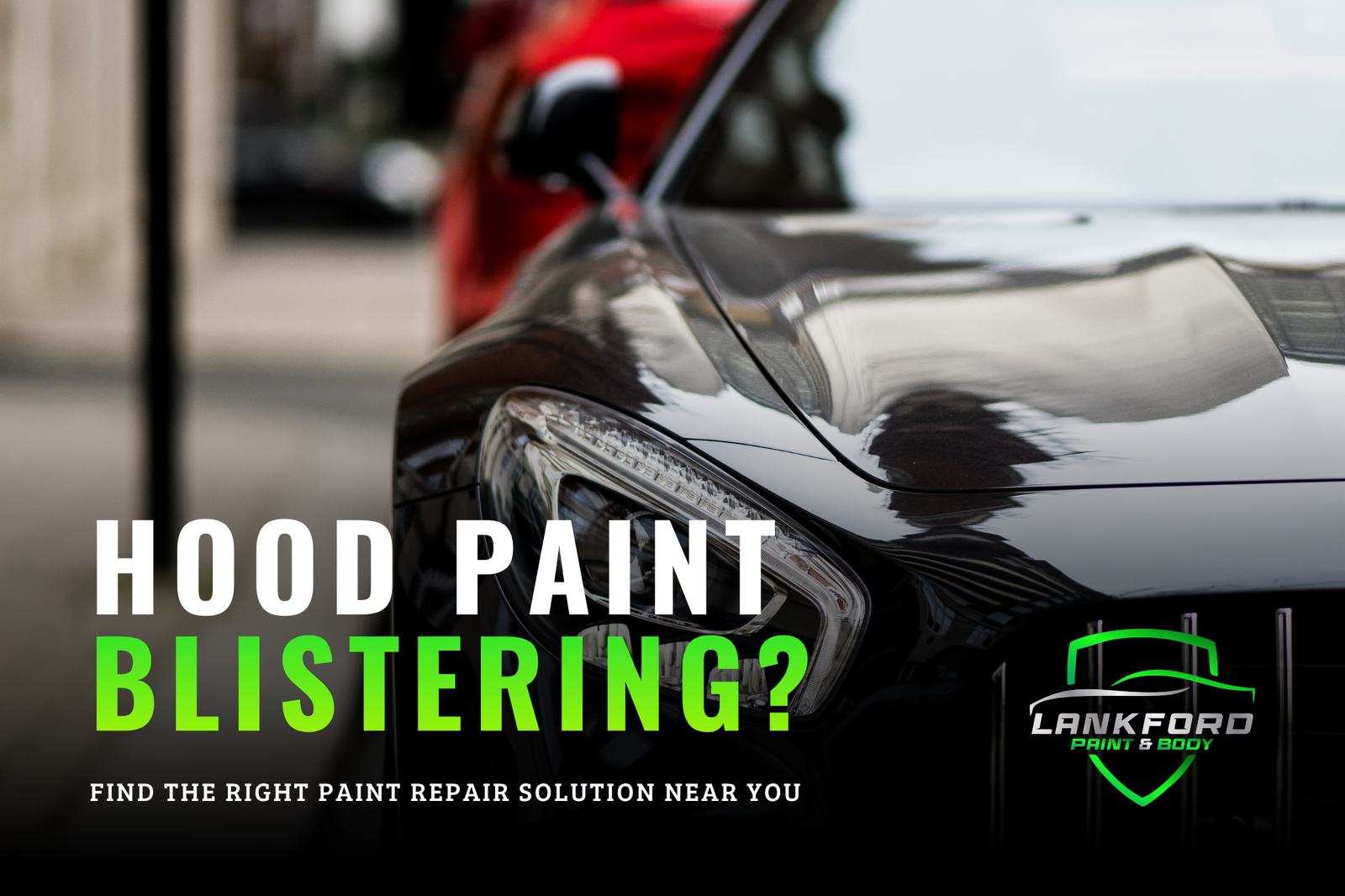
Those small, raised bubbles on your car’s hood may be more than a cosmetic issue. Hood paint blistering can indicate problems within the coating layers or with the underlying surface. The appropriate repair depends on what caused the blistering, how much of the hood is affected, and whether the existing finish is stable enough to refinish.
If you’re searching for paint repair near you, Lankford Paint & Body in Prairieville offers professional automotive paint refinishing and free estimates. A proper inspection can help determine whether the hood needs localized corrective work, more extensive coating removal, or additional surface repair before refinishing.
Seeing raised bubbles on your car’s hood? Lankford Paint & Body can assess the affected finish and explain your paint repair options.
Request a Free Hood Paint EstimateWhat Does Blistering Car Paint Look Like?
Paint blistering usually appears as small raised bubbles or swollen spots within a painted surface. Some blisters are isolated, while others form clusters across a panel.
Common signs include:
Small, rounded bumps beneath the paint finish
Raised areas that appear different under sunlight
Localized swelling or uneven paint texture
Cracking or peeling around previously blistered areas
Discoloration near damaged paint or panel edges
The visible appearance does not establish how deeply the problem extends.
PPG’s automotive paint blistering guide explains that blistering can involve separation within coating layers and may require removal of affected material before refinishing.
Avoid squeezing, scraping, or puncturing the bubbles to investigate them yourself. A professional can evaluate the coating without unnecessary additional damage.
What Can Cause Paint Bubbles on a Hood?
There is no single explanation for every blistered hood. Several conditions can contribute to bubbling automotive paint.
Moisture Trapped Beneath the Coating
Moisture introduced during an earlier refinishing process can become trapped between coating layers.
I-CAR explains that humidity and trapped moisture can contribute to paint blistering during automotive refinishing.
The appearance of bubbles does not prove that moisture is the cause. Other possibilities must also be considered.
Corrosion Beneath the Paint
When the hood’s underlying metal begins corroding, the corrosion can affect coating adhesion and create raised or blistered areas.
This may be associated with damaged paint, exposed metal, or an earlier repair where the surface needs further evaluation.
I-CAR’s corrosion guidance explains how corrosion can sometimes become visible through raised or blistered finishes.
Not every blister indicates rust, especially on panels made from different materials.
Coating Adhesion or Material Problems
Paint may also blister when coating layers do not bond properly or when incompatible materials are involved.
Possible contributing factors include:
Surface contamination
Insufficient preparation
Excessive coating thickness
Incompatible refinishing materials
Solvents trapped during application
These conditions require professional evaluation rather than assumptions based on appearance.
Previous Hood Repairs
An older vehicle may have received bodywork or refinishing before its current owner purchased it.
The existing coating thickness, repair materials, and condition of underlying layers can influence the next repair decision.
However, visible blistering alone does not establish whether previous workmanship was responsible.
Blistering vs. Peeling Clear Coat and Fading
Not every deteriorating hood finish is blistering.
Paint conditionTypical visible appearanceBlisteringRaised bubbles or swollen areasClear coat peelingFlaking or separation of the transparent outer coatingFadingGradual loss of color intensity or gloss without obvious raised bubbles
These conditions can sometimes occur together, but they are not interchangeable.
A faded surface might require a different evaluation from a hood with unstable coating layers. Identifying the actual condition helps prevent unnecessary or ineffective corrective work.
Inspect the Existing Finish and Underlying Material
A blistered car paint inspection should evaluate more than the visible bubbles.
A professional shop may examine:
Blister location: Are the raised spots concentrated along edges, near previous repairs, or across the hood?
Extent of damage: Is the issue limited to a small area or spread across multiple sections?
Coating condition: Are surrounding paint layers stable, separating, or visibly deteriorating?
Underlying material: Is there evidence of corrosion, earlier bodywork, or other surface damage?
Previous refinishing: Are there signs of additional coating layers or previous repairs?
Some conditions can be assessed visually. Others may only become apparent during professional preparation or further inspection.
This matters because painting over unstable material may leave the original problem underneath the new finish.
Lankford’s paint refinishing services include panel refinishing, full repaints, and color matching. The necessary preparation depends on the condition of the actual vehicle.
Could the Problem Extend Beneath Your Hood’s Paint?
Paint bubbles can develop for different reasons. An inspection can help identify the affected coating and whether additional surface preparation or repair may be needed before refinishing.
Get Your Blistered Hood EvaluatedWhen Is Professional Hood Refinishing Appropriate?
Professional car hood paint blistering repair may be appropriate when the affected coating can be removed or corrected and a suitable surface can be prepared for refinishing.
The repair plan may involve several considerations.
Correcting Localized Coating Problems
If blistering affects a limited area and the surrounding coating is sound, a shop may evaluate whether a localized correction is feasible.
However, a small blistered area does not guarantee that the work can be limited to a small paint spot.
Addressing Extensive Blistering
When coating failure is widespread, more material may need to be removed to reach a stable surface.
If corrosion or underlying panel damage is discovered, that condition must be considered before applying new paint.
Matching the Hood to Surrounding Panels
Once the surface is suitable for refinishing, the shop can evaluate the color and appearance of the existing vehicle.
Professional car paint color matching may consider the factory color information, existing finish, and neighboring panels.
A matching paint code alone does not guarantee an invisible transition.
If damage extends beyond the hood, Lankford’s full repaint vs. panel repair guide explains how the scope of affected panels can influence the refinishing decision.
The goal is to determine the appropriate repair based on the hood’s actual condition, not automatically recommend another complete paint job.
A Gonzales Driver Notices Hood Paint Bubbles
Hypothetical example for illustration only.
A driver in Gonzales notices several raised bubbles on the hood of an older sedan. The vehicle was purchased used, and its previous paintwork history is unclear.
During an inspection, a paint shop could document the affected areas, examine the surrounding finish, and look for signs of corrosion or earlier refinishing.
If the problem appears limited to the coating, corrective refinishing may be considered. If the underlying material is damaged or the coating is unstable across a larger area, additional preparation or repair may be necessary.
The shop can then prepare an estimate explaining the proposed work and any conditions requiring further investigation.
No diagnosis or repair outcome can be established from the visible bubbles alone.
Hood Paint Blistering Repair Estimate Checklist
Before requesting hood paint refinishing near me, prepare the following information:
Vehicle details: Year, make, model, and VIN
Affected area: Identify where bubbles appear on the hood
Photos: Take clear pictures of the entire hood and close-ups of the affected spots
Paint history: Share any known previous repainting or body repairs
Timeline: Note when the bubbles first appeared
Changes: Explain whether the bubbles have spread, cracked, or begun peeling
Bring the vehicle for an in-person assessment when possible.
Pictures can help communicate the problem, but they cannot establish the condition of every underlying coating or determine a final repair price.
Questions to Ask Before Authorizing Hood Paintwork
Before approving corrective refinishing, ask the shop:
What conditions may be contributing to the blistering?
Does the existing finish appear stable enough for corrective work?
Is corrosion or previous body damage suspected?
How much coating may need to be removed?
What work is included in the initial estimate?
These questions help clarify the proposed repair and what may change if additional problems are discovered.
Frequently Asked Questions
Can blistered hood paint be repaired without repainting the entire car?
Often, yes. If the condition is limited to the hood, refinishing the entire vehicle may be unnecessary. The actual repair scope depends on coating stability, underlying damage, and surrounding paint condition.
Will polishing remove paint blisters?
Polishing generally cannot correct underlying coating blistering. If the paint layers are separating, the affected material may require professional removal or refinishing.
Do paint bubbles always mean there is rust underneath?
No. Moisture, coating adhesion problems, material compatibility, and previous refinishing can contribute to blistering. A professional evaluation is needed to investigate the cause.
Where can I request a hood paint repair estimate near Prairieville?
Lankford Paint & Body provides paint refinishing services in Prairieville, Louisiana. Free estimates are available, and customers can bring vehicles during regular business hours without an appointment.
Get a Repair Estimate for Your Blistered Hood
If your hood has raised paint bubbles, peeling areas, or other visible finish problems, Lankford Paint & Body in Prairieville can evaluate the condition and discuss appropriate refinishing options.
Request a free estimate with your vehicle’s year, make, model, a description of the affected area, and optional photos. Include any previous paint repair history you know. An in-person inspection may be needed to establish the repair scope.
Lankford Paint & Body | 38173 Post Office Rd, Prairieville, LA 70769 | (225) 241-8904
Monday-Friday, 8 AM-5 PM. Free estimates without an appointment during regular business hours. Weekends by appointment.
Visit Lankford Paint & Body for Hood Paint Repairs
Noticing paint blisters, bubbling, peeling clear coat, or uneven paint on your vehicle’s hood? Visit Lankford Paint & Body in Prairieville, LA, for a professional paint inspection and evaluation of your repair options. Our team can assess the affected finish, determine whether surface correction or refinishing is needed, and provide a free repair estimate.