Old Paintwork Peeling or Looking Different From Other Panels?
Your car may have been repainted years ago, but now one panel looks rougher, duller, or noticeably different from the rest. Peeling clear coat, uneven texture, and visible paint transitions can make an older repair stand out. An auto paint shop near you can evaluate the existing finish to determine whether the concern may be corrected through professional surface finishing, localized refinishing, or more extensive coating removal and repainting.
At Lankford Paint & Body, vehicle owners in Prairieville, Ascension Parish, and the Baton Rouge area can request a professional evaluation of previous paintwork. The appearance of a defect does not automatically prove poor workmanship. An inspection helps establish what is happening with the existing coating, what repair may be appropriate, and what should be included in an estimate.
Noticing peeling or uneven texture on previously repainted panels? Lankford Paint & Body can evaluate the existing finish and discuss appropriate refinishing options.
Request a Free Paint EstimateWhat Problems Can Appear in Previous Auto Paintwork?
Previously refinished panels can show several types of visible finish irregularities. Some become noticeable shortly after painting, while others appear or become more apparent over time.
Common concerns include:
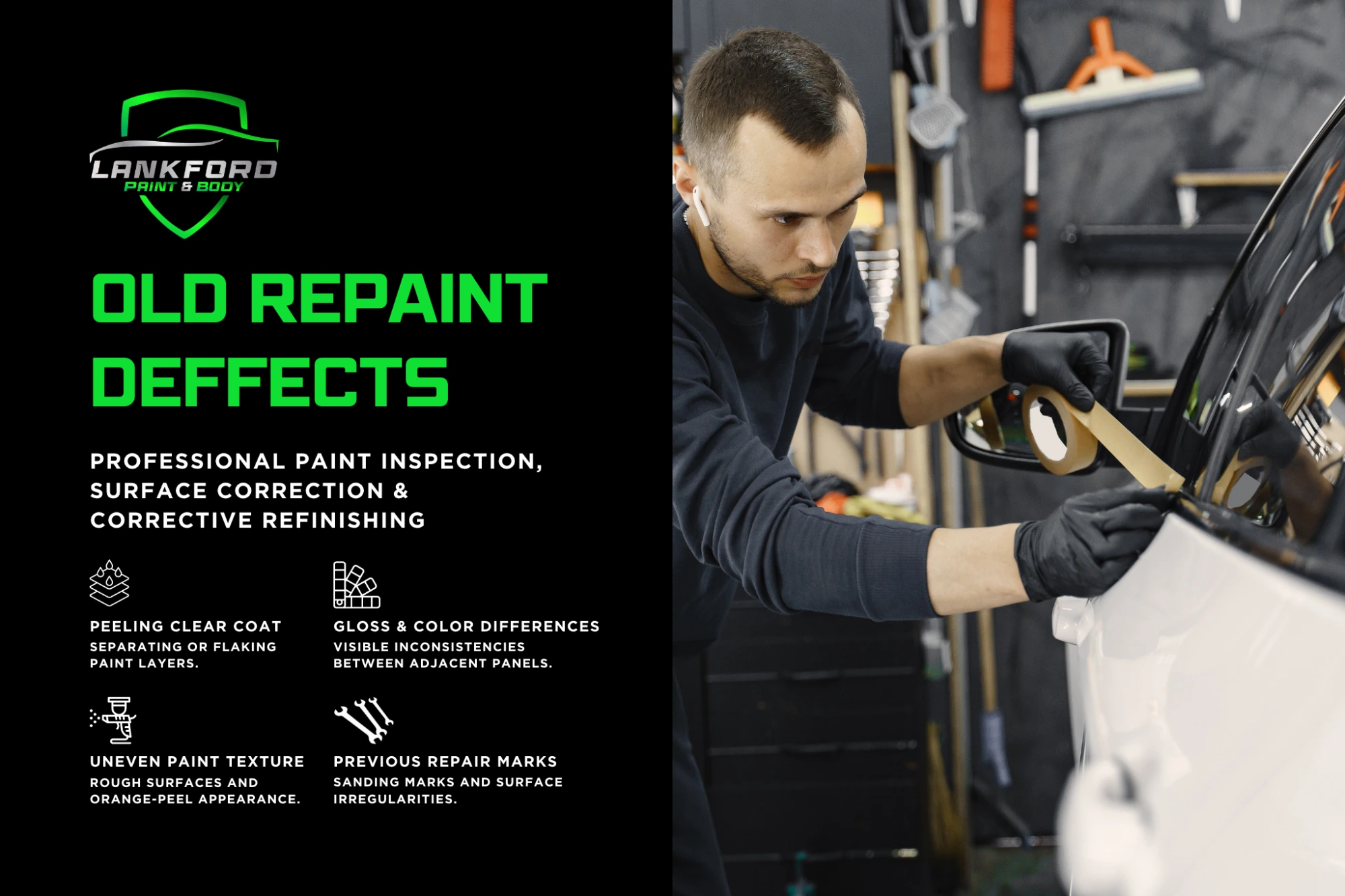
Peeling or flaking paint: Clear coat or another coating layer begins separating from the surface underneath.
Uneven paint texture: A panel has a noticeably rougher, bumpier, or smoother finish than neighboring panels.
Inconsistent gloss: One repaired area appears dull, hazy, or unusually shiny compared with the surrounding paint.
Visible paint transitions: A difference in color, metallic appearance, or finish becomes noticeable where repaired and original panels meet.
Sanding marks or surface irregularities: Earlier preparation marks, repair outlines, or other imperfections are visible through the finish.
PPG’s Common Paint Defects Guide identifies multiple types of coating defects, each with different potential causes and corrective procedures.
These symptoms provide a starting point for inspection. They do not establish the cause or automatically mean the entire vehicle needs repainting.
Identify Uneven Texture, Peeling, and Finish Differences
Uneven Texture and Orange Peel
Orange peel describes a textured finish that resembles the surface of an orange. Some texture is normal even on factory finishes, but a significant difference between neighboring panels may deserve closer examination.
According to PPG’s orange peel guidance, texture can be influenced by application technique, coating materials, mixing, and application conditions.
An uneven car paint finish repair may involve professional finishing techniques or refinishing, depending on the coating’s condition and available material. Polishing is not automatically suitable for every textured surface.
Peeling or Separating Coatings
Peeling can indicate that a coating has lost adhesion to another paint layer or the underlying surface.
I-CAR’s adhesion-failure guidance identifies several possible contributing factors, including surface contamination, coating thickness, material compatibility, and preparation.
However, peeling alone cannot establish exactly when or why the problem began.
A shop must evaluate the existing coating before deciding how much material needs to be removed. Applying fresh paint over an unstable layer can leave the original problem underneath.
Different Gloss or Color Between Panels
A previously repaired door may have a different gloss level or color appearance than an adjacent factory-painted fender.
Lighting, paint aging, clear coat condition, earlier repairs, and refinishing methods may contribute to the visible difference.
PPG’s guidance on poor color matching discusses color selection, paint application, and blending considerations.
A color difference does not necessarily mean the panel has adhesion failure. Each concern should be assessed separately.
For additional information, read Lankford’s guide to car paint color matching.
Why Does Existing Surface Condition Matter?
Corrective auto paint refinishing begins with understanding the surface underneath the visible finish.
A previously repaired panel may have multiple coating layers, earlier body filler, primer, or other materials beneath the final color and clear coat.
The condition of those layers influences whether another refinishing procedure is appropriate.
A professional evaluation may consider:
Whether existing coatings are stable or separating
The condition of the underlying metal, plastic, or repaired surface
Evidence of previous sanding, filling, or body repair
Coating thickness where measurement is appropriate
Corrosion, contamination, cracking, or other surface defects
The appearance of neighboring panels
Some of these conditions may be visible during an initial inspection. Others may require additional preparation or investigation before the final repair scope is established.
This is why fixing previous auto paintwork is not always as simple as spraying another coat of paint.
Is the Old Coating Suitable for Another Refinish?
Peeling or uneven paint may require more than another coat. An inspection can help identify the affected panels and the preparation needed before a corrective repair estimate is finalized.
Get a Previous Paintwork EstimateHow Is Corrective Refinishing Evaluated?
A professional assessment starts with the affected vehicle rather than assuming every repaint defect requires the same solution.
1. Document the Visible Conditions
The shop identifies which panels are affected and records peeling, texture, gloss differences, paint edges, or signs of previous repairs.
2. Examine the Existing Coating
The technician evaluates whether the finish appears suitable for further refinishing or whether unstable material may need to be removed.
3. Determine the Potential Repair Scope
Depending on the findings, options may include professional surface correction, localized refinishing, removing unsound coatings, or addressing underlying panel damage before painting.
If defects affect several areas, the customer may also need to compare a partial repair with a larger paint project. Lankford explains that distinction in its full repaint vs. panel repair guide.
4. Prepare a Repair Estimate
An initial estimate should describe the proposed work based on what can reasonably be inspected.
Additional problems discovered during preparation may require a revised repair plan and customer authorization.
Lankford’s paint refinishing services include individual panel refinishing, full repaints, and paint matching. The appropriate approach depends on the actual vehicle and existing finish.
A Baton Rouge Used-Car Example
Hypothetical scenario for illustration only.
A Baton Rouge driver purchases a used sedan that previously received body and paint repairs.
The passenger-side door has a visibly rougher texture than the front fender. Under certain lighting, the two panels also appear to have different gloss levels.
The owner is concerned that the earlier paintwork may need to be corrected.
During an assessment, a body shop could document the visible differences, examine coating condition, review signs of earlier repairs, and determine whether additional investigation is necessary.
The door may require a different corrective process from the neighboring fender. A written estimate could explain the proposed preparation and refinishing work.
The shop should not claim that the previous repairer caused the problem without sufficient evidence.
This example illustrates why automotive repaint defect repair should be based on inspection rather than appearance alone.
Previous Auto Paintwork Assessment Checklist
Before searching for an auto paint shop near you, prepare the following information:
Affected panels: Identify which doors, fenders, bumpers, or other panels have visible issues.
Visible symptoms: Describe peeling, roughness, gloss differences, color differences, or other concerns.
Repair history: Bring previous repair invoices or paintwork records if available.
Photos: Take clear close-up and wider photos under suitable lighting.
Vehicle information: Prepare the year, make, model, and VIN.
Timeline: Note when you first noticed the problem and whether its appearance has changed.
Avoid scraping, sanding, or attempting to remove loose coatings simply to determine how deep the problem goes.
Photographs can help communicate concerns, but they cannot reliably establish coating adhesion, underlying panel condition, or the final repair cost.
Questions to Ask Before Approving Corrective Paintwork
When reviewing an estimate, ask:
Which coating or surface conditions need additional evaluation?
Is the proposed repair limited to one panel or several panels?
Will unstable coatings need to be removed before refinishing?
Could underlying body repairs affect the final scope?
What happens if additional problems become visible during preparation?
These questions help clarify what the repair is intended to address and reduce misunderstandings before work begins.
Frequently Asked Questions
Can an auto paint shop fix peeling from an old repaint?
Often, but the appropriate repair depends on why the coating is separating and how much material is affected. Unstable coatings generally need to be addressed rather than simply covered with another layer.
Does uneven paint texture always require repainting?
No. Some texture is normal, and certain surface irregularities may be correctable through professional finishing. More significant defects or unsuitable coating conditions may require refinishing.
Can a paint shop determine whether a previous repair was done incorrectly?
An inspection may identify coating problems and possible contributing factors. However, the visible defect alone does not prove who caused it or whether the original work was improper.
Does Lankford Paint & Body provide free paint repair estimates?
Yes. Lankford’s published contact information confirms free estimates, with no appointment required during regular business hours. The shop can evaluate the affected vehicle and discuss appropriate refinishing options.
Have Your Previous Paintwork Evaluated
If an older repaint is peeling, uneven, or noticeably different from surrounding panels, Lankford Paint & Body in Prairieville can evaluate the affected finish and provide a free repair estimate.
Share your vehicle’s year, make, model, affected panels, and any available previous repair details. You can also include photos to help explain the concern. An in-person inspection may be needed to determine the appropriate refinishing work.
Lankford Paint & Body | 38173 Post Office Rd, Prairieville, LA 70769 | (225) 241-8904
Monday-Friday, 8 AM-5 PM. Free estimates, no appointment needed during regular business hours. Weekends by appointment.
Visit Lankford Paint & Body for Paint Defect Repairs
Dealing with peeling clear coat, uneven paint texture, color mismatches, or visible marks from previous repairs? Visit Lankford Paint & Body in Prairieville, LA, for professional paint inspection, surface correction, and corrective refinishing. Request a free estimate to explore your repair options.