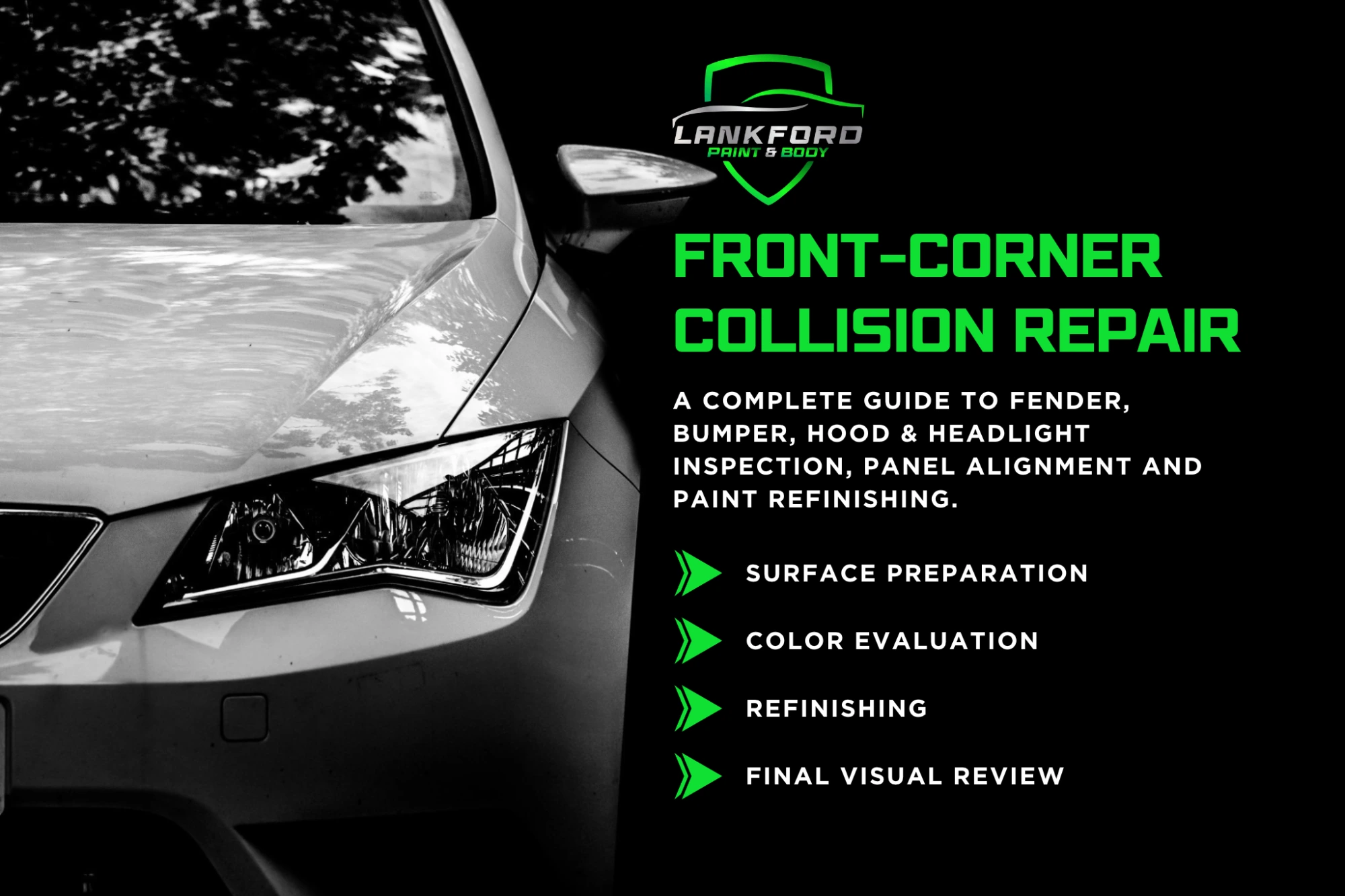
Front-Corner Damage Can Affect More Than One Panel
Your car clips another vehicle while pulling out of a parking space. The front fender is dented, the bumper is scraped, and the hood no longer lines up evenly. What initially looks like cosmetic damage may involve several connected components.
Panel and paint repairs after a front-corner collision should begin with a complete damage assessment. The fender, bumper, hood edge, headlight, and mounting areas may all require inspection before a repair plan is developed.
Lankford Paint & Body provides collision repair and paint refinishing in Prairieville, Louisiana, helping drivers understand their vehicle’s damage before authorizing repairs.
Front Fender, Bumper, or Hood Damaged?
A front-corner collision may affect more than the visible dent. Let Lankford Paint & Body inspect your damaged panels, headlight, and surrounding components before repairs begin.
What Damage Can a Front-Corner Collision Cause?
A front-corner impact concentrates force around several adjoining components.
Depending on the vehicle and collision severity, front corner collision repair may involve:
Front fender: Dents, creases, damaged edges, or misalignment.
Bumper corner: Scratches, cracks, displaced covers, or damaged mounting points.
Hood edge: Dents, uneven gaps, or latch-related concerns.
Headlight assembly: Broken lenses, brackets, or mounting tabs.
Adjacent body areas: Damage that may not be visible until surrounding parts are inspected.
The affected components should be evaluated together because an impact can transfer force beyond the most visible damage.
Inspect the Fender, Hood, Bumper, and Headlight
Front Fender and Hood
Professional car fender and hood repair begins by examining the shape, condition, and alignment of both panels.
A fender may be repairable if its material and damage allow appropriate restoration. More extensive deformation, damaged attachment points, or manufacturer restrictions may require replacement.
Likewise, a dented hood edge should be evaluated alongside the surrounding panels rather than treated as an isolated cosmetic issue.
For additional guidance, see Lankford’s article on body panel repair versus replacement.
Bumper and Mounting Components
A scratched bumper cover may have damage underneath that is not immediately visible.
Technicians may need to inspect retainers, brackets, and nearby components to determine the appropriate repair.
Headlight and Lighting Components
A front-corner collision can damage a headlight assembly or affect its position.
I-CAR’s headlamp aiming guidance explains that some vehicles require specific inspection, aiming, or calibration procedures after headlight repairs.
These requirements depend on the vehicle and manufacturer instructions.
Evaluate Panel Gaps and Hidden Mounting Damage
An uneven gap between the hood and fender may indicate misalignment, damaged mounting components, or deformation in an adjoining area.
During a professional assessment, technicians may examine:
Hood-to-fender gaps
Bumper-to-fender alignment
Headlight mounting points
Damaged brackets and fasteners
Nearby body panels
Underlying components when the impact warrants further inspection
Not every front-corner collision causes structural damage. However, unusual alignment or damaged attachment areas may require closer evaluation.
I-CAR’s guidance on indirect collision damage explains how an impact can affect components beyond the obvious damage.
Its guidance on removing parts for access also explains why adjacent components sometimes need to be removed to evaluate or complete a repair.
If your fender, bumper, or hood is damaged and the panels no longer line up correctly, Lankford Paint & Body can inspect the affected areas and provide a free written collision repair estimate.
Uneven Panel Gaps or a Damaged Headlight?
Don’t overlook damage behind the bumper or around the fender. Our Prairieville collision repair team can assess affected components and help you understand your repair options.
Plan Body Repairs and Paint Refinishing Together
After identifying the damaged components, the shop determines which parts can be repaired and which may require replacement.
For front-end panel and paint repair, the plan may include:
Documenting the damaged panels and components.
Determining appropriate repair or replacement methods.
Correcting body damage and alignment.
Preparing repaired or replacement surfaces.
Evaluating paint color and refinishing requirements.
Reassembling components and completing applicable checks.
Paintwork should be considered alongside body repairs because adjoining panels may need refinishing or blending to produce a visually consistent appearance.
Why Paint Matching Matters
The factory paint code provides a starting point, but the existing finish may differ because of age, weather exposure, production variation, or previous repairs.
I-CAR’s color-matching guidance discusses how color evaluation, tinting, and blending can help address those differences.
Blending may be appropriate when refinished areas meet neighboring panels, but it is not automatically required for every repair.
Lankford’s guide to car paint color matching explains these considerations in more detail.
Why Multiple Damaged Panels Need One Repair Plan
Multiple body panel collision repair is not simply several unrelated cosmetic jobs.
A damaged fender can affect its fit against the bumper and hood. Replacing one component without evaluating adjoining mounting areas may leave alignment problems unresolved.
The shop should establish the repair requirements for the affected components before determining the full refinishing scope.
Photos and an initial estimate may not show concealed damage. Additional findings after disassembly can require revisions to the repair plan and, when insurance is involved, supplemental documentation subject to insurer review.
For drivers comparing repair options, Lankford’s collision repair and paint refinishing services cover both bodywork and refinishing.
A Front-Corner Collision in Prairieville
Consider a hypothetical Prairieville driver whose SUV contacts another vehicle in a parking area.
The SUV has a dented front fender, scraped bumper corner, and a small crease along the hood edge.
The driver initially assumes the fender only needs repainting.
However, the shop evaluates the bumper attachment, headlight position, hood alignment, and surrounding components before preparing an estimate.
The assessment determines whether the panels can be repaired or whether specific components need replacement. Refinishing and any necessary blending are then considered as part of the overall repair plan.
This hypothetical example illustrates why the most visible dent does not always represent the entire repair.
What to Bring for a Front-Corner Collision Estimate
Before requesting front fender repair in Prairieville, gather the information that can help the shop evaluate your vehicle.
Bring:
Vehicle year, make, model, and VIN
Photos of the damaged front corner
A description of the collision
Notes about loose panels or lighting problems
Details of previous repairs in the affected area
Insurance estimate or claim information, if applicable
Bring the vehicle for inspection when it is safe to transport. If a damaged hood cannot latch securely, a component is loose, or a wheel is contacting bodywork, arrange a professional assessment before driving.
An initial estimate may be updated if additional damage becomes visible during repairs.
Front-Corner Collision Repair Estimate Checklist
Before authorizing repairs:
Photograph the damaged fender, hood, bumper, and headlight.
Note uneven panel gaps or misalignment.
Identify loose or visibly damaged mounting components.
Report lighting problems or warning messages.
Document any previous body repairs.
Gather vehicle and insurance information.
Request a complete collision damage assessment.
Review bodywork, replacement parts, and refinishing requirements.
Frequently Asked Questions
Can a damaged front fender and hood be repaired together?
Yes. Both panels can be evaluated as part of one collision repair plan. Whether each component is repaired or replaced depends on its actual condition and manufacturer requirements.
Does a front-corner collision always require repainting?
No. Refinishing depends on paint damage, the selected repair method, and the condition of the affected surfaces.
Can front-corner damage affect a headlight?
Yes. An impact may damage the headlight assembly, mounting points, or alignment. Some vehicles require additional checks or calibration according to manufacturer procedures.
Can a body shop estimate multiple damaged panels at once?
Yes. A collision repair estimate can document the visible damage across several components. Concealed damage discovered later may change the final repair requirements.
Get Your Front-Corner Collision Damage Evaluated
Damaged fender, scraped bumper, misaligned hood, or broken headlight? Lankford Paint & Body provides collision repair and paint refinishing in Prairieville, LA.
Get a professional damage assessment and free written estimate. No appointment is needed during regular business hours.
Lankford Paint & Body
38173 Post Office Rd, Prairieville, LA 70769
Monday-Friday, 8 AM-5 PM
Weekends by appointment
Visit Lankford Paint & Body in Prairieville
Need front-corner collision repair or paint refinishing? Visit our Prairieville body shop for a free damage estimate.