Rear-End Collision Damage May Go Beyond Your Bumper
Your car gets rear-ended at an intersection. The bumper looks cracked, but now the trunk takes extra force to close. What appears to be minor damage may involve components hidden behind the bumper.
If you’re searching for collision repair near you, start with a professional damage assessment. A rear-end impact can affect bumper reinforcement, rear body panels, trunk components, and electronic systems, depending on the vehicle and collision severity.
Lankford Paint & Body provides collision repair in Prairieville, Louisiana, helping drivers understand their vehicle’s damage and the repairs it may require.
Rear-Ended? Don’t Overlook Hidden Damage.
A cracked bumper may be hiding more serious damage. Get a free collision repair estimate from Lankford Paint & Body in Prairieville.
What Damage Can a Rear-End Collision Cause?
A rear-end collision can affect several areas, even when the exterior damage appears limited.
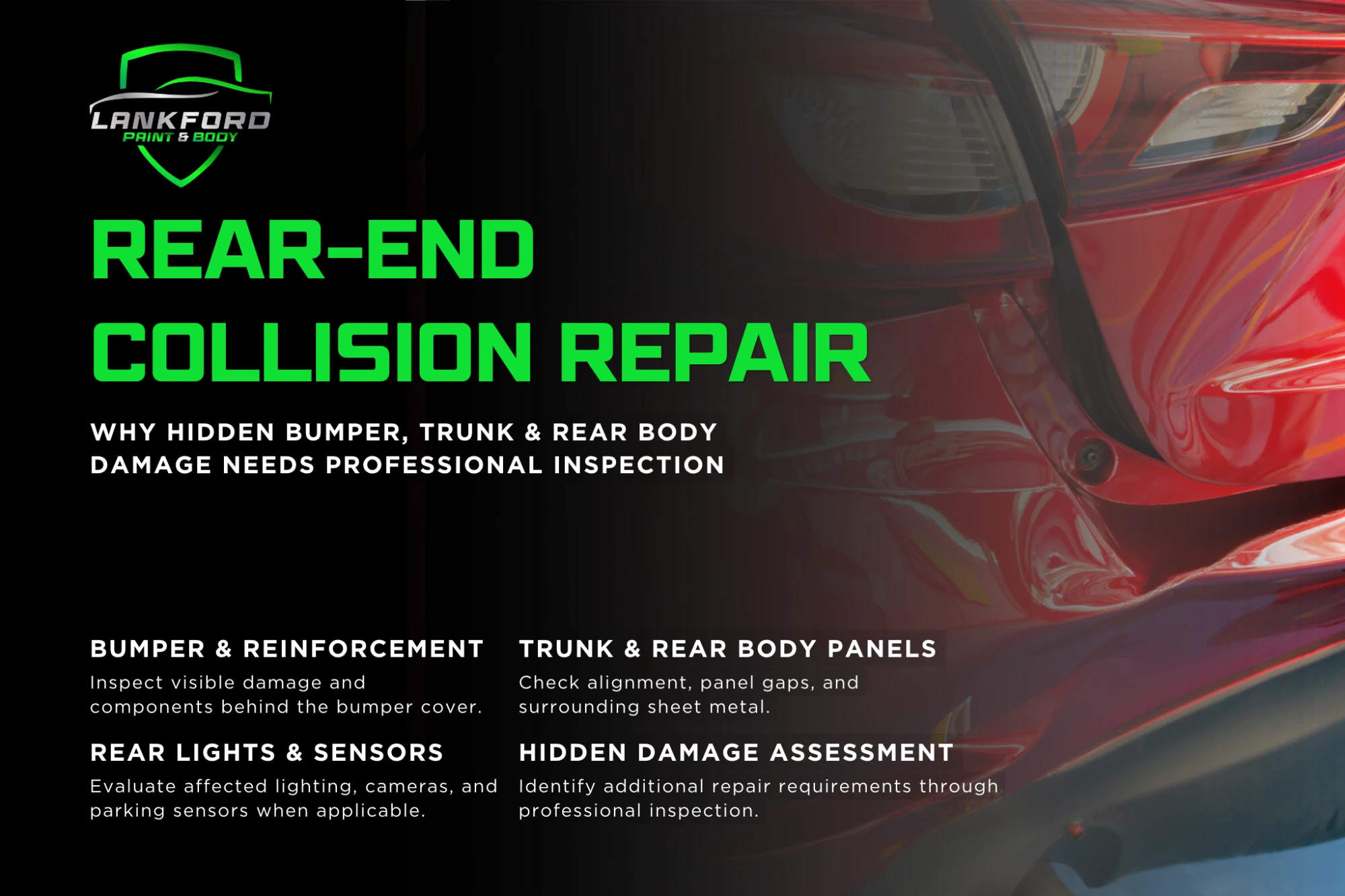
Common concerns include:
Bumper cover: Cracks, dents, paint damage, or displacement.
Bumper reinforcement: Potential impact damage behind the exterior cover.
Rear body panel: Deformation or damage to the panel behind the bumper.
Trunk lid and floor: Changes in alignment, panel gaps, or underlying sheet metal.
Rear lamps: Cracked lenses, damaged mounting points, or lighting problems.
Cameras and sensors: Damage to vehicle-specific parking or driver-assistance equipment.
Rear bumper collision repair may therefore involve more than refinishing or replacing the visible cover.
For additional information, review Lankford’s guide to bumper repair versus replacement.
Inspect the Bumper, Trunk, and Rear Body Structure
A professional collision assessment considers the damage location and how the impact may have affected adjacent components.
Bumper Cover and Reinforcement
The painted bumper cover is only one part of the assembly. Reinforcement components, absorbers, brackets, and mounting points may sit behind it.
Removing damaged exterior components may be necessary to determine the full repair requirements.
Trunk Lid and Trunk Floor
Trunk damage after a rear-end accident may include uneven panel gaps, difficulty latching, or deformation around the rear opening.
These signs do not automatically confirm structural damage. However, they can indicate the need for a closer inspection.
Rear Body Panels and Structural Components
Some impacts affect exterior sheet metal, while more substantial collisions may damage structural components.
Professional rear body damage repair requires determining exactly which areas were affected and consulting the appropriate manufacturer procedures.
I-CAR’s OEM repair information guidance distinguishes rear body panels, trunk floors, and rear rails as separate repair areas.
Check Rear Cameras and Sensors When Applicable
Modern vehicles may have parking sensors, blind-spot monitoring equipment, or rear cameras located in or around the bumper and trunk area.
After a rear-end collision, technicians may need to inspect affected sensors, wiring, mounting brackets, and related components.
Depending on the vehicle, manufacturer procedures may also require system checks, diagnostics, or calibration.
I-CAR’s guidance on bumper repairs involving ADAS demonstrates why requirements vary among manufacturers.
Not every rear-end collision requires calibration, and the repair requirements cannot be determined from bumper appearance alone.
Have visible bumper or trunk damage but aren’t sure what is happening underneath? Lankford Paint & Body can evaluate the affected areas and provide a free estimate based on the damage that can currently be assessed.
Is Your Car Safe to Drive After Being Rear-Ended?
A vehicle that starts and moves after an accident is not necessarily safe to continue driving.
Warning signs that need professional attention include unusual noises, fluid leaks, loose bumper components, damaged rear lights, abnormal handling, or a trunk that no longer closes securely.
If the vehicle cannot be controlled normally, has significant damage, or has components at risk of detaching, arrange professional assessment or towing rather than continuing to drive.
Lankford provides towing coordination and collision repair services for vehicles that cannot be driven.
Bumper Cracked? Trunk Not Closing Right?
Don’t guess what’s damaged behind the bumper. Let Lankford Paint & Body evaluate your vehicle and explain the next steps.
What Determines the Rear-End Collision Repair Plan?
The repair plan depends on the damage discovered, vehicle construction, component condition, and manufacturer requirements.
1. Initial Damage Assessment
A technician documents visible damage and identifies areas requiring additional inspection.
2. Repair or Replacement Decisions
Some damaged panels may be repairable, while others require replacement. The decision depends on material condition, severity, and vehicle-specific procedures.
3. Hidden Damage and Supplements
An initial estimate may not include concealed damage discovered after disassembly.
When additional repairs become necessary, the shop may prepare a supplement documenting the revised repair requirements.
An insurance supplement is subject to insurer review and is not automatically approved.
4. Refinishing and Final Repair Requirements
Repairs may involve paint preparation, color evaluation, refinishing, reassembly, and applicable system checks.
I-CAR’s repair blueprinting guidance explains why identifying damage, required parts, and repair procedures is important before completing the repair plan.
Repair timing depends on the actual damage, parts availability, and any additional authorization required.
A Rear-End Accident in Prairieville
Consider a hypothetical driver whose sedan is rear-ended while stopped at an intersection in Prairieville.
The collision leaves a cracked rear bumper and a trunk lid that appears slightly misaligned.
During the initial inspection, the body shop documents the visible damage and evaluates whether further examination is needed.
If removing the bumper reveals damaged brackets or surrounding components, the repair plan may require additional parts or labor.
The driver provides the insurance estimate, accident photographs, and vehicle information for review.
The shop can then document the repair requirements and communicate additional findings to the insurer when applicable.
This example shows why two vehicles with similar-looking bumper damage may require different repairs.
For general insurance information, the Louisiana Department of Insurance provides guidance for vehicle owners following an accident.
What to Bring for a Rear-End Collision Estimate
If you need rear-end collision repair near you, preparing the right information helps the shop understand what happened.
Bring the vehicle when safe to transport, along with its year, make, model, VIN, accident photos, and any available insurance estimate or claim number.
Also explain whether the trunk, rear lights, handling, or other vehicle functions changed after the collision.
Lankford’s free estimate form allows customers to submit vehicle details, a description of the accident, and optional damage photographs.
Rear-End Collision Repair Estimate Checklist
Before arranging repairs:
Photograph the rear bumper and surrounding panels.
Document visible cracks, dents, and misalignment.
Note trunk opening or closing problems.
Report damaged rear lights or warning messages.
Record any unusual vehicle behavior.
Gather insurance and vehicle information.
Request a professional collision damage assessment.
Review the written estimate before authorizing repairs.
Frequently Asked Questions
Can a rear-end collision cause hidden damage?
Yes. Bumper covers may conceal damaged brackets, reinforcement components, mounting points, or adjacent body panels. Additional inspection or disassembly may be necessary.
Does a cracked rear bumper always need replacement?
No. Repairability depends on the bumper material, crack location, mounting areas, and manufacturer requirements.
Can a rear-end collision affect parking sensors?
Yes. Depending on the vehicle, an impact may affect sensors, brackets, wiring, or related components. Required diagnostics and calibration procedures vary by manufacturer.
Can I get a free rear-end collision repair estimate in Prairieville?
Yes. Lankford Paint & Body offers free estimates without an appointment during regular business hours. Customers can also submit vehicle and damage details online.
Find Out What Your Rear-End Collision Actually Damaged
Cracked bumper, misaligned trunk, or damaged rear sensors? Lankford Paint & Body in Prairieville can evaluate the visible damage and explain your repair options.
Share your vehicle details, accident information, and optional photos. Free estimates are available without an appointment during regular business hours.
38173 Post Office Rd, Prairieville, LA 70769
(225) 241-8904
Monday-Friday, 8 AM-5 PM
Weekends by appointment
Visit Lankford Paint & Body in Prairieville
Need a free estimate after a rear-end collision? Visit Lankford Paint & Body at 38173 Post Office Rd, Prairieville, LA 70769. No appointment is needed during regular business hours.