A Small RV Scrape Can Create a Much Larger Refinishing Decision
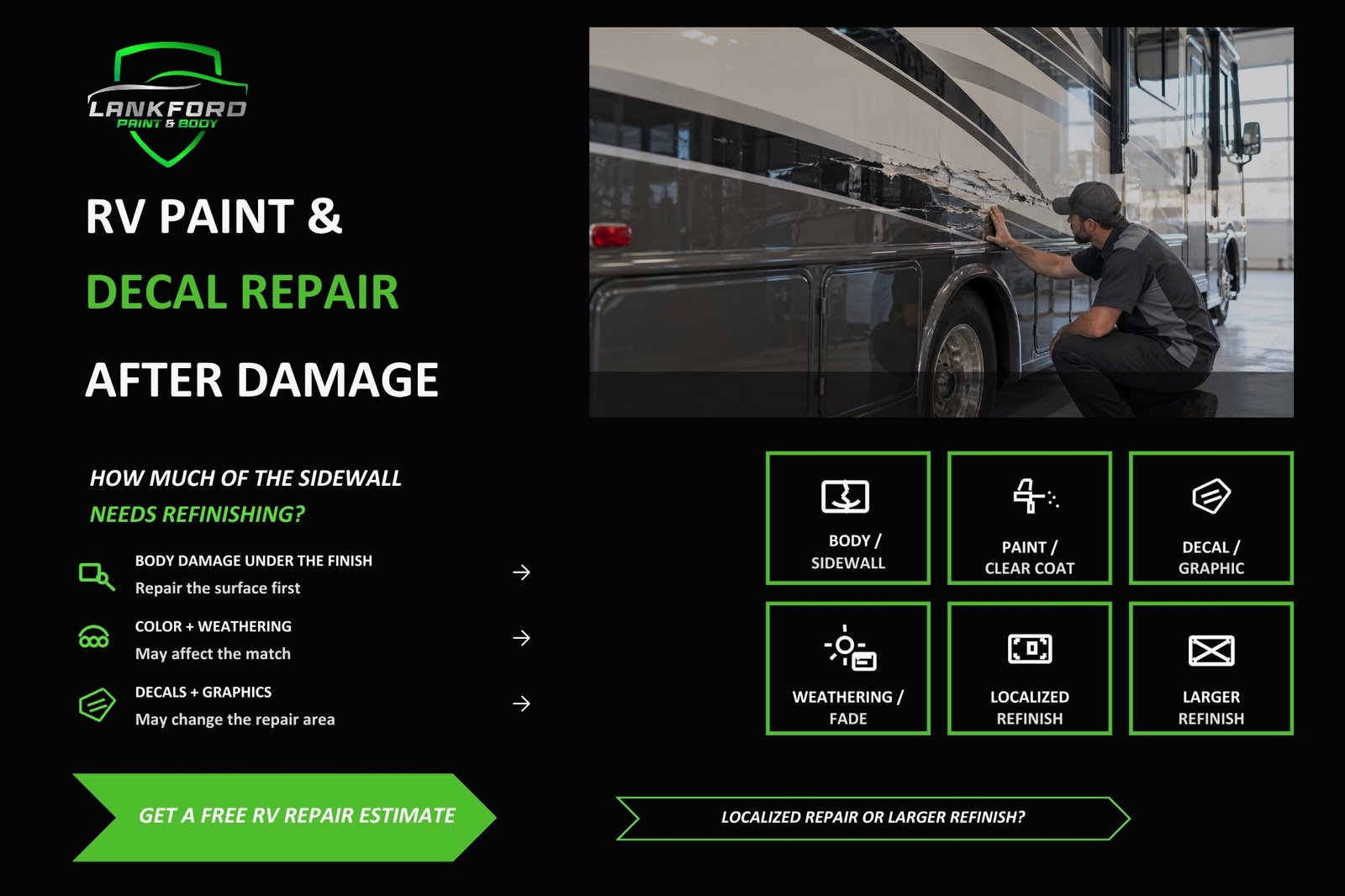
A scrape down the side of a motorhome may cross several paint colors, tear a graphic, and damage a surface far larger than a typical passenger-car panel. That is why RV paint repair should begin with an inspection of the actual exterior, not a promise based on a close-up photograph.
For RV owners around Prairieville and Ascension Parish, Lankford Paint & Body works on motorhomes, travel trailers, and campers, including collision and panel damage, large-body refinishing, and color and decal matching. The first question is not simply whether the damaged spot can be repainted. The shop also needs to determine whether the underlying body needs repair, how much of the surrounding finish to address, and what can realistically be done with the existing graphics.
Why RV Paint Repair Is Different From a Typical Car Panel
Passenger vehicles are divided by doors, fenders, pillars, quarter panels, and other natural breaks. A motorhome or travel trailer may have a long uninterrupted sidewall with broad painted surfaces, several colors, stripes, and decals extending across multiple areas.
That changes the repair decision.
A relatively small impact can affect:
-
The exterior body or sidewall surface
-
Base color and clear coat
-
Multiple paint colors
-
Vinyl graphics or decals
-
Moldings and trim
-
A finish that has changed from years of weather exposure
The dimensions of the visible scrape therefore do not always determine the size of the complete refinishing area.
Lankford’s RV and camper repair services include large exterior surfaces, collision and panel damage, and color and decal matching, so the condition of the entire affected area matters before a repair plan is finalized.
Body Damage Should Be Addressed Before the Finish
Paint and graphics should not be used to hide damaged bodywork.
If an RV was scraped against a post, struck while being maneuvered, damaged at a campsite, or involved in a collision, the shop first needs to understand what happened underneath the visible finish.
Depending on the RV, that could involve fiberglass, another composite material, metal, or part of a laminated exterior assembly. Gouges, punctures, cracks, dents, or distortion can change the repair before paint work begins.
If cracking or sidewall damage is involved, Lankford’s RV fiberglass repair guide explains why the exterior material and the condition behind it can affect the repair scope.
This distinction also keeps the two repair decisions separate. Repairing the body establishes the surface. Refinishing restores the appearance after the appropriate underlying repair has been completed.
Weathering Can Change RV Color Matching
An RV may spend years exposed to Louisiana sun, rain, heat, washing, storage conditions, and normal aging.
The finish visible today may therefore differ from how the vehicle looked when it left the manufacturer.
That matters for RV color matching.
Factory paint information can provide a starting point, but the refinishing decision may also need to consider:
-
Weather exposure
-
Fading
-
Changes in gloss
-
Previous paint work
-
Metallic or pearl effects
-
Multi-color finishes
-
Repair location
-
The size of the area being refinished
Professional refinishing may also involve blending when the repair and finish require it. For technical background on these considerations, see I-CAR guidance on color matching, blending, and tinting and I-CAR exterior-panel refinish considerations.
Lankford’s automotive paint color matching guide also explains why a paint code alone does not determine the complete refinishing plan.
RV Decal Repair Can Be as Important as the Paint
RV decal repair can add another layer to an exterior collision repair.
The damaged graphic may be:
-
An original factory decal
-
Part of a larger multi-piece design
-
A vinyl stripe
-
A custom graphic
-
A graphic placed across multiple paint colors
-
A design that is no longer readily available
Availability matters.
Even when an original-style replacement can be sourced, a new graphic may not look identical beside graphics that have spent years exposed to weather.
The condition of the paint underneath is also important. Removing or replacing graphics over deteriorated, chipped, previously refinished, or otherwise compromised paint can create different considerations from working over sound factory paint.
For more information on why the underlying surface matters when vehicle graphics are involved, see Avery Dennison guidance on vehicle wrap surfaces.
A shop should therefore evaluate the decal and the surface beneath it before promising a perfect graphic or paint match.
Localized Refinishing vs Larger RV Paint Work
Not every damaged RV sidewall needs a complete repaint.
At the same time, RV paint repair cannot always be confined to the exact outline of a scratch or gouge.
Localized refinishing may be practical when the damage, color, panel layout, existing finish, and graphic design allow an appropriate transition into the surrounding area.
A larger refinishing area may need to be considered when:
-
Damage crosses several colors
-
A repair falls in the middle of a large uninterrupted sidewall
-
Existing paint has noticeable weathering
-
A decal must be removed or replaced
-
Previous refinishing affects the same area
-
Body repair increases the prepared repair area
-
The color or graphic cannot transition naturally within a small space
There is no universal rule that says an entire RV side must be repainted after localized damage. There is also no responsible way to promise that every repair can remain small without first seeing the actual finish and damage.
Have the Paint, Graphic, and Body Damage Evaluated Together
If your motorhome or travel trailer has a scrape that damaged the body, paint, and decals in the same area, Lankford Paint & Body can evaluate those issues as one repair instead of treating each visible mark separately.
Bring wide photos, close-up photos, the VIN, and any information you have about previous paint or graphic work. That gives the shop better context before determining what can be confirmed during the estimate.
Why Photos Cannot Determine the Complete Paint Plan
Photos are useful for beginning the conversation.
They can show:
-
Where the damage occurred
-
How much of the RV appears affected
-
Whether graphics cross the repair
-
Whether multiple colors are involved
-
Obvious scratches, gouges, or paint loss
However, photos may not clearly show subtle sidewall distortion, previous refinishing, differences in gloss, weather-related fading, the condition underneath a decal, or damage hidden by moldings and other exterior components.
Lighting can also change the appearance of colors, especially metallic and pearl finishes.
That is why motorhome paint repair and travel trailer paint repair decisions should be based on the actual exterior when possible rather than photographs alone.
A Travel Trailer Repair
Consider a travel trailer that brushes against a fixed post while being backed into a campsite.
The contact leaves a gouge in the lower sidewall, removes part of a two-color finish, and tears a diagonal graphic extending well beyond the impact area.
From one photograph, the damage might appear to require a small localized paint repair.
An inspection may reveal additional questions:
Is the exterior surface itself damaged? How far must the body repair and preparation extend? Can the current colors be transitioned within the repair area? Is the original decal still available? Has the surrounding finish faded enough that a new graphic would stand out?
If the original graphic is unavailable, the repair discussion may involve a different approach to the affected design.
This does not mean the entire sidewall automatically requires repainting. It shows why the complete exterior needs to be considered before the size of the RV collision paint repair is promised.
What to Bring for an RV Paint Repair Estimate
To make the estimate more useful, bring or provide:
-
Year, make, and model
-
VIN
-
RV type
-
Wide photographs of the damaged side or corner
-
Close photos of scratches, gouges, paint loss, and damaged decals
-
A description of how the damage occurred
-
Information about previous paint or body work
-
Original graphic or paint information, if you have it
-
Insurance documentation if the repair is connected to a claim
Lankford’s current free estimate form allows vehicle information, VIN, a description of what happened, and optional damage photographs to be submitted before the vehicle is inspected.
Get an RV Paint Plan Based on the Actual Exterior
If your motorhome or travel trailer has scraped paint, torn decals, collision damage, or a repaired body area that needs refinishing, the next step is to evaluate the entire affected area before deciding how much to paint or how to handle the graphics.
Lankford Paint & Body provides RV and camper body and paint repair in Prairieville, including large-body color and decal matching. Current shop information lists free estimates with no appointment required during regular business hours. Pasted text
Lankford Paint & Body
38173 Post Office Rd
Prairieville, LA 70769
Call (225) 241-8904 or use the free estimate form to submit your RV and damage information. Bring the vehicle in so we can evaluate the body condition, existing finish, graphics, and full repair area before recommending localized refinishing or larger paint work.
FAQs
Can damaged RV paint be repaired without repainting the entire side?
Sometimes. The appropriate RV paint repair area depends on the damage location, existing finish, colors, body repair required, graphics, weathering, and how the new finish can transition into the surrounding surface.
Can damaged RV decals be matched or replaced?
It depends on the graphic. In some cases, original replacement graphics may be available, while other designs may be discontinued or significantly weathered. Evaluate the existing decal, paint, and replacement options before promising a match.
Why is RV color matching difficult on an older motorhome?
Sun exposure, weathering, previous repairs, paint type, gloss changes, metallic or pearl effects, and the size of the RV’s uninterrupted surfaces can all influence how a repaired area appears beside the existing finish.
Can I send photos for an RV paint and decal estimate?
Photos can help document the visible damage and are useful when starting the estimate process. They may not show the condition beneath graphics, subtle body distortion, previous repairs, fading, or the complete refinishing area, so an in-person inspection may still be necessary.