A Dented Panel Does Not Automatically Need Replacement
A badly dented door can sometimes be repaired, while smaller damage may require replacement because of where it occurred, how the material stretched, or what happened to an attachment point. Body panel repair vs. replacement is not determined by appearance alone.
For Prairieville-area vehicle owners, the decision should be based on the actual panel, collision damage, vehicle construction, accessibility, previous repairs, and manufacturer procedures. Lankford Paint & Body evaluates collision damage with those factors in mind rather than applying one repair method to every vehicle.
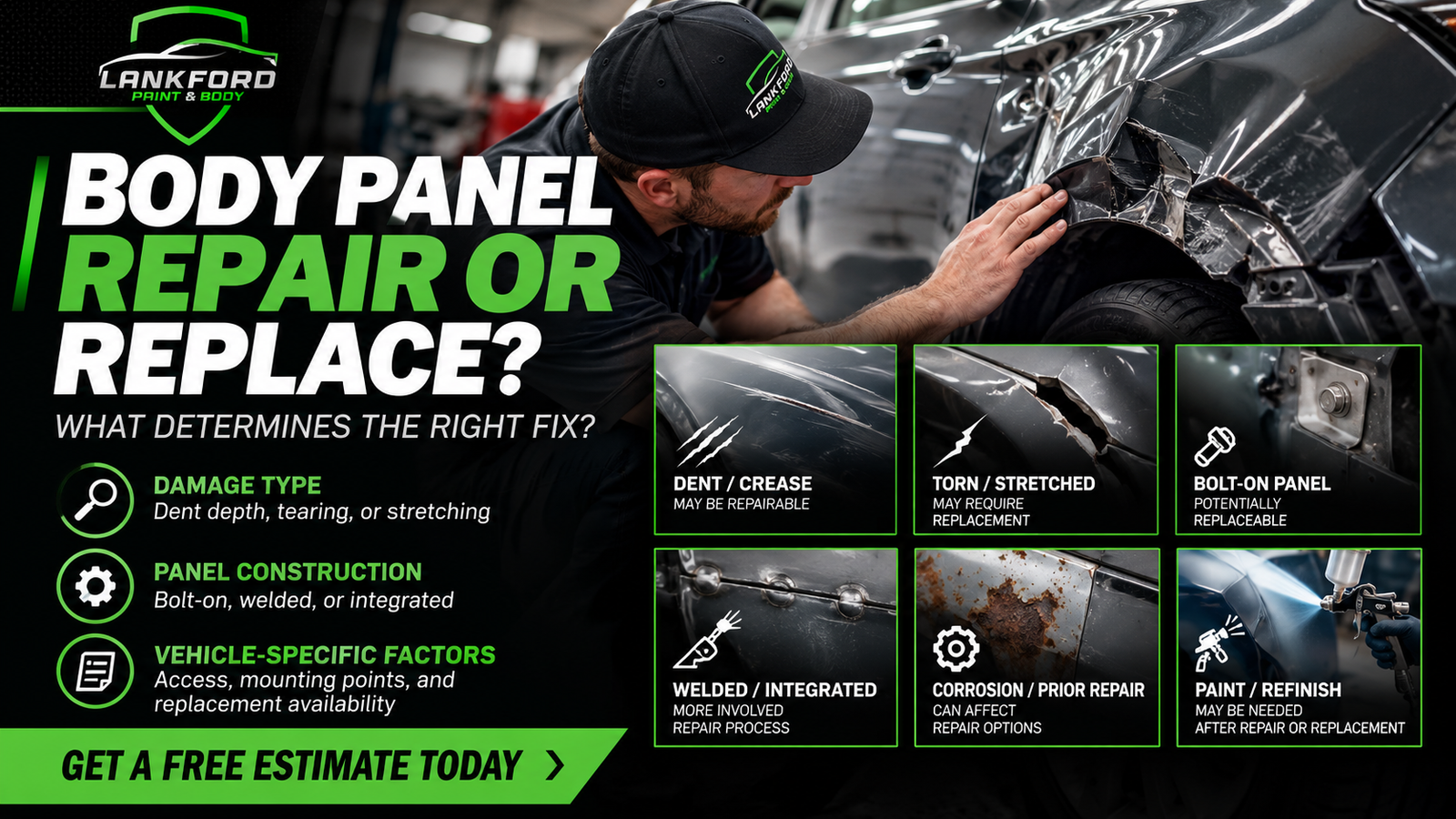
In short, a panel may be repairable when its material and condition allow the damaged area to be restored appropriately. Replacement may become the better repair when damage involves severe stretching, tearing, compromised attachment areas, inaccessible damage, previous problems, or vehicle-specific restrictions. Neither option is automatically better for every collision.
What Determines Body Panel Repair vs Replacement?
The body shop first needs to determine what was actually damaged.
Factors that can affect the decision include:
-
Panel material
-
Dent depth and shape
-
Tearing, cracking, or severe stretching
-
Damage around edges or body lines
-
Condition of mounting or attachment points
-
Access to the back of the damaged area
-
Damage to adjacent components
-
Previous repairs
-
Existing corrosion
-
Replacement-part availability
-
Paint and refinishing requirements
-
Manufacturer repair procedures
I-CAR’s repair-versus-replace guidance highlights many of these same considerations, including material type, severity, location, accessibility, previous repairs, corrosion protection, and OEM repair restrictions. Review I-CAR repair vs. replacement considerations
The important point for a vehicle owner is that a repair decision should come after the damaged area has been evaluated, not simply because repair sounds less expensive or replacement sounds more complete.
Bolt-On Panels and Welded Body Sections Are Different Decisions
Not every exterior panel attaches to the vehicle the same way.
Many front fenders are bolt-on components. A damaged fender may be removed and replaced without disturbing the vehicle body, unlike a welded panel.
Doors also require a closer look. Depending on the vehicle and damage, the repair plan may involve the door shell, outer panel, attached hardware, hinges, intrusion-related components, or adjacent body areas.
Quarter panels are different. On many vehicles, the quarter panel is part of the welded exterior body structure rather than a simple bolt-on component. Replacing one can require significantly more disassembly and refinishing than changing a bolt-on fender.
This is why quarter panel repair vs replacement should not be treated the same as fender repair vs replacement.
I-CAR also notes that access to damaged components and panel layering can influence how much must be removed during a repair or replacement procedure. See I-CAR guidance on removing parts for repair access
When Repairing a Damaged Body Panel May Be Considered
Repair may be considered when the panel condition, material, location, and manufacturer requirements allow it.
Examples can include damage where:
-
The metal or panel material has not been damaged beyond an appropriate repairable condition
-
There are no severe tears or cracks
-
Attachment areas remain suitable
-
The technician has proper access
-
The panel can be restored without using a prohibited repair method
-
The repair allows required corrosion protection to be restored
-
Previous repairs do not interfere with the new repair
That does not mean every dent should be repaired.
A deep crease through a body line, stretched material, torn metal, or damage around an attachment area can change the decision significantly.
If you are comparing a panel-specific repair with bumper work, Lankford’s bumper repair vs replacement guide explains why even apparently simple exterior components can involve more than the visible surface.
When Collision Panel Replacement May Be Appropriate
A collision panel replacement may become appropriate when repairing the original panel is not supported by its condition or the applicable repair procedure.
Possible factors include:
-
Significant tearing
-
Severe material stretching
-
Cracked or damaged mounting areas
-
Damage at factory seams
-
Damage involving an area where repair is restricted
-
Extensive previous repair
-
Corrosion that changes the condition of the panel
-
Insufficient access for an appropriate repair
-
Damage extending into additional layers or adjacent components
Replacement should not automatically be described as safer simply because a new part is being installed.
The replacement itself has to be performed according to the vehicle-specific repair information, particularly when welded, bonded, riveted, or integrated body sections are involved.
OEM1Stop provides access to collision-repair position statements and manufacturer-specific information that demonstrates why repair procedures can vary considerably between automakers and vehicles. Review OEM collision repair position statements
Why Access and Adjacent Damage Matter
A damaged exterior panel can sometimes block access to another damaged area.
For example, visible quarter-panel damage may not be the only consideration if the collision also affected the inner structure behind it. A shop may need additional access before the complete damage can be evaluated.
The same can apply around:
-
Door openings
-
Wheel openings
-
Fender mounting areas
-
Rocker areas
-
Inner panel assemblies
-
Adjacent body panels
This is one reason photographs can help document the collision but may not provide enough information to determine the complete body panel repair vs. replacement decision.
Need an Answer Based on Your Actual Panel?
If you have a damaged door, fender, quarter panel, or other exterior body panel, Lankford Paint & Body can inspect the vehicle and explain what factors support repair or replacement.
The goal is not to choose the more extensive option automatically. It is to determine what the specific damaged area and vehicle actually require.
You can review Lankford’s current collision and body repair services before bringing the vehicle in for an estimate.
Paint Requirements Are Part of the Decision
Body repair and paint refinishing are closely connected.
Even when a panel can be repaired instead of replaced, the damaged finish may still require refinishing. Replacement panels generally require their own preparation and paint process as well.
The paint plan may consider:
-
Existing vehicle finish
-
Factory paint information
-
Color variants
-
Metallic or pearl characteristics
-
Repair location
-
Adjacent panels
-
Previous refinishing
-
Whether blending is appropriate
This means door repair vs. replacement, for example, should not be evaluated only by the metal work. The total repair plan can also involve adjacent trim, preparation, paint, and blending.
Corrosion protection is another consideration when repair operations disturb factory-protected areas. I-CAR emphasizes restoring corrosion-protection materials as required during collision repair and following the body repair manual for the specific vehicle. Review I-CAR corrosion protection guidance
A Prairieville Repair Example
Consider a Prairieville driver whose vehicle is struck along the passenger side.
The front fender is deeply dented near its mounting area, the front door has a broad shallow dent, and the rear quarter panel has a crease near the wheel opening.
Those three damaged areas should not automatically receive the same repair method.
The fender may require evaluation of the damaged mounting area and whether the component can be repaired appropriately.
The door may have enough accessible, repairable damage to support body repair, depending on its material, previous condition, and the exact location of the impact.
The quarter panel requires a different evaluation because replacement may involve a welded or integrated body section, additional disassembly, access to underlying areas, corrosion protection, and a larger refinishing operation.
The example does not mean the fender should be replaced, the door should be repaired, or the quarter panel should be saved. It shows why the vehicle and each damaged panel have to be evaluated individually.
What to Bring for a Body Panel Repair Estimate
If you are ready to have the collision damage evaluated, bring:
-
The vehicle
-
Year, make, and model
-
VIN when requested
-
Photos taken after the collision
-
Insurance estimate, if available
-
Claim information, if applicable
-
A description of how the impact occurred
-
Details about any previous repair to the damaged area
Parts can also affect the estimate. If replacement is being considered, Lankford’s OEM vs aftermarket collision parts guide explains why part type, availability, repair procedures, and the specific claim can influence the repair plan.
Get the Damaged Panel Evaluated Before Choosing Repair or Replacement
If you are comparing body panel repair vs replacement, the most useful next step is an inspection of the actual vehicle.
Lankford Paint & Body can evaluate the damaged panel, surrounding areas, repair access, paint requirements, and other collision-related factors before explaining the repair plan.
The current estimate process includes free estimates, and customers can provide vehicle details, VIN, a description of the damage, and optional photos through the shop’s estimate form.
Lankford Paint & Body
38173 Post Office Rd
Prairieville, LA 70769
Call (225) 241-8904 or use the Lankford Paint & Body estimate form to request an evaluation based on the actual damage.
FAQs
Is it better to repair or replace a damaged body panel?
Neither option is automatically better. The decision can depend on the panel material, damage severity, accessibility, attachment points, previous repairs, corrosion, paint requirements, and manufacturer procedures.
Can a damaged quarter panel be repaired instead of replaced?
Sometimes. Quarter panel repair vs replacement depends on the damage location, material condition, severity, access, underlying damage, and the vehicle manufacturer’s repair information.
Is a damaged fender usually easier to replace than a quarter panel?
Many front fenders are bolt-on panels, while many quarter panels are welded or integrated body sections. That can make the replacement procedures substantially different, but the correct repair still depends on the specific vehicle.
Can photos tell a body shop whether my panel needs replacement?
Photos can help show the visible damage, but they may not reveal stretching, attachment damage, previous repairs, underlying damage, or conditions behind the panel. An in-person inspection may be needed before the complete repair plan is known.