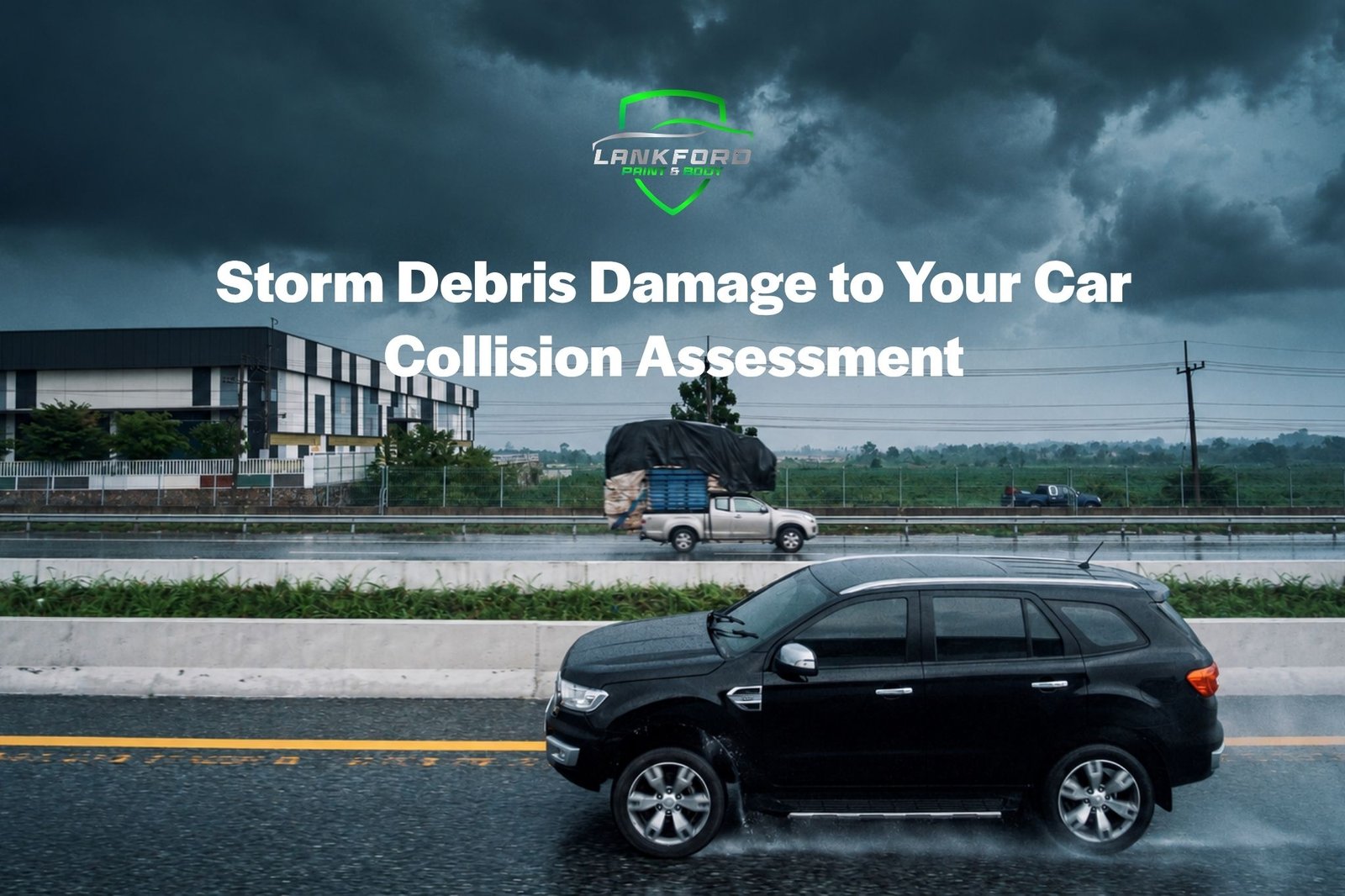
The Storm Passed. Now Look Beyond the Most Obvious Damage.
One falling branch or piece of windblown debris can leave more than one repair problem. A dented roof may grab your attention first, while cracked glass, chipped paint, damaged molding, or movement around the impact area is easier to overlook.
If you need storm damage car repair in Louisiana, the first step is not deciding whether the vehicle needs paintless dent repair, a new panel, glass replacement, or an insurance claim. Start by documenting what happened, checking the entire vehicle, and having damage professionally assessed when the repair is not obvious.
For drivers around Prairieville and Ascension Parish, Lankford Paint & Body provides collision, dent, paint, and automotive glass services from its Prairieville shop. Its current site also confirms free estimates and allows customers to submit vehicle information and optional damage photos before bringing the vehicle in.
Step 1: Photograph the Vehicle Before Repair or Cleanup
Once conditions are safe, document the vehicle before repairs begin.
Take photos of:
-
Each side of the vehicle
-
The roof, hood, and trunk
-
Obvious dents or impact points
-
Scratches and chipped paint
-
Cracked or shattered glass
-
Broken trim, lamps, or exterior components
-
Any object that struck the vehicle, when safe to photograph
-
The overall vehicle, not only close-up damage
The Louisiana Department of Insurance advises residents with storm damage to take photos before cleanup or repairs and to have an initial assessment available when contacting an insurer. Louisiana Department of Insurance
Photos are useful for documentation, but they do not replace a complete inspection. A photograph can show the surface of a damaged panel without revealing everything behind it.
Step 2: Inspect More Than the Point Where the Debris Hit
Storm debris car damage is not always confined to one visible dent.
A tree limb striking the roof, hood, door, or quarter panel may affect nearby components as well. Windblown objects can also scrape multiple panels as they move across the vehicle.
Look for:
-
Dents and creases
-
Scratches that may extend through the finish
-
Chipped or cracked paint
-
Cracked windshield, back glass, or door glass
-
Damaged mirrors or lamps
-
Loose exterior trim
-
Panels or doors that no longer appear to sit normally
-
Damage around the original impact area
Lankford’s current services include collision repair, paint refinishing, dent repair where the panel allows it, and windshield, back-glass, and door-glass replacement.
For damage that looks similar to hail rather than a single heavy impact, Lankford’s existing Louisiana hail damage guide explains how dent location, paint condition, panel access, and other factors can affect whether paintless repair is appropriate.
Step 3: Do Not Assume the Vehicle Is Safe Because It Still Starts
A storm-damaged vehicle may still start and move even when something needs professional attention.
Avoid deciding roadworthiness from photos or appearance alone.
Have the vehicle evaluated before continuing to drive if you notice issues such as:
-
Broken glass interfering with visibility
-
A loose body panel
-
Wheel or tire contact
-
Fluid leakage
-
A damaged light needed for safe driving
-
A door, hood, or trunk that no longer closes correctly
-
Steering or handling that changed after the impact
-
Significant body deformation
If the vehicle does not appear safe to operate, arranging transportation or towing is more appropriate than driving it simply to see whether the problem gets worse.
Step 4: Understand Why a Tree Branch Can Create Several Types of Repair
Tree branch car damage can range from a shallow cosmetic dent to a much more involved collision repair.
For example, imagine a hypothetical Prairieville vehicle parked beneath a tree during a severe storm. A large limb lands across the hood and passenger-side fender.
The visible result might include:
-
A dented hood
-
A damaged fender
-
Scratched paint
-
A cracked headlamp
-
A small windshield impact
The correct repair cannot be determined solely from the fact that a branch caused the damage.
The shop still needs to evaluate the affected components, their construction, the depth and location of the damage, paint condition, and whether anything underneath the visible panels was affected.
I-CAR’s repairability resources emphasize the importance of vehicle-specific manufacturer information when determining collision repair procedures. Its OEM Technical Information Matrix helps repairers identify available manufacturer information for body materials, replacement procedures, sectioning, attachment methods, corrosion protection, and glass requirements.
Review I-CAR’s Repairability Technical Support resources
That is one reason two vehicles with visually similar storm damage may require different repair plans.
Step 5: Decide Whether the Panel Can Be Repaired or Needs Refinishing
Not every storm dent needs panel replacement.
Not every dent qualifies for paintless dent repair either.
The decision may depend on:
-
Dent depth
-
Sharpness of the impact
-
Paint condition
-
Panel access
-
Stretched metal
-
Damage near an edge or body line
-
Previous repairs
-
Panel material
-
Vehicle-specific repair information
If the paint remains intact and the panel is suitable, paintless dent repair may be an option. When the finish is cracked, chipped, or deeply scratched, conventional body work and refinishing may be more appropriate.
If paint is involved, Lankford’s automotive paint color matching guide explains why professional refinishing involves more than simply looking up a factory paint code.
If a storm left several different types of damage on your vehicle, do not feel like you need to identify the repair method yourself. Lankford Paint & Body can inspect the dents, paint, glass, and collision damage together and provide a written estimate based on the vehicle’s actual condition.
Step 6: Check Broken Glass Separately
Broken car glass after a storm deserves its own inspection.
Windblown debris or falling branches can damage:
-
Windshields
-
Back glass
-
Door glass
-
The surrounding body opening
-
Trim and molding around the glass
The glass itself may not be the only concern. An impact strong enough to break the glass may also affect the surrounding body area.
Lankford’s current service information confirms in-house replacement of windshields, back glass, and door glass. Lankford Paint & Body
If you find broken glass together with dents or panel damage, it is useful to have the entire impact area evaluated rather than treating each visible issue as unrelated.
Step 7: How Does Insurance Handle Storm Damage?
For storm-damaged car insurance in Louisiana, coverage depends on the policy and the specific loss.
Louisiana Department of Insurance guidance explains that comprehensive auto coverage can apply to certain weather-related losses. Its consumer materials specifically discuss windstorm, falling objects, broken glass caused by windblown objects, and damage from fallen tree limbs under comprehensive coverage.
Read Louisiana Department of Insurance guidance on weather-related auto coverage
That does not mean every storm-damage claim will be paid automatically. Your policy, deductible, cause of loss, documentation, and insurer’s claim review still matter.
When contacting the insurer, be prepared with:
-
Your policy or claim information
-
Photographs of the damage
-
A description of what happened
-
The damaged vehicle’s information
-
A repair estimate when requested
If additional damage becomes visible after damaged components are removed, the repair plan may need to be updated. Lankford’s collision repair supplement guide explains how supplemental damage can be documented during collision repair.
This article provides general insurance information, not individualized coverage or legal advice.
Step 8: Get the Entire Vehicle Assessed Before Choosing the Repair
The most visible dent should not automatically determine the entire repair.
A useful storm damage car repair Louisiana assessment should consider the whole affected area and answer practical questions:
-
Is the damage limited to the exterior finish?
-
Is a dent suitable for paintless repair?
-
Has the paint been broken?
-
Does a panel require conventional repair?
-
Is glass replacement needed?
-
Is there damage concealed behind an exterior component?
-
Does the vehicle manufacturer provide a specific repair procedure?
-
What can be confirmed now, and what may require further access?
I-CAR’s damage-analysis training notes that disassembly can sometimes expose collision damage that could not be detected during an exterior inspection.
Review I-CAR information on collision damage analysis
That is why an initial inspection and the final repair plan are not always identical.
Get Your Storm Damage Properly Evaluated in Prairieville
If wind, a falling branch, or flying debris damaged your vehicle, start with documentation and a professional inspection rather than guessing which repair method it needs.
Lankford Paint & Body provides collision, dent, paint, and glass services for Prairieville and surrounding communities. Current website information confirms free written estimates and states that customers may bring a vehicle by during business hours without an appointment or send vehicle details and optional damage photos through the free estimate form. Lankford Paint & Body
Lankford Paint & Body
38173 Post Office Rd
Prairieville, LA 70769
Call (225) 241-8904 to discuss the storm damage or request a free estimate. Bring any photographs and insurance documentation you already have so the damage can be evaluated as a complete repair problem rather than a collection of isolated dents and scratches.
FAQs
Does comprehensive insurance cover tree branch damage to a car in Louisiana?
It may. Louisiana Department of Insurance guidance identifies falling objects, windstorm damage, and certain tree-limb damage as losses commonly associated with comprehensive auto coverage. Actual coverage depends on your policy, deductible, and the circumstances of the claim.
Can wind damage to a car be repaired without repainting?
Sometimes. Wind damage car repair may involve paintless dent repair when the panel and finish are suitable, but scratches, chipped paint, deep creases, stretched metal, or other damage may require conventional body work and refinishing.
Should I drive my car if a branch fell on it?
Do not determine roadworthiness only from how the vehicle looks. Broken glass, loose panels, fluid leakage, wheel or tire contact, damaged lights, significant deformation, or changes in steering or handling should be professionally evaluated. Towing may be appropriate when the vehicle does not appear safe to operate.
Can photos show the full extent of storm debris damage?
Not always. Photos are useful for documenting visible damage, but they cannot show everything behind exterior panels, trim, glass, or other components. An in-person inspection and, when appropriate, further access or disassembly may be needed to establish the complete repair scope.