Why Matching Your Car’s Paint Takes More Than a Paint Code
After a collision or body repair, one of the biggest concerns is whether the repaired panel will stand out from the rest of the vehicle. Professional car paint color matching starts with the manufacturer’s color information, but selecting paint from a code alone is usually not the entire process.
At Lankford Paint & Body, paint refinishing is part of the collision and body-repair services provided for Prairieville-area vehicle owners. The shop’s current service information explains that paint is matched using the factory paint code and may be blended into adjacent panels where needed. The goal is to determine what the actual vehicle requires rather than assume one formula or technique works for every repair.
The Factory Paint Code Is the Starting Point
The factory paint code identifies the original color assigned to the vehicle and helps the refinisher locate an appropriate formula.
That information is essential, but the finish on a vehicle today may not look exactly the way it did when it left the assembly plant. Production differences, previous refinishing, normal weather exposure, and variations in the existing finish can influence what the technician sees during the repair.
I-CAR’s guidance on color matching, blending, and tinting explains that manufacturing variation, different paint suppliers, weathering, and previously repaired panels are among the reasons a standard formula may need additional evaluation.
This is an important part of understanding why car paint colors differ even when vehicles share the same basic factory color.
Why One Paint Code Can Have Multiple Color Variants
Automotive refinish systems may provide several variants for a single color code. These variants account for differences that can occur during vehicle production.
The refinisher compares the available color information with the finish currently on the vehicle and determines which option provides the most appropriate starting point.
Variants are especially important with:
- Metallic finishes
- Pearl colors
- Multi-stage paint systems
- Colors that change noticeably with viewing angle
- Vehicles with previous paint work
PPG’s color formula identification guidance describes checking OEM color codes, evaluating available variants, comparing spray-out samples, and viewing the color under suitable lighting.
Good auto paint color matching therefore involves evaluating the actual vehicle rather than simply ordering paint by code.
What Does Computerized Paint Matching Do?
Modern refinishing technology can include spectrophotometers and digital color software. These tools measure characteristics of the existing finish and can help identify formulas or variants that may be suitable for the repair.
This process is commonly referred to as computerized paint matching.
For example, PPG’s RapidMatch color-measurement system uses multi-angle measurements to assist refinishing professionals in evaluating automotive colors, including metallic and pearl finishes.
However, a digital measurement is still only part of the overall process. The refinisher may also need to consider the condition of the paint, the repair location, previous refinishing, application technique, and surrounding panels.
Lankford Paint & Body’s website does not currently identify a specific computerized color-measurement system, so customers should not assume that a particular device or paint brand is used there.
Why Spray-Out Tests Can Be Important
A technician may create a spray-out card or test panel before applying the final color to the vehicle.
Instead of judging the paint while it is still mixed in a container, the technician applies it using the intended refinishing process and then compares the dried sample with the vehicle.
This is particularly useful with metallic and pearl colors because their appearance can change depending on application technique and viewing angle.
A spray-out can help determine whether the selected formula is close enough to proceed, whether another variant should be considered, or whether additional adjustment may be needed.
This additional verification is one reason car paint color matching is more involved than simply locating a formula in a database.
Application Technique Can Affect the Finished Color
The paint formula is only one part of the result.
With certain automotive finishes, application variables can influence how the final color appears. These can include spray distance, overlap, equipment setup, air pressure, and how metallic or pearl particles settle in the coating.
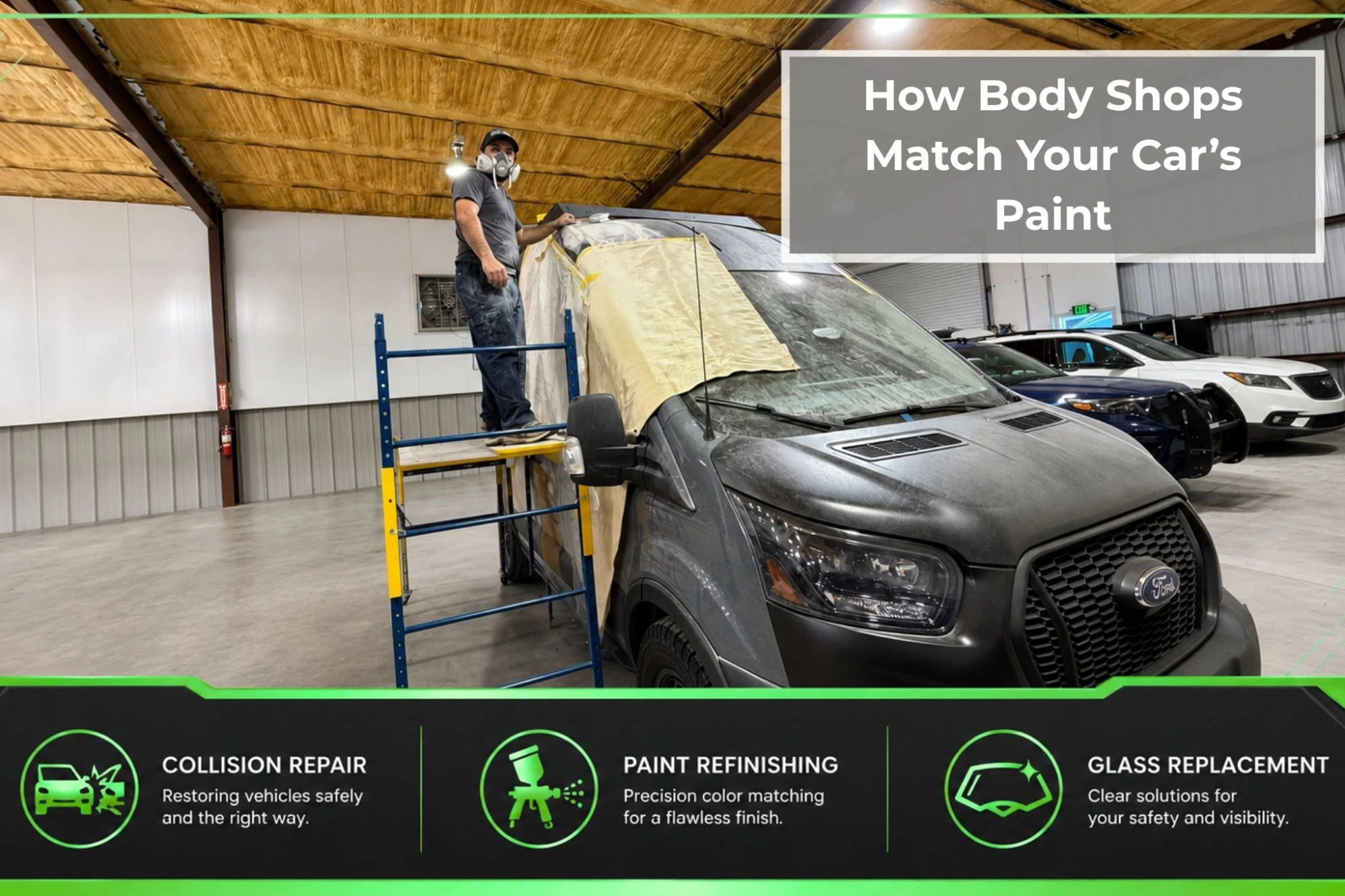
Surface preparation matters too. Before refinishing begins, repaired areas need to be properly prepared so the paint system has an appropriate foundation.
3M’s professional collision refinishing resources cover preparation, paint application, blend-panel preparation, and finishing as separate parts of professional automotive refinishing.
If your vehicle has collision or paint damage and you are unsure which panels may need refinishing, Lankford Paint & Body can inspect the vehicle and explain the proposed repair. Its paint and body repair services include full repaints, individual panel work, factory-code color matching, and blending where appropriate.
Why Blending Adjacent Panels May Be Necessary
One of the most important parts of professional refinishing is blending adjacent panels.
Imagine that a damaged front door needs to be repaired and painted. Even if the refinisher develops a very close color match, applying the new color only to that door can sometimes create a visible transition where the repaired panel meets an older finish.
Blending gradually extends color into an adjacent area instead of creating an abrupt edge between the new finish and the existing paint.
I-CAR describes blending as extending basecoat into an area or panel next to the repair so some of the original vehicle color remains visible through the transition.
Blending should not be viewed as a way to hide an unacceptable paint formula. The refinisher still needs to develop an appropriate blendable color first.
A Hypothetical Prairieville Example
Consider a hypothetical vehicle in Prairieville with collision damage to the driver’s front door.
The factory paint code identifies the original color, but the vehicle has already spent several years exposed to sunlight and normal South Louisiana weather. The neighboring fender and rear door may also have slightly different surface conditions.
The technician evaluates the current finish and determines which formula or variant best fits the vehicle. A spray-out may be used when additional verification is needed.
If the repair plan calls for blending adjacent panels, the new basecoat can transition into the neighboring finish rather than stopping abruptly at the repaired door.
If the color contains metallic or pearl effects, viewing angle and application technique also become part of the evaluation.
The exact process depends on the vehicle, paint system, damaged area, and existing finish. This example is not meant to suggest that every door repair requires blending.
Clear Coat and Surface Texture Matter Too
Color alone does not determine whether a refinished panel looks consistent with the rest of a vehicle.
The final appearance can also be influenced by:
- Gloss level
- Surface texture
- Clear coat appearance
- Metallic or pearl orientation
- Panel-to-panel transitions
- Lighting conditions
- Viewing angle
A repaired panel may have a close color but still appear different if its gloss or texture is noticeably different from the surrounding finish.
That is why final inspection should consider the complete refinished surface rather than only the base color.
Why Lighting Can Change the Way Paint Looks
Automotive paint may appear different in direct sunlight, shade, indoor shop lighting, or evening conditions.
Metallic and pearl colors can make those differences particularly noticeable because the effect particles interact with light differently as the viewing angle changes.
PPG’s color-matching procedures recommend evaluating paint under natural sunlight, color-corrected lighting, or an appropriate color-matching light when determining whether a formula or spray-out provides a suitable match.
Professional auto paint color matching therefore combines technical paint information with visual evaluation.
Why Age and Previous Repairs Can Complicate Paint Matching
A vehicle’s current finish may no longer be identical to the original factory appearance.
Possible reasons include:
- Years of sun and weather exposure
- Previous body repairs
- Previous refinishing
- Production color variation
- Earlier blending
- Differences in clear coat condition
- Changes in gloss and surface condition
A previously refinished neighboring panel can be particularly important. Instead of matching untouched factory paint, the technician may need to work with a finish that was already altered during an earlier repair.
This is another reason why car paint colors differ and why evaluating the actual vehicle matters.
When refinishing is part of a larger accident repair, Lankford’s guide to how long collision repair takes explains how paint work fits with repair planning, parts availability, body work, reassembly, and final quality checks.
Questions to Ask When Comparing Paint Repair Estimates
Two paint-repair estimates may not include exactly the same work. Instead of comparing only the total price, ask what is actually included in the proposed repair.
Useful questions include:
- Which panels need body repair?
- Which panels will be refinished?
- How will the existing color be evaluated?
- Will the factory paint code be used as the starting point?
- Are color variants available for this vehicle?
- Will a spray-out or test sample be used if necessary?
- Does the repair require blending adjacent panels?
- How will metallic or pearl effects be evaluated?
- What surface preparation is included?
- Could previous paint work affect the color match?
- How will the finished paint be inspected?
These questions give customers a clearer picture of the actual repair process and make it easier to compare estimates based on the proposed work rather than price alone.
Start With a Paint Repair Plan Based on Your Vehicle
Professional car paint color matching combines factory paint information, evaluation of the existing finish, suitable formula or variant selection, refinishing technique, and blending when the repair requires it.
No single paint code, camera, or computer replaces the need to evaluate the actual vehicle.
Lankford Paint & Body provides paint refinishing, collision repair, dent work, and related auto body services in Prairieville. The current website lists free estimates and states that customers can bring a vehicle by during business hours without an appointment or submit vehicle and damage information through the free estimate form.
Lankford Paint & Body
38173 Post Office Rd
Prairieville, LA 70769
Call (225) 241-8904 to discuss paint or panel damage and request a free estimate.
FAQs
Can a body shop match factory paint?
A body shop can use manufacturer paint information as the starting point and then compare that information with the vehicle’s existing finish. Variants, weathering, previous repairs, metallic or pearl effects, and application technique may influence the final match.
Is a factory paint code enough to match an older vehicle?
Not always. The factory paint code identifies the original color, but normal aging, production variation, previous refinishing, and the condition of surrounding panels may require further evaluation.
What is computerized paint matching?
Computerized paint matching generally uses digital color-measurement equipment and paint-formula software to help identify a suitable formula or variant. The specific equipment and processes used can vary by paint manufacturer and repair facility.
Why does a body shop blend paint into another panel?
Blending adjacent panels creates a gradual color transition between the repaired area and the existing finish. It can help make small differences less noticeable, but blending should begin with an appropriate color match rather than being used to compensate for an unacceptable formula.